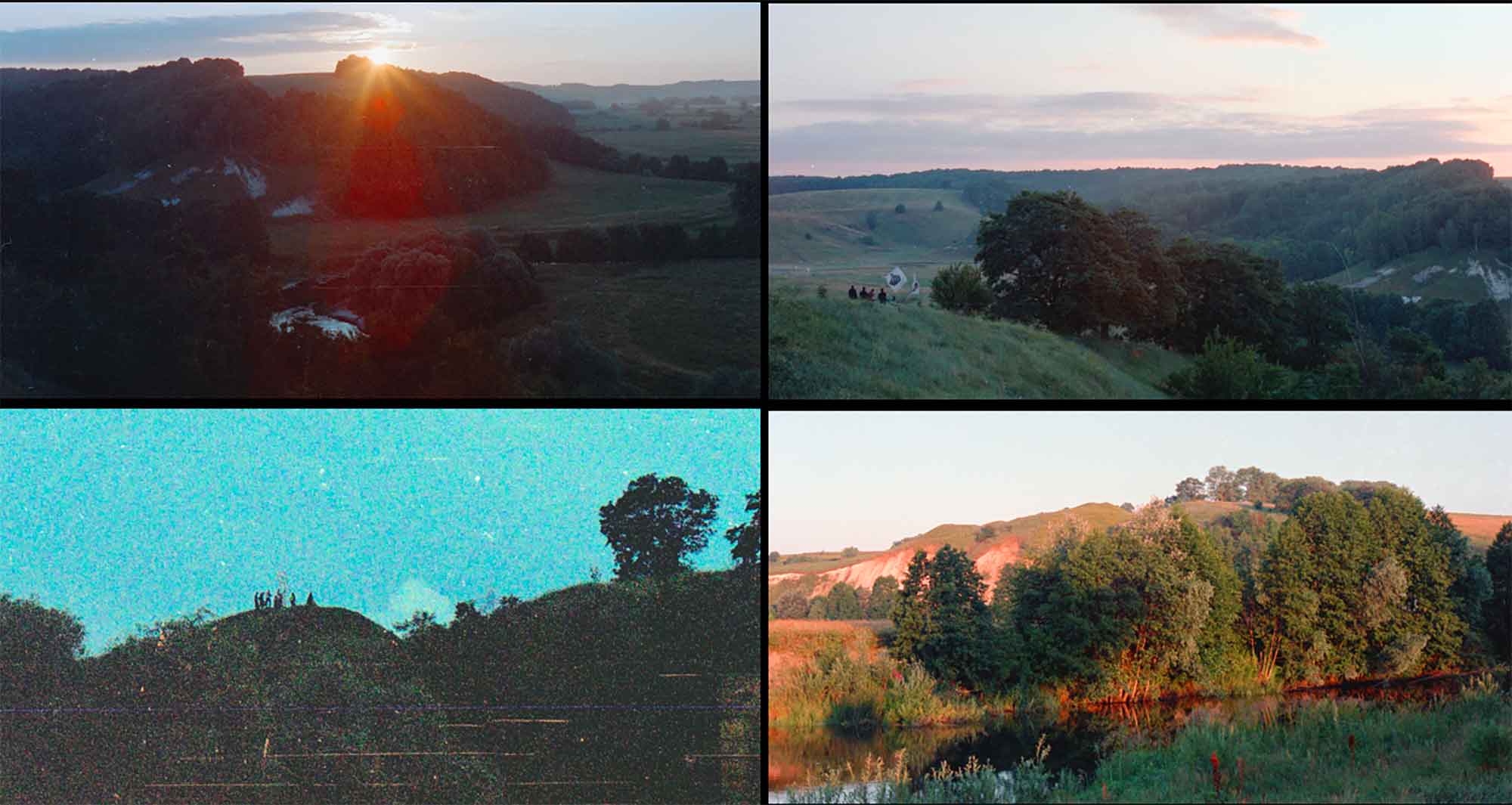
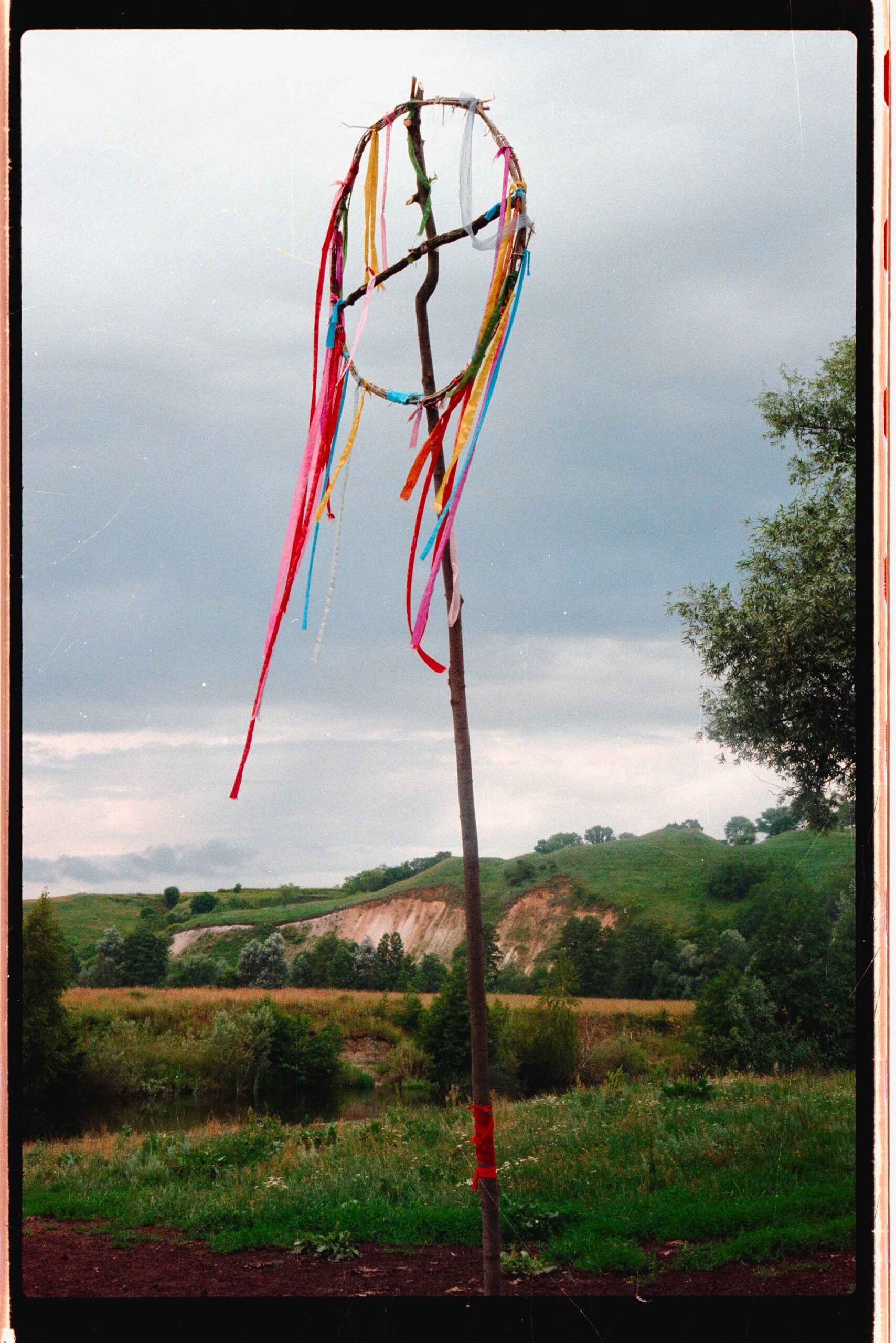
An important component of the symposium was the collection of historical and ethnographic material. This included local legends about the “borderlands”—concerning the division between the wild steppe and fortified settlements—and references to the northern branch of the Silk Road, which, according to scholarly sources, passed through these territories (from Volga Bulgaria to Kyiv). Participants documented stories about the crossing beneath the settlement, as well as numerous accounts of treasure finds in the region.
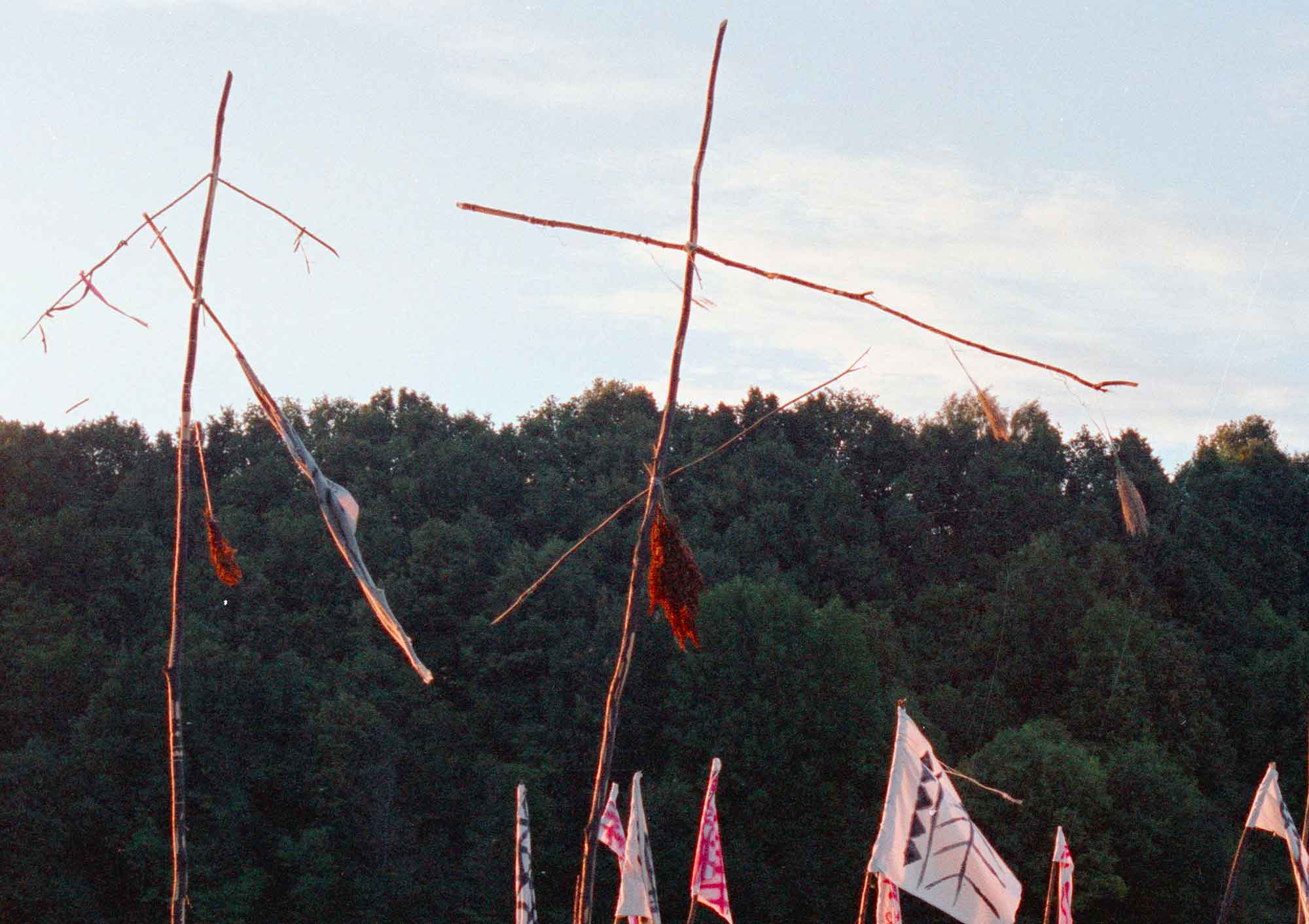
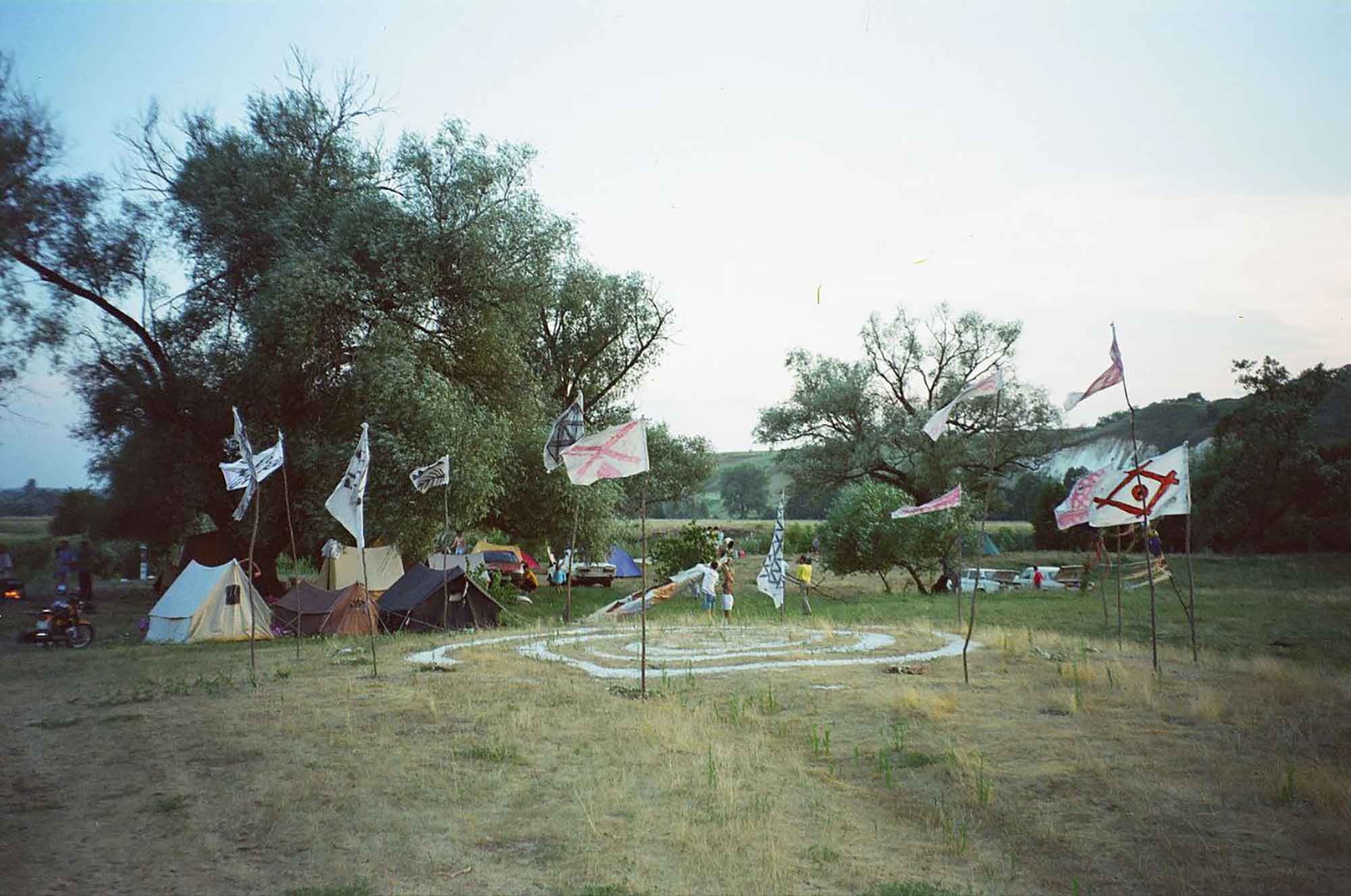
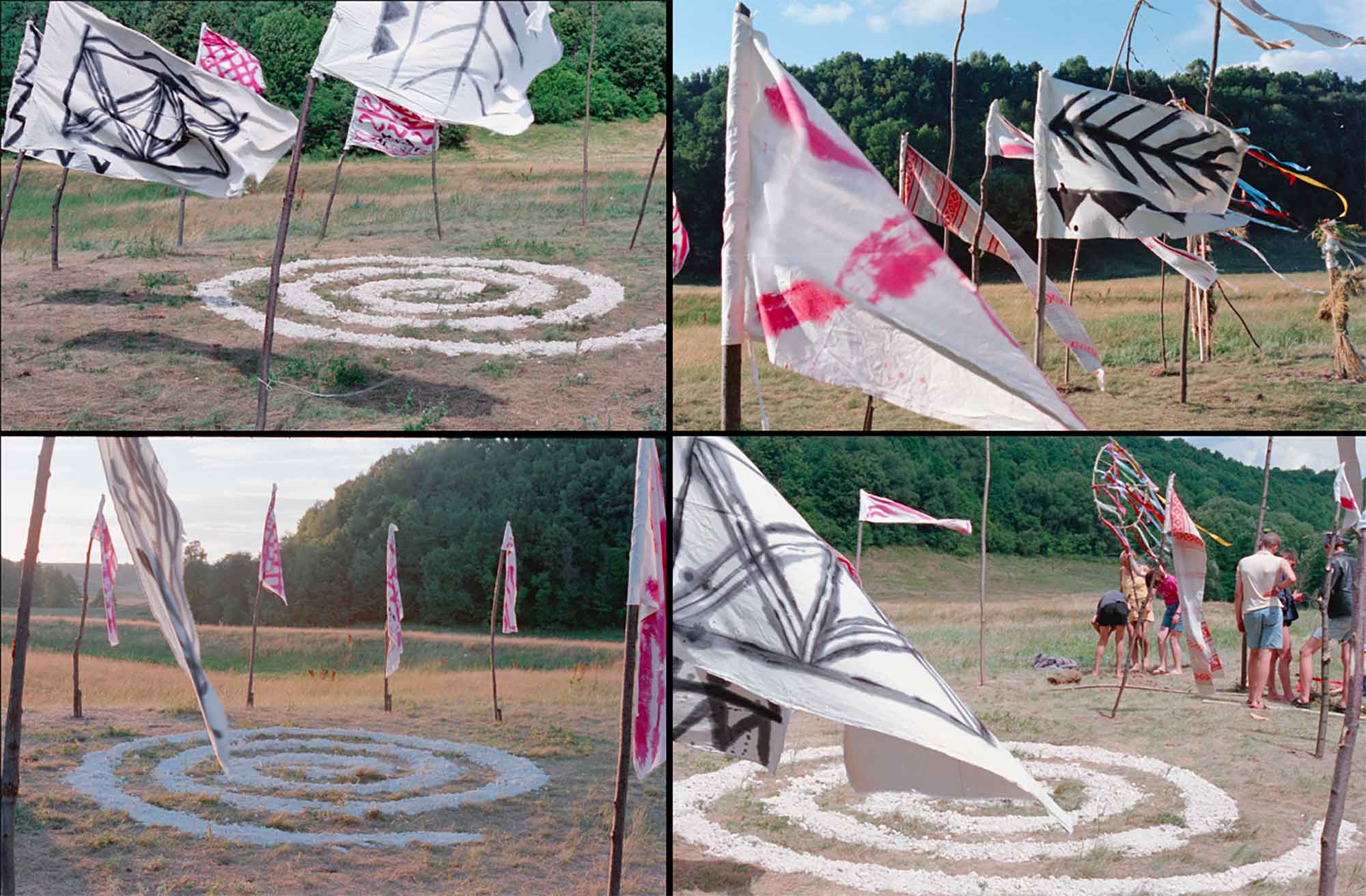
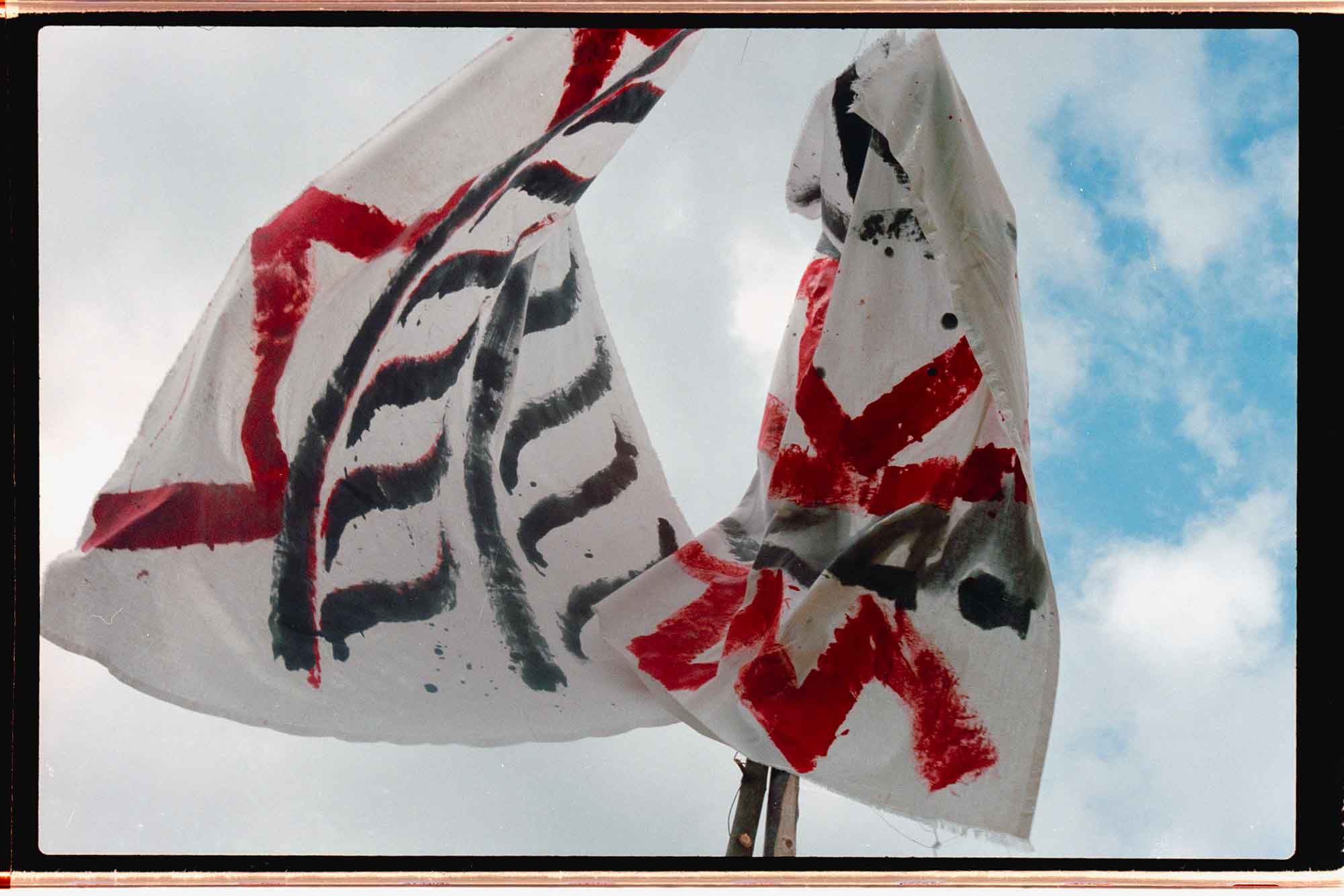
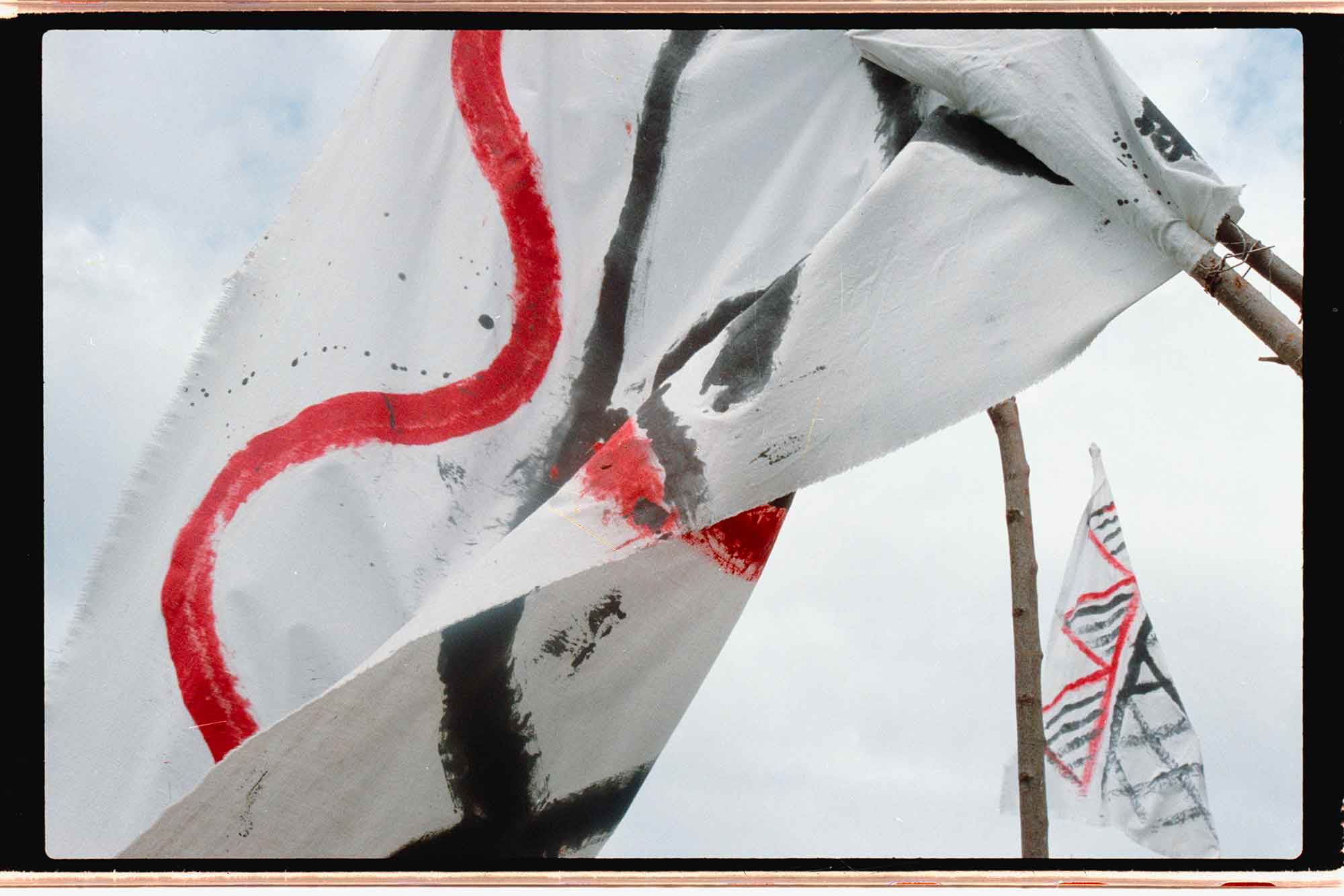
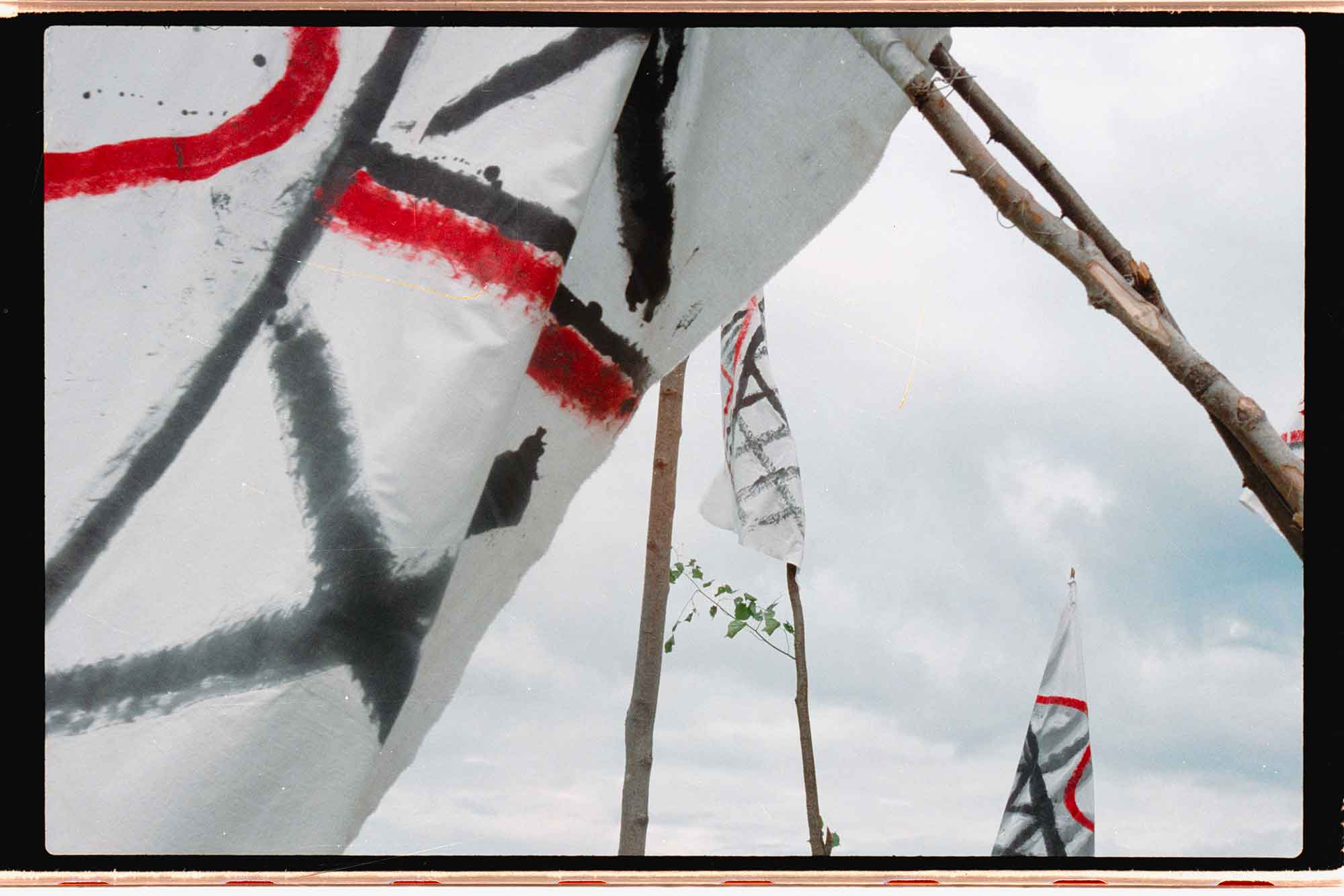
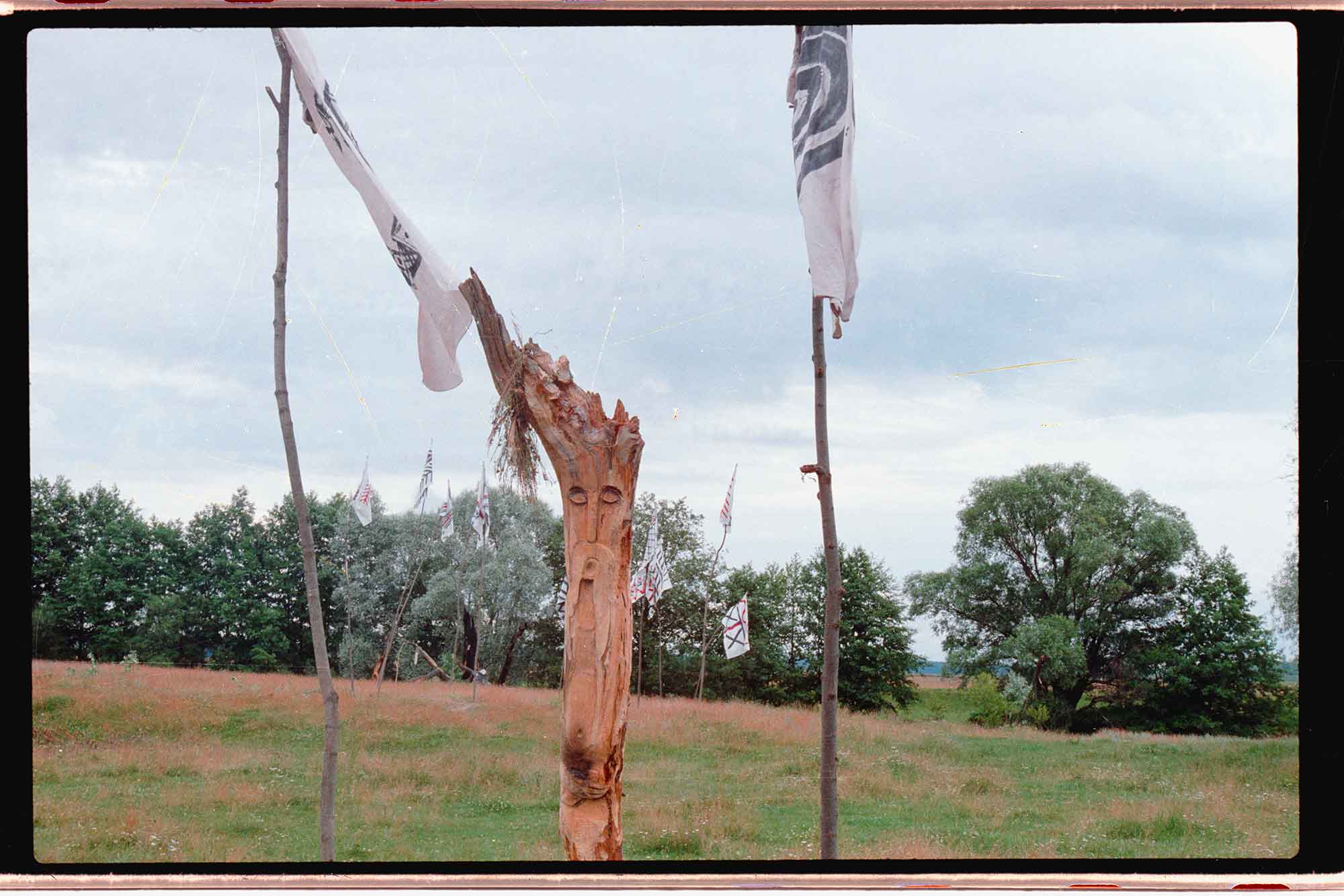
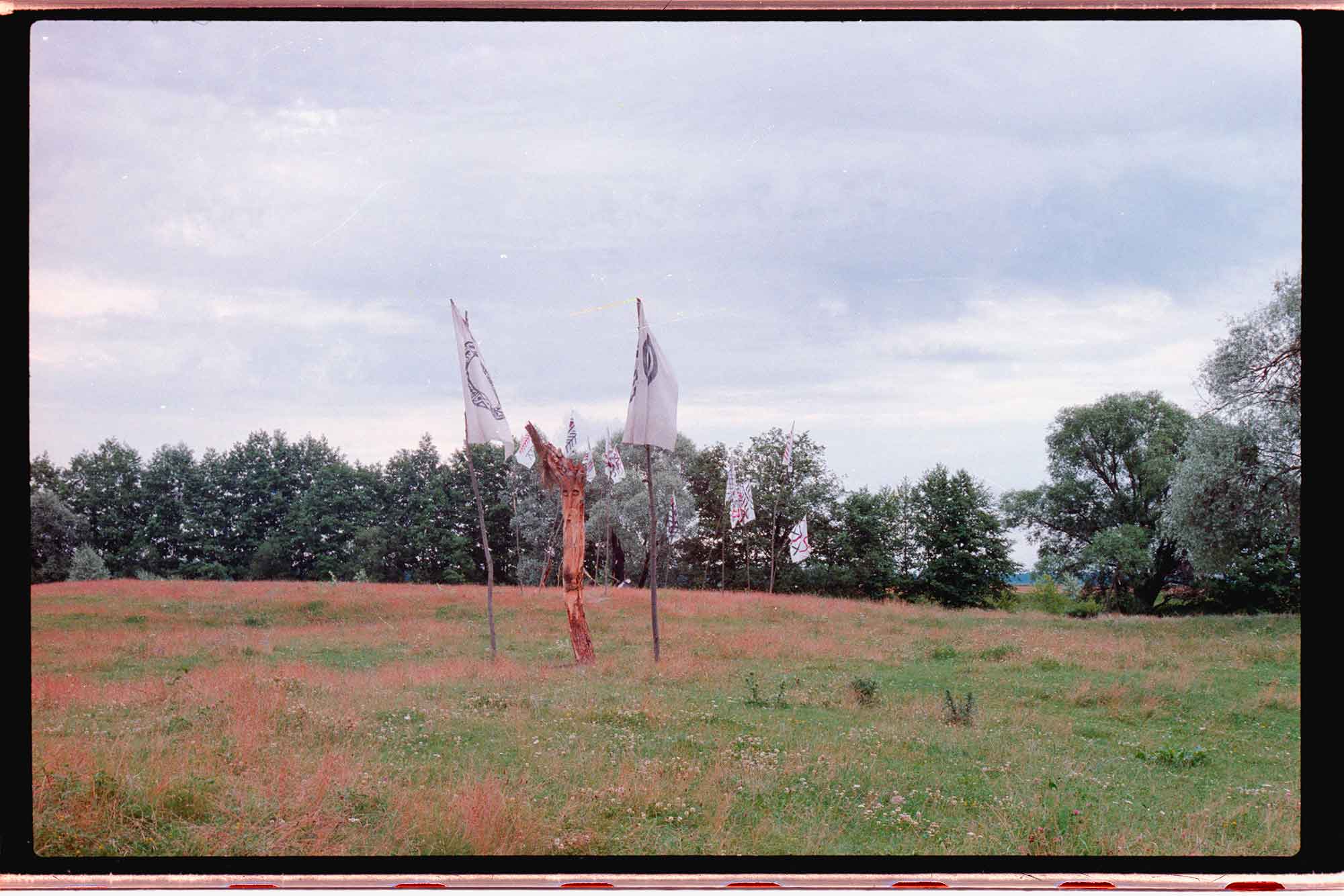
A separate strand of research was the study of symbols of ancient Rus’ culture, which inspired the creation of the symposium’s own symbols. In particular, the temporal spiral of the Siverian tribe (who historically inhabited the territories of present-day Sumy and Chernihiv regions) was used. This spiral was depicted in a calendar circle on the crown of a ritual vessel found in the Kyiv region. The motif was adapted for the symposium’s flags, which featured symbols of the months of the year.
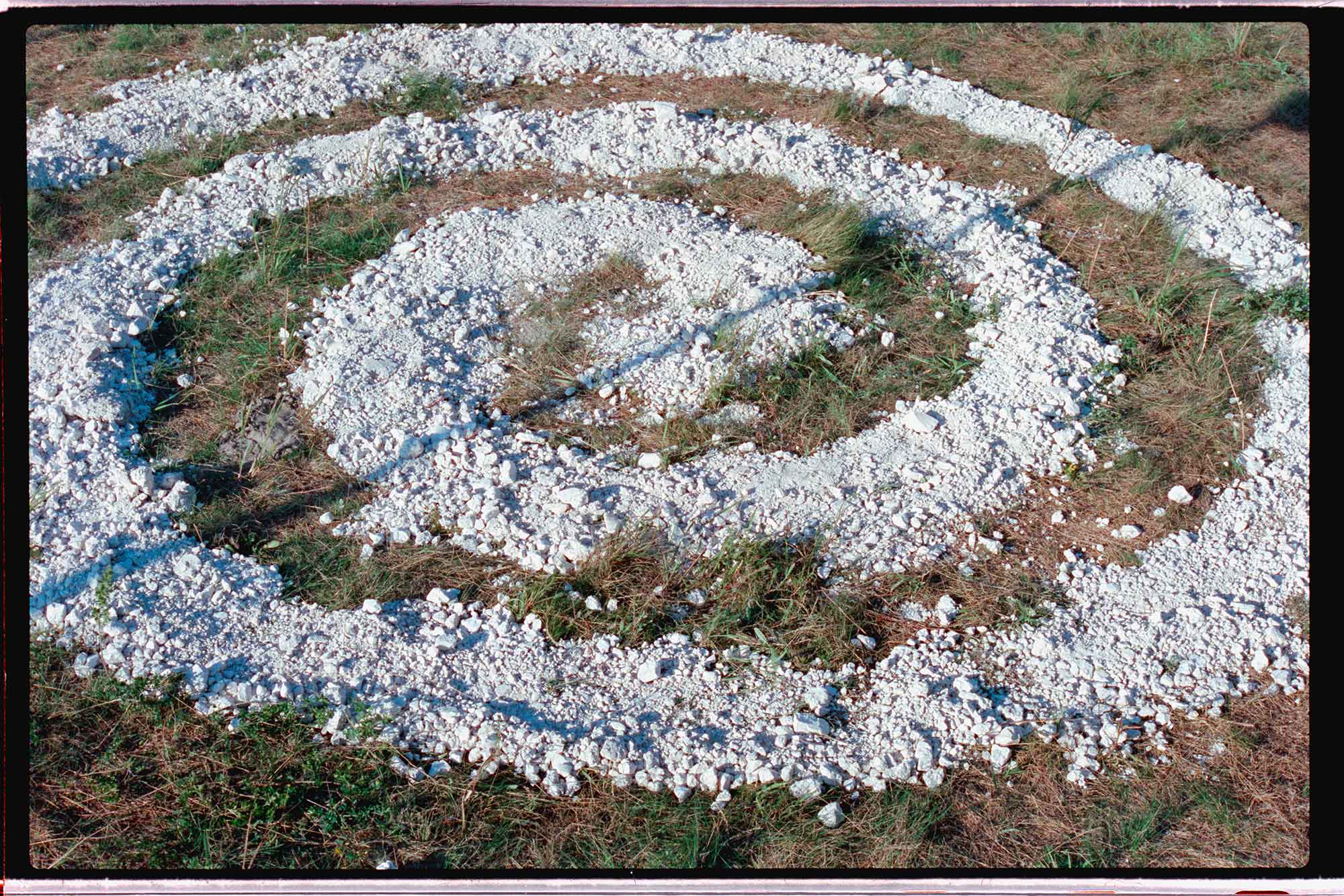
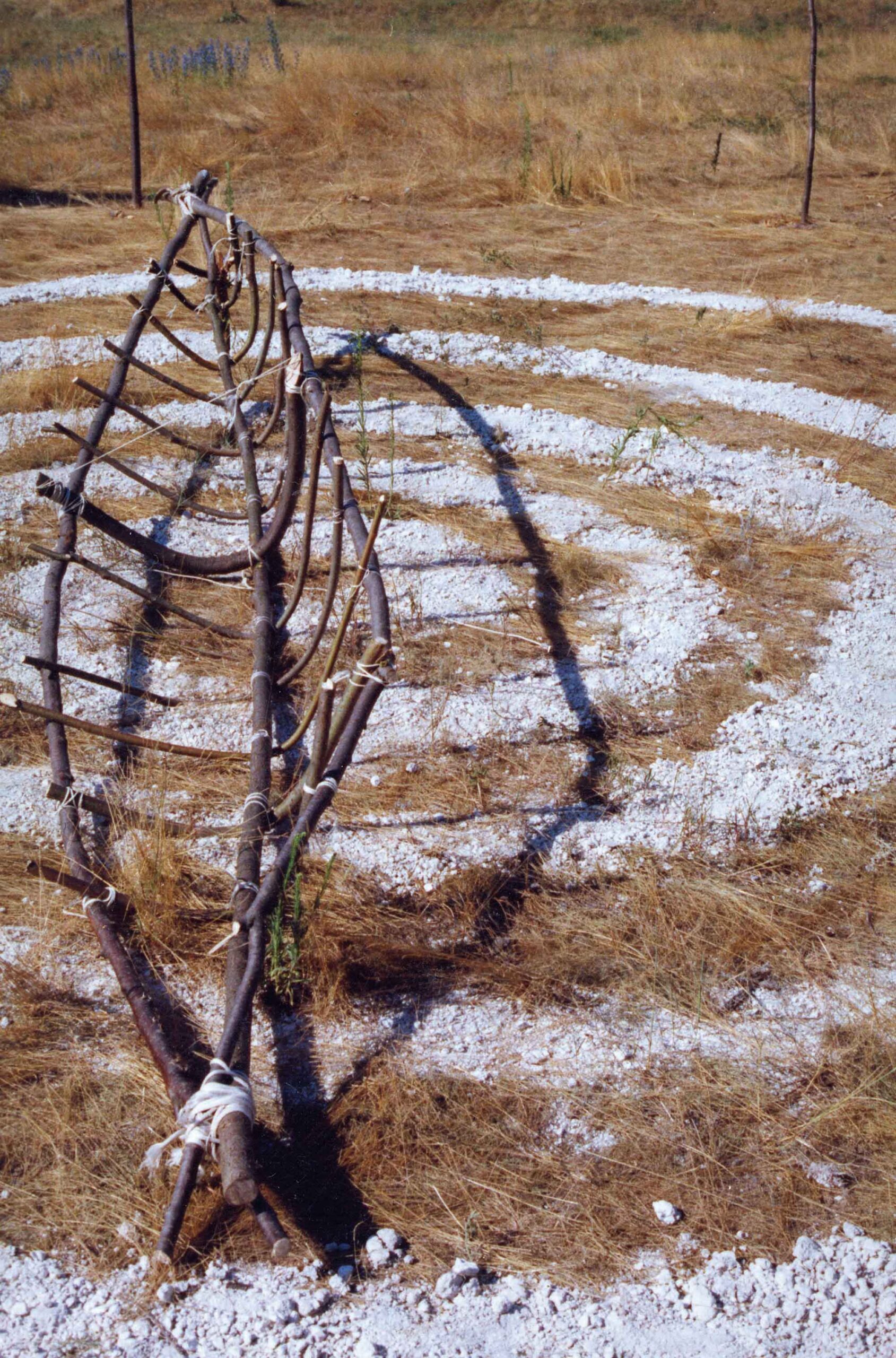
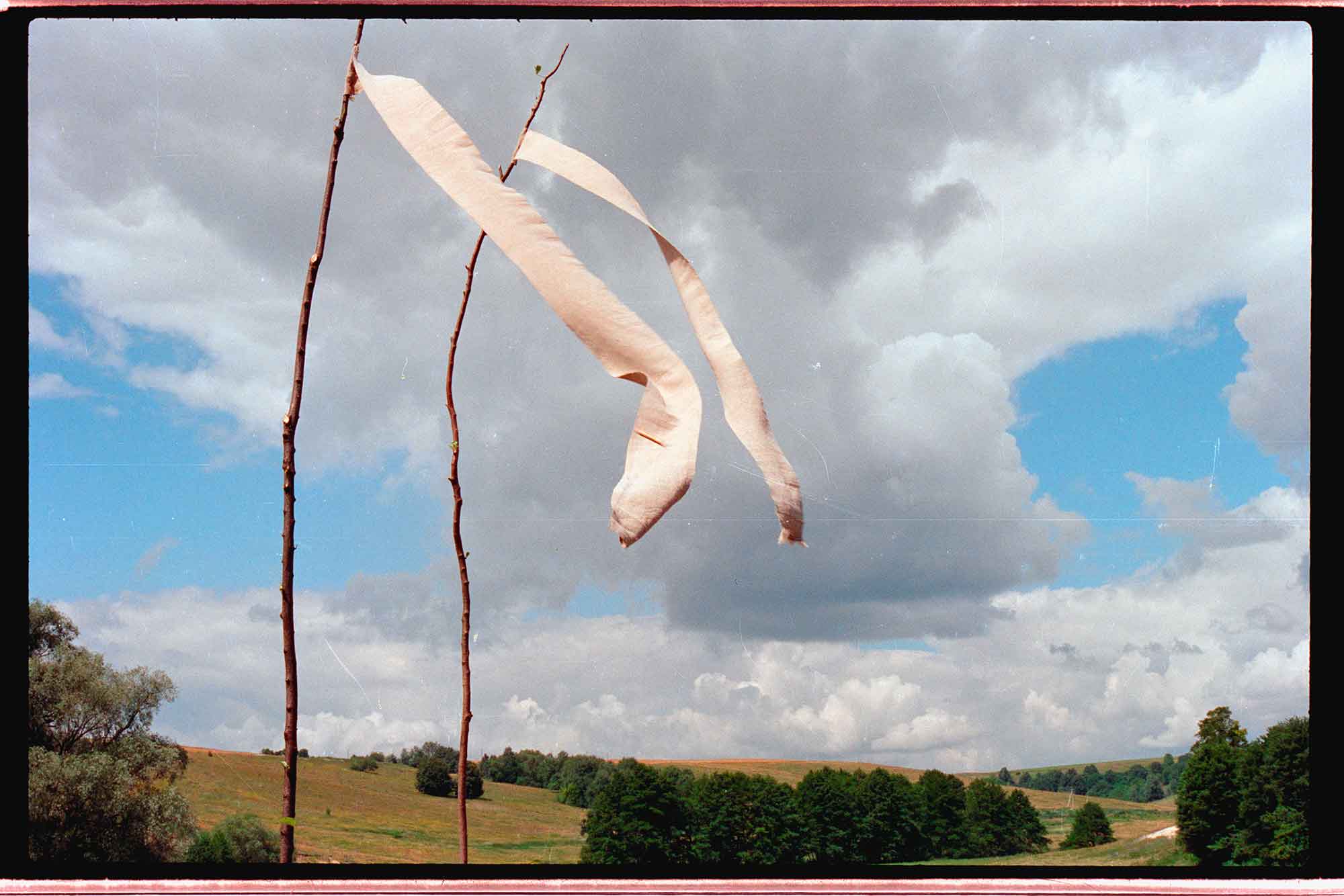
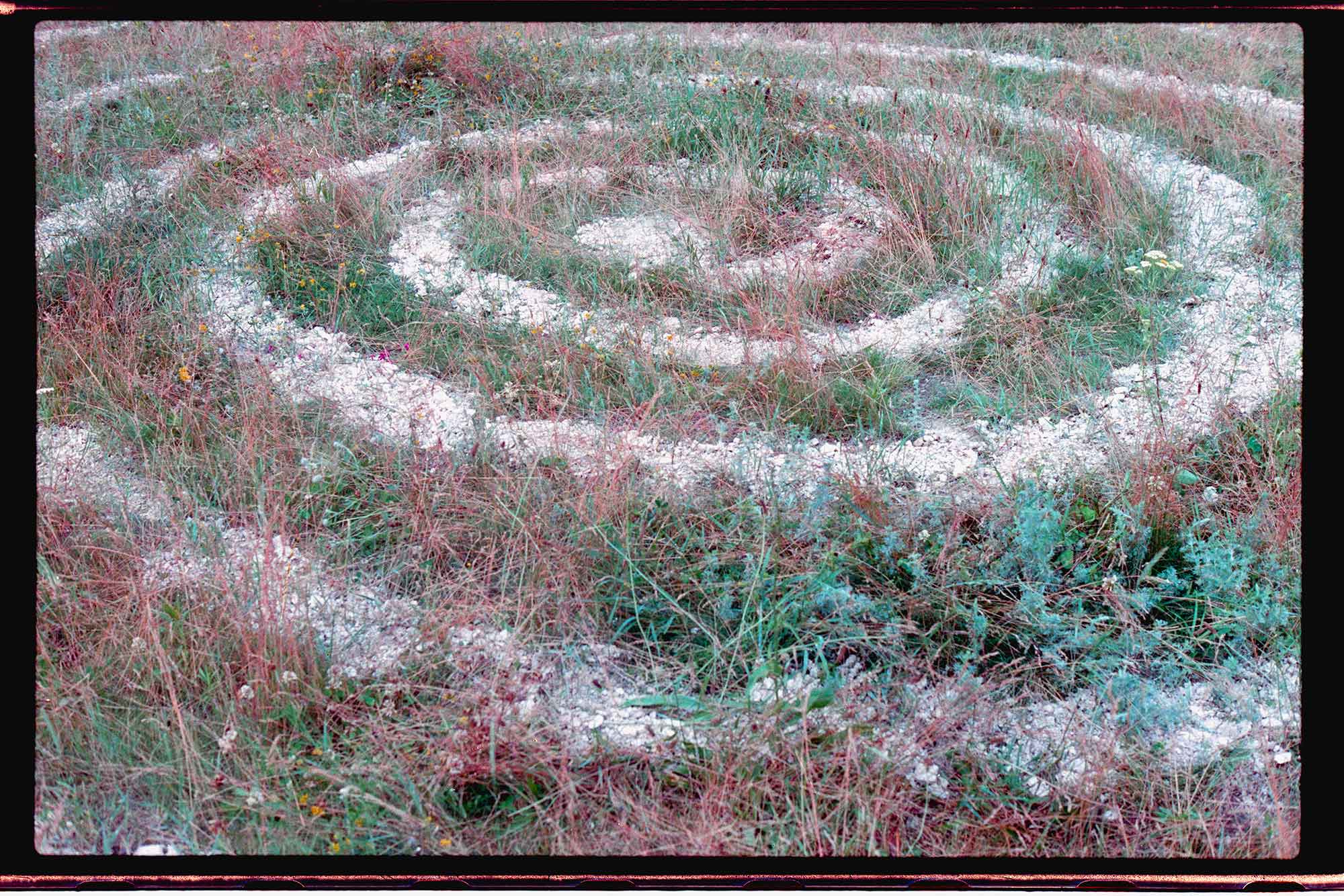
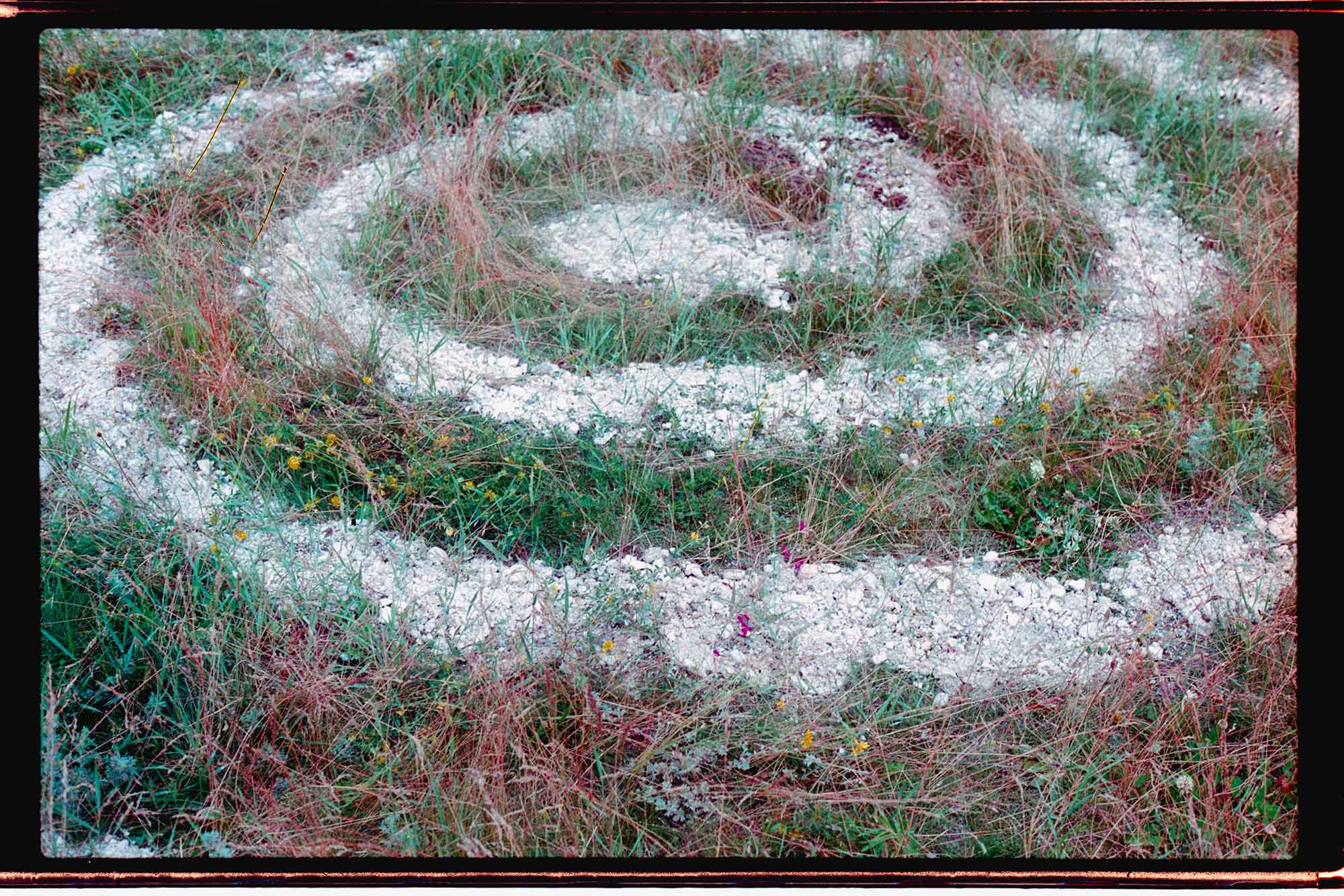
From this time, a tradition emerged in the first years of the symposium: the creation of a large chalk spiral, accompanied by the installation of flags for the duration of the event. This gesture carried both artistic and ritual significance—it marked the beginning of co-creation within the landscape and signified the temporary presence of the participants on site.
Such an interdisciplinary approach—combining artistic practice with archaeological exploration, geological study of the relief, ethnographic collection of legends and myths, and engagement with symbols of ancient culture—gave the symposium a unique conceptual dimension. This specific combination of fields enabled participants not only to interact with the landscape as an artistic material, but also to perceive it as a multi-layered structure of time and memory.
The symposium gradually took shape as a space of synthesis—of knowledge, experience, and a sense of place. The landscape was no longer perceived as a backdrop or an object; it emerged as a fully-fledged participant, a living bearer of historical memory.