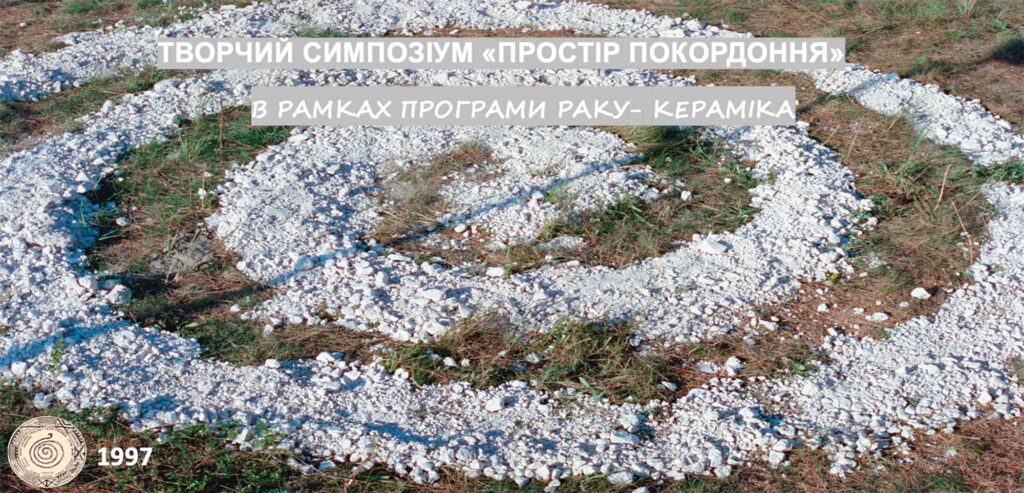
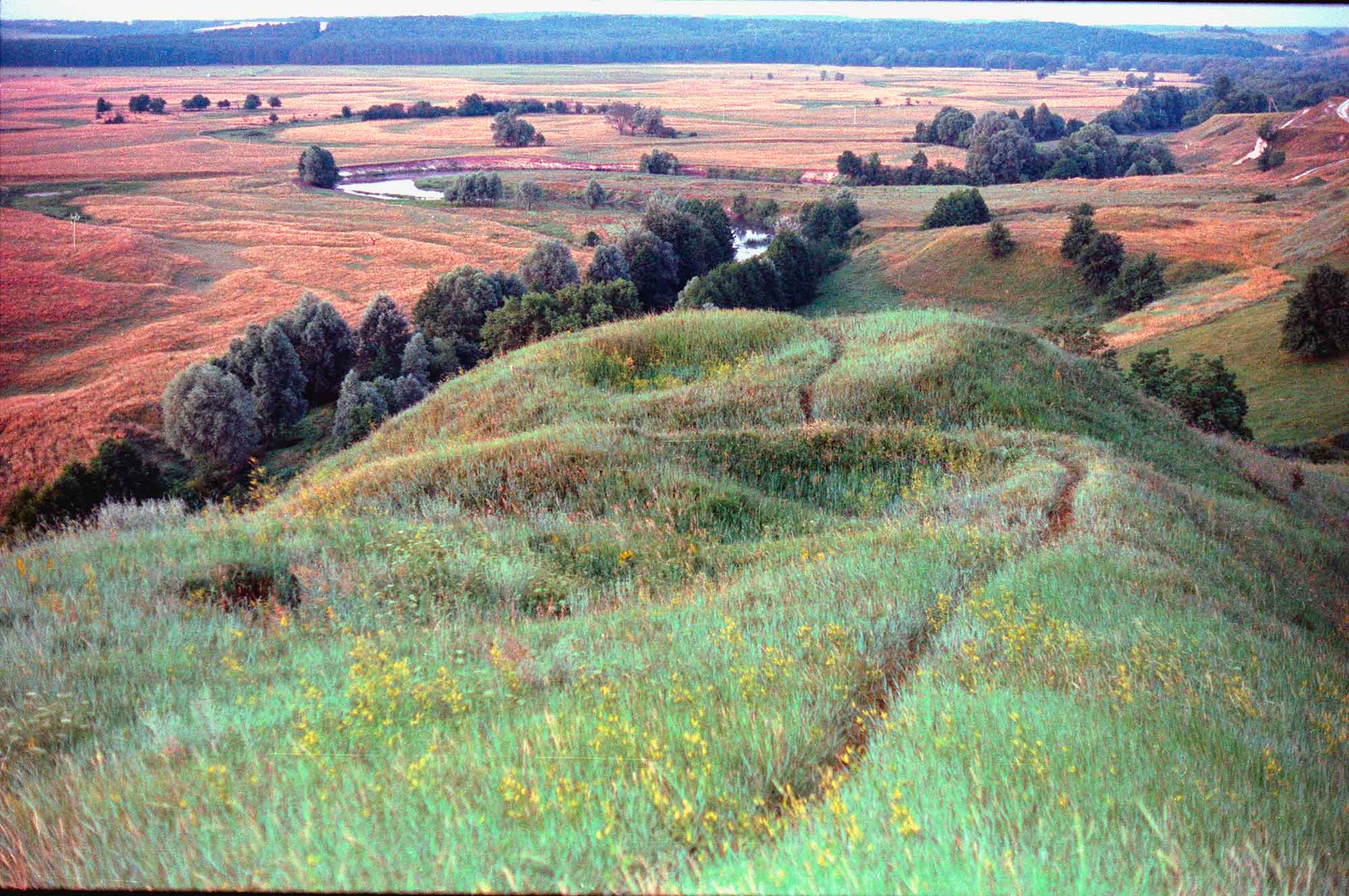
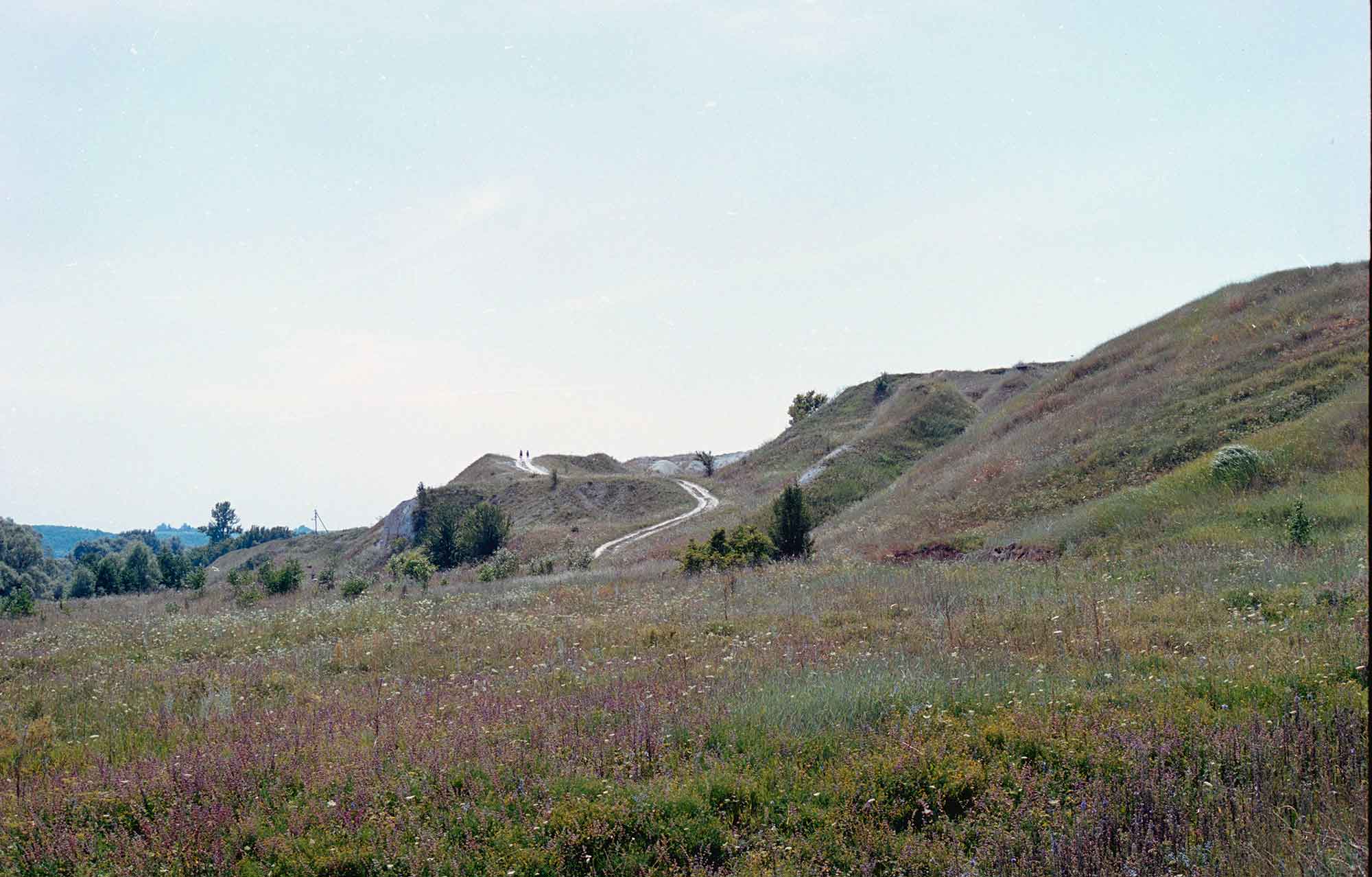
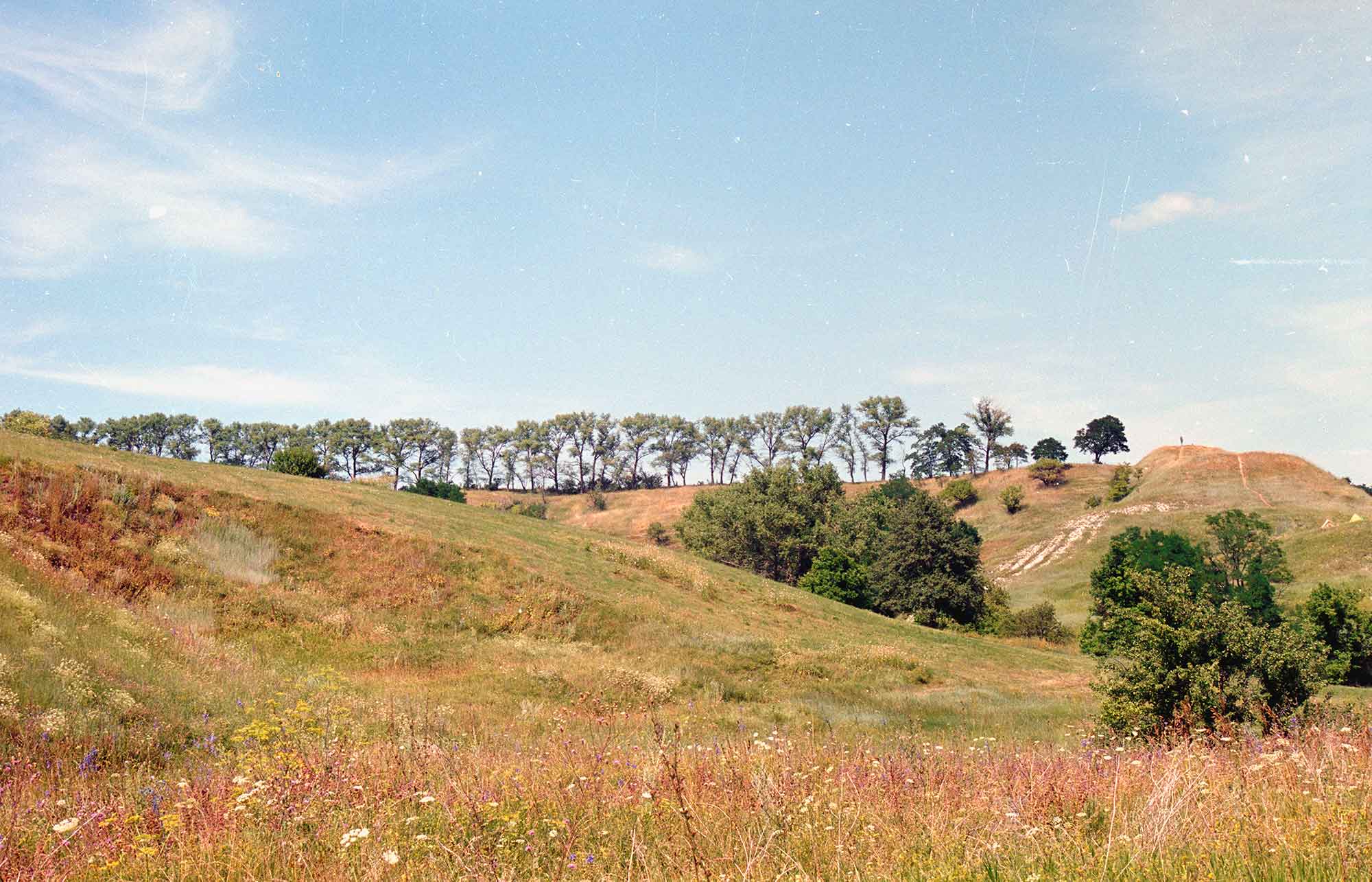
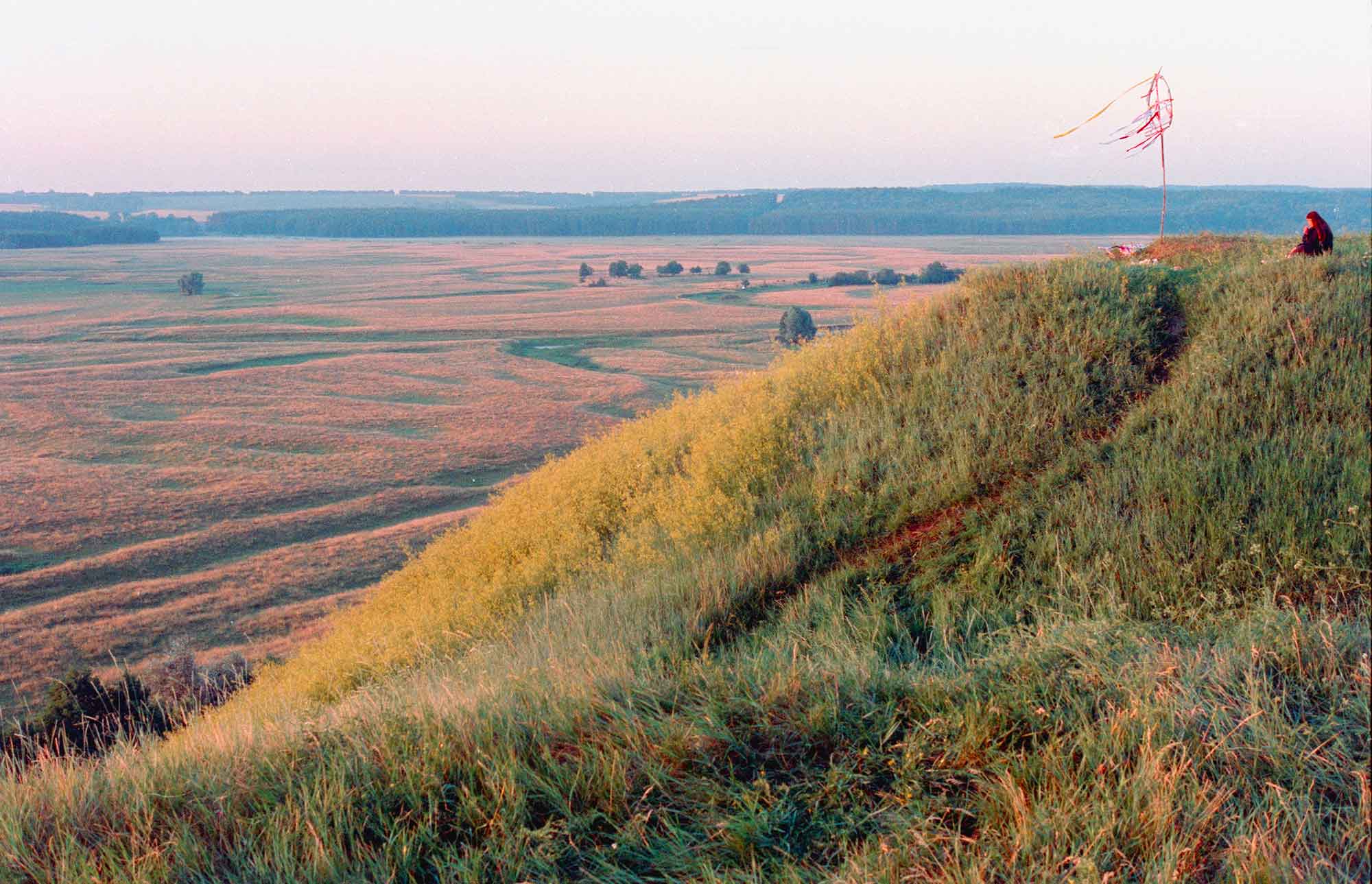
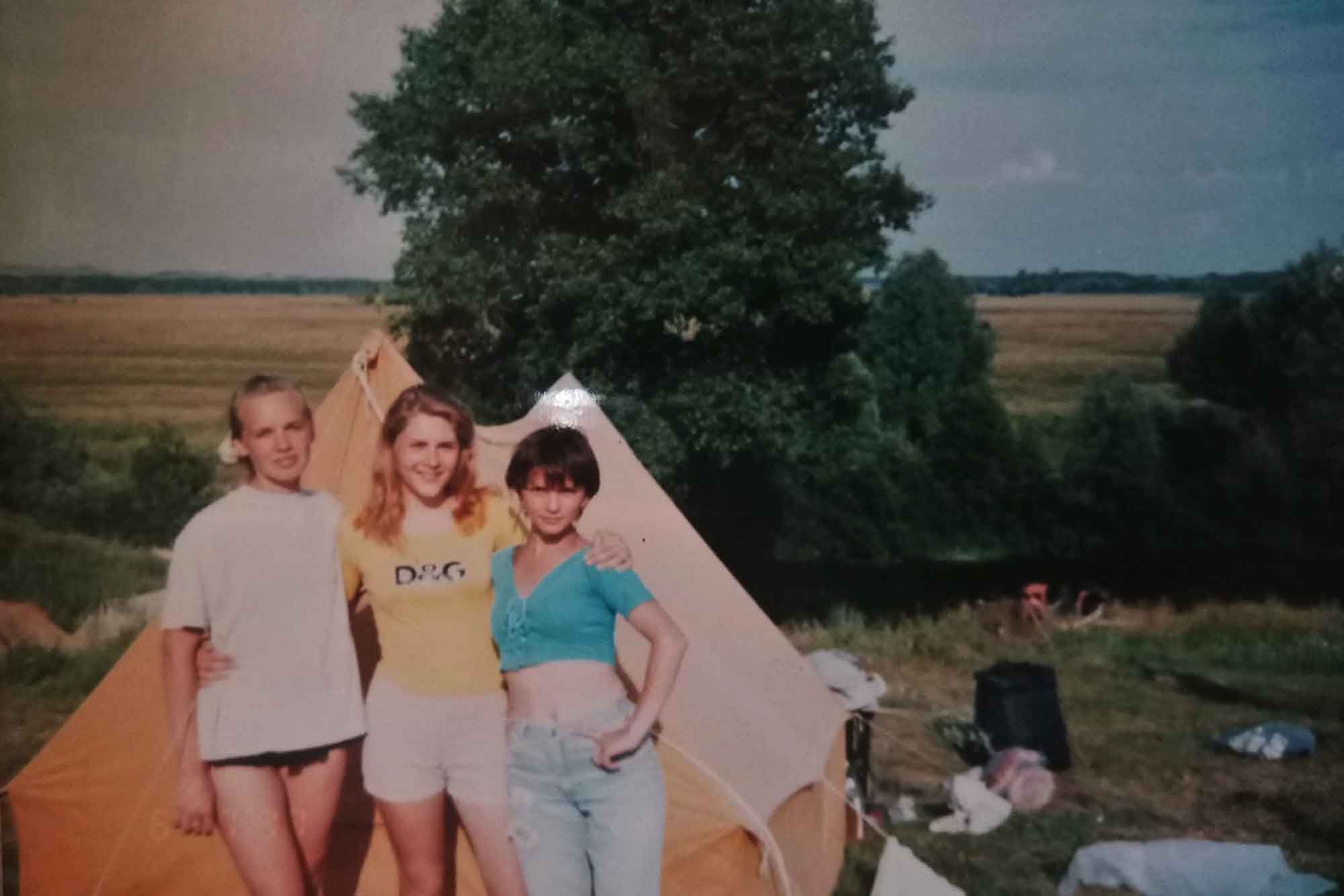
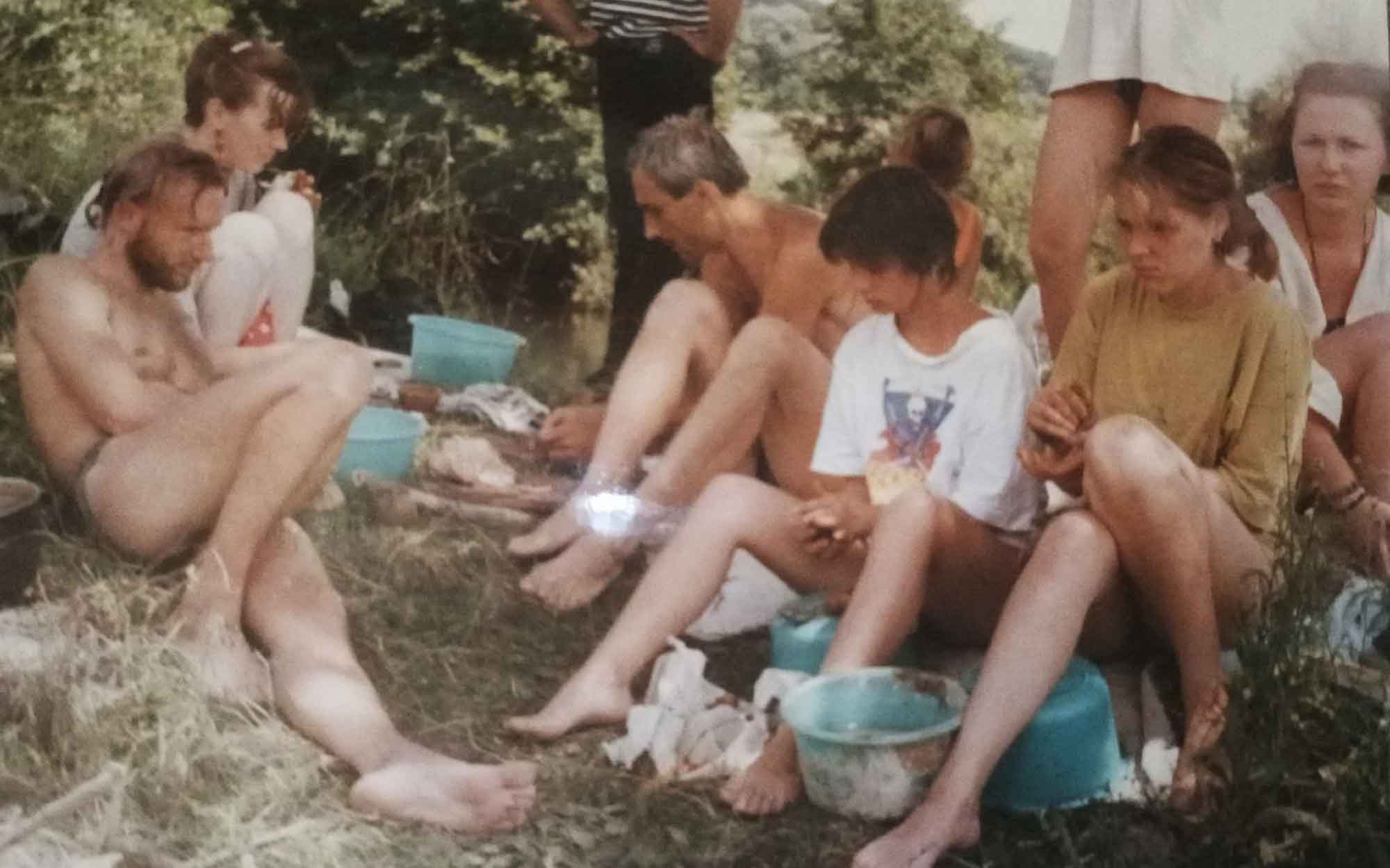
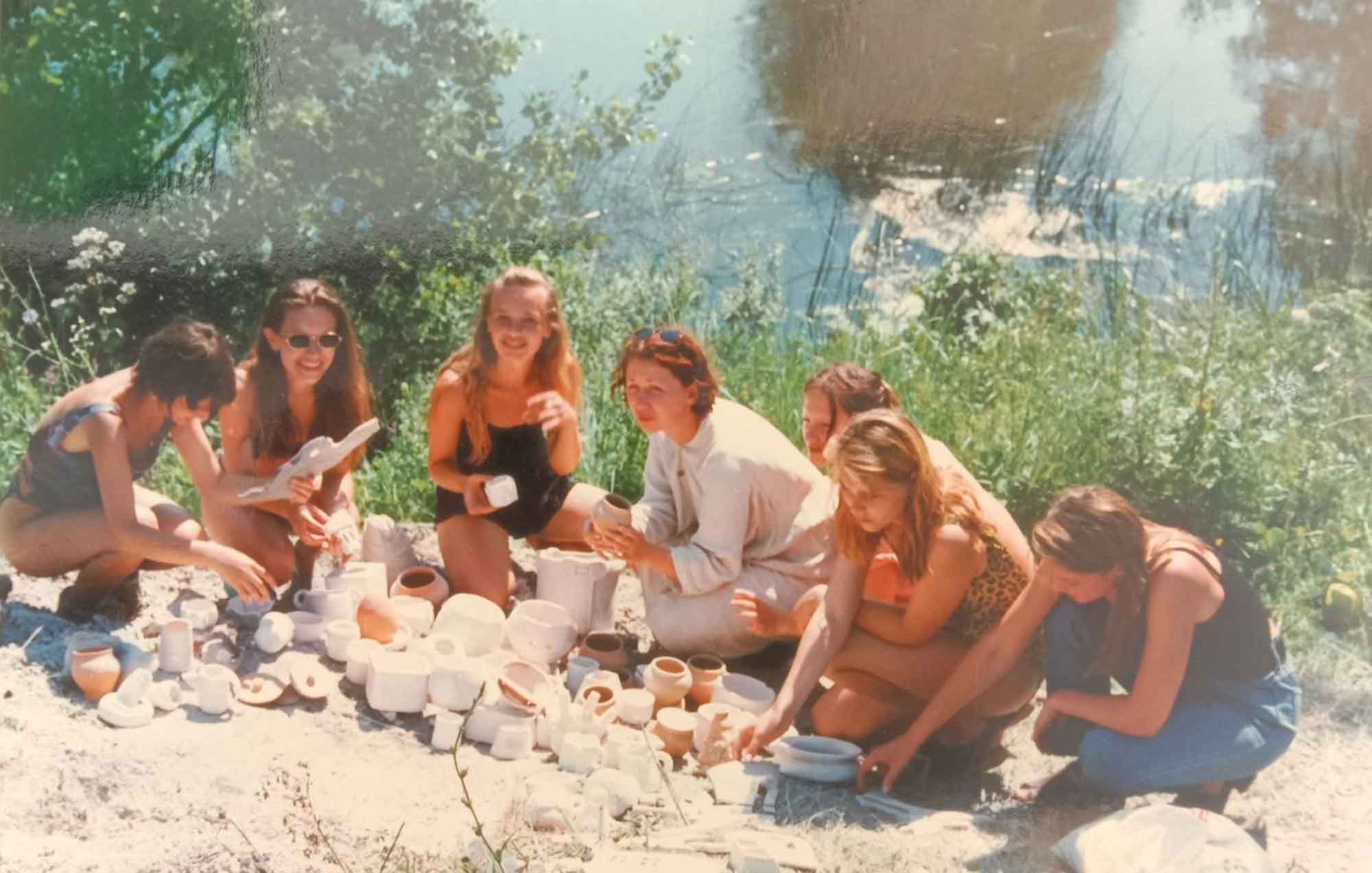
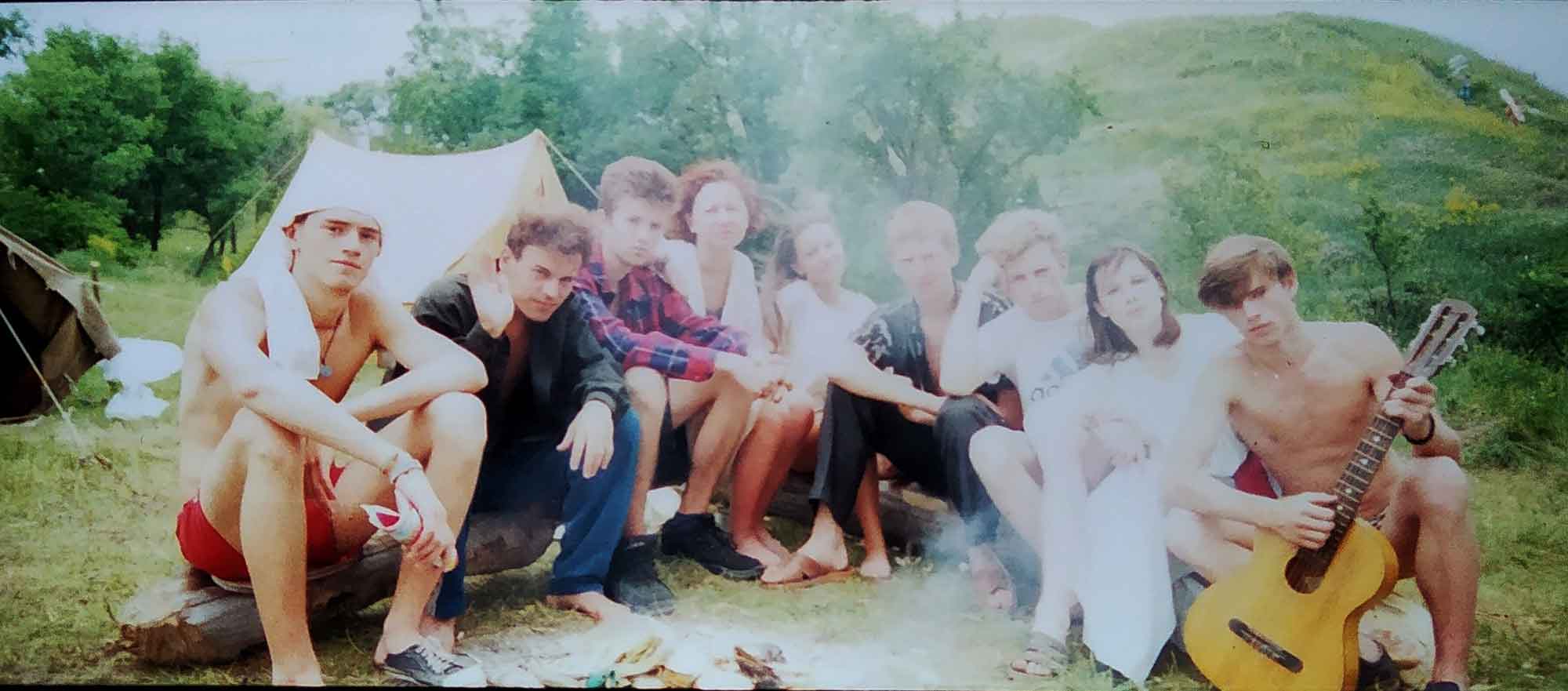
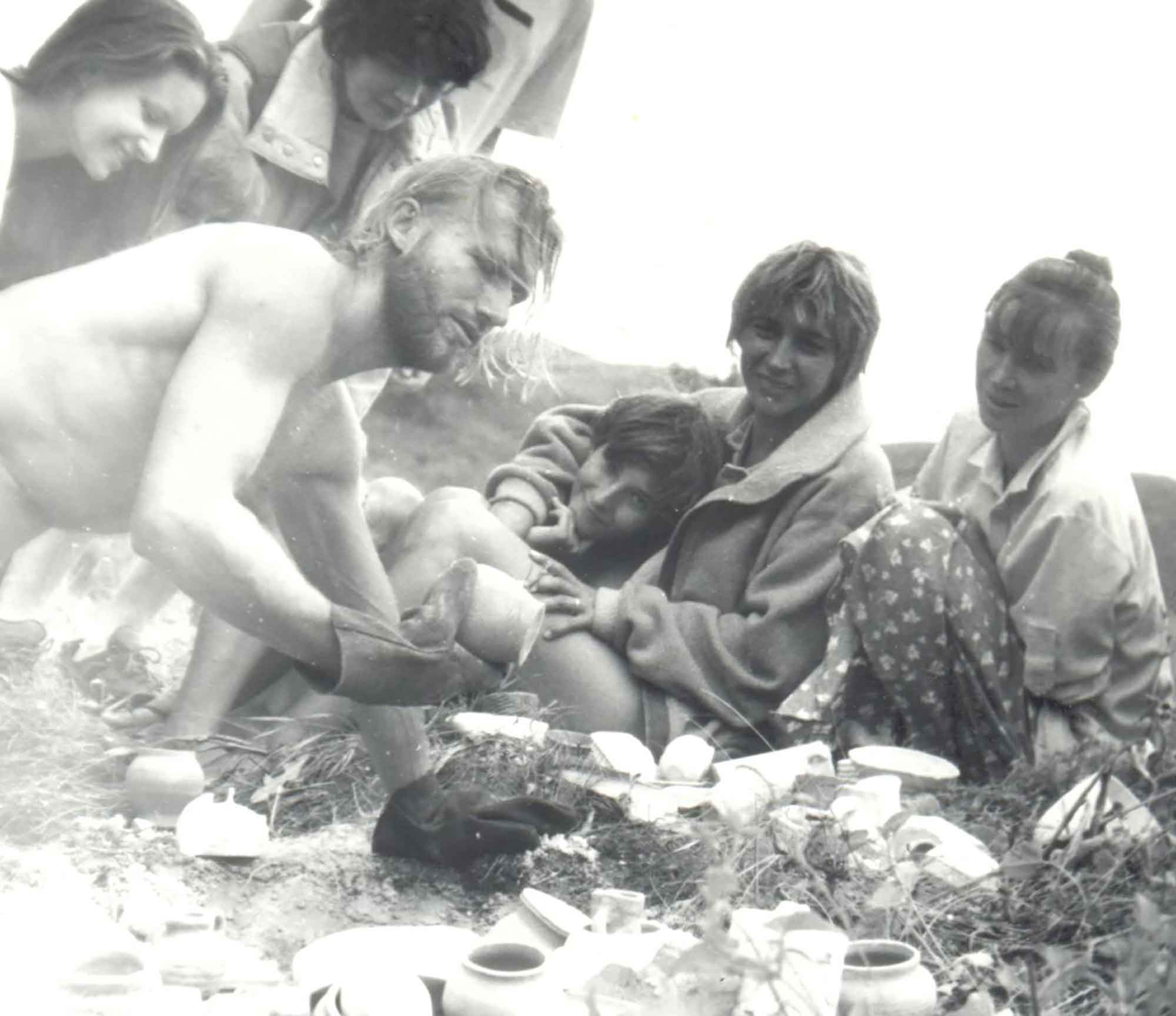
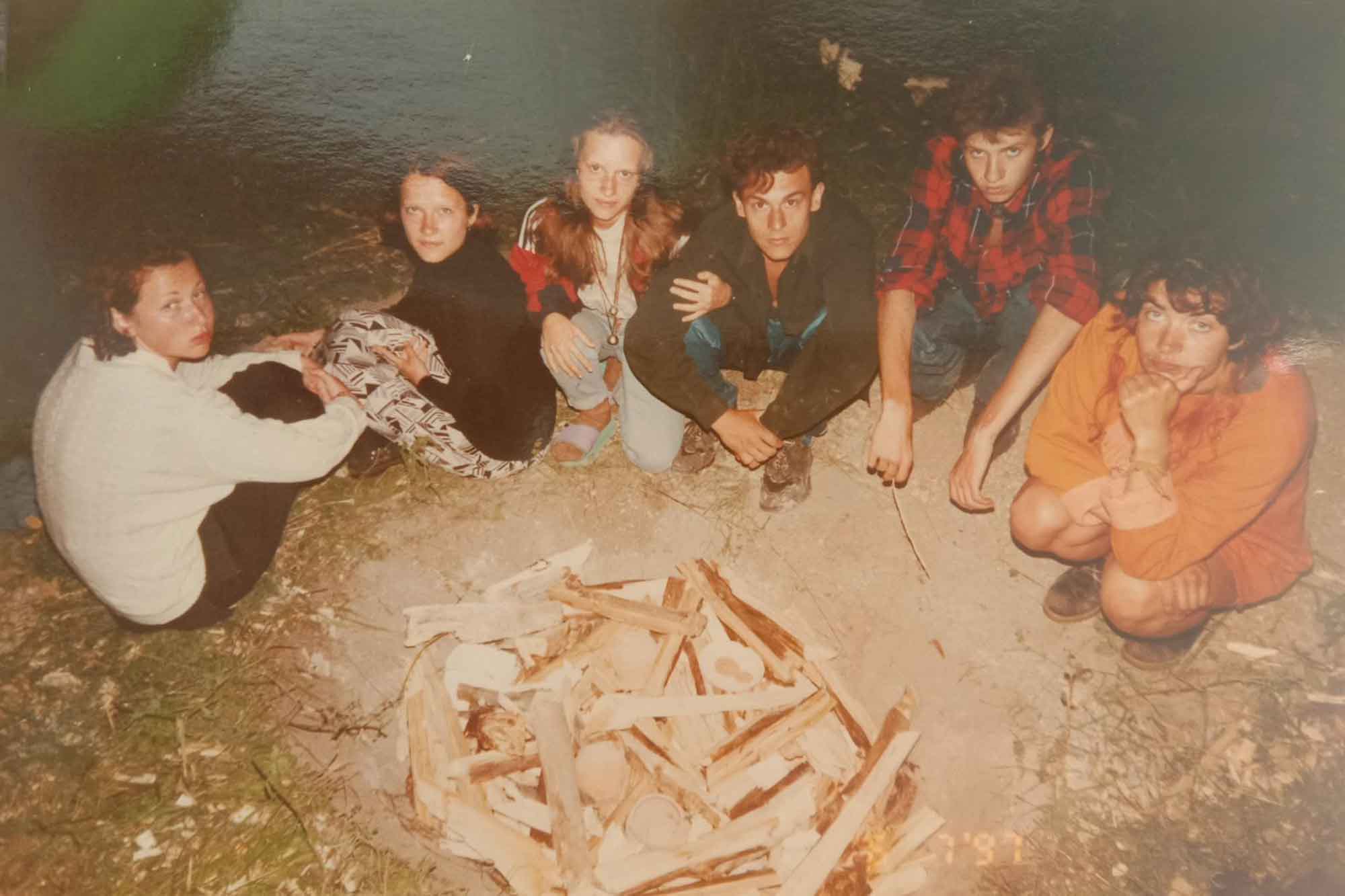
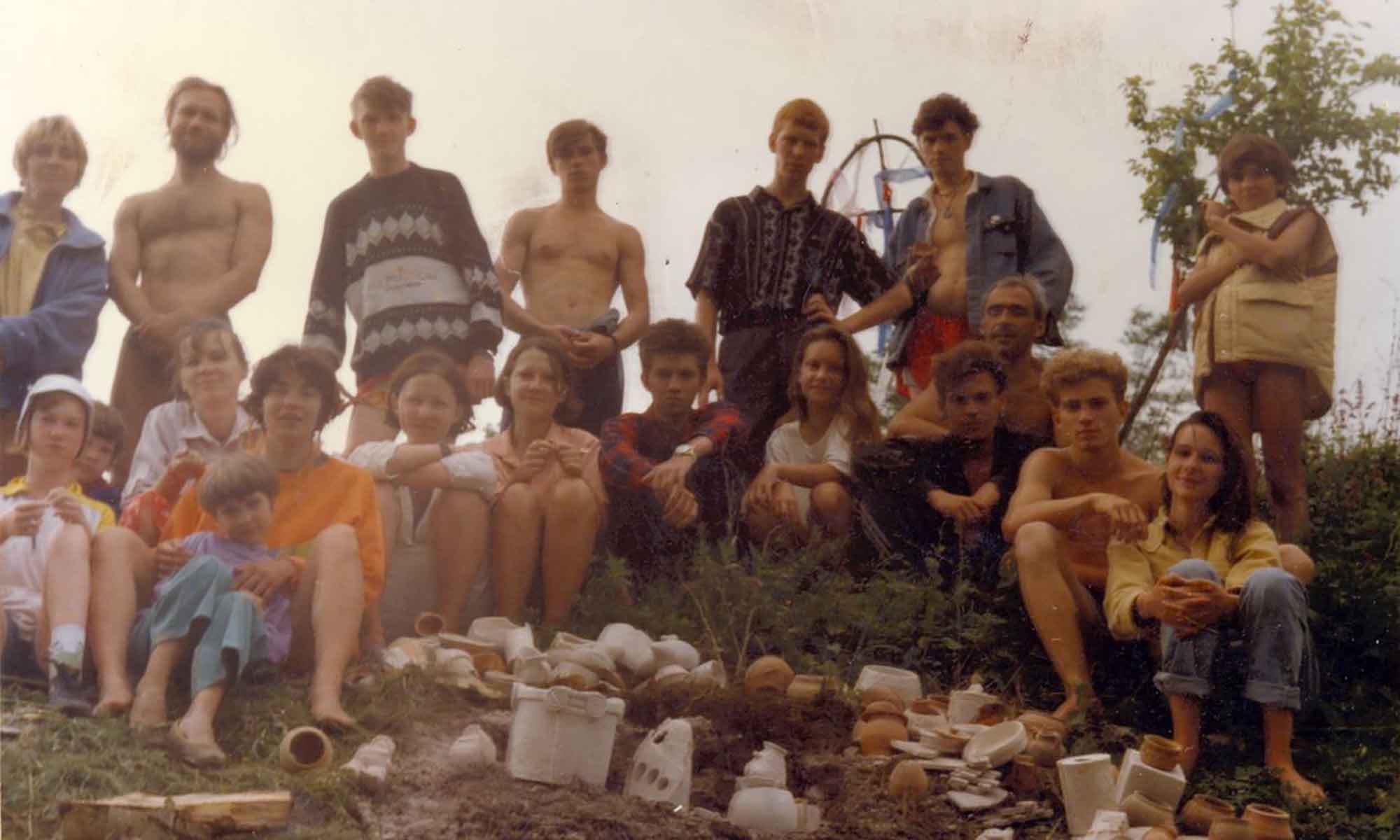
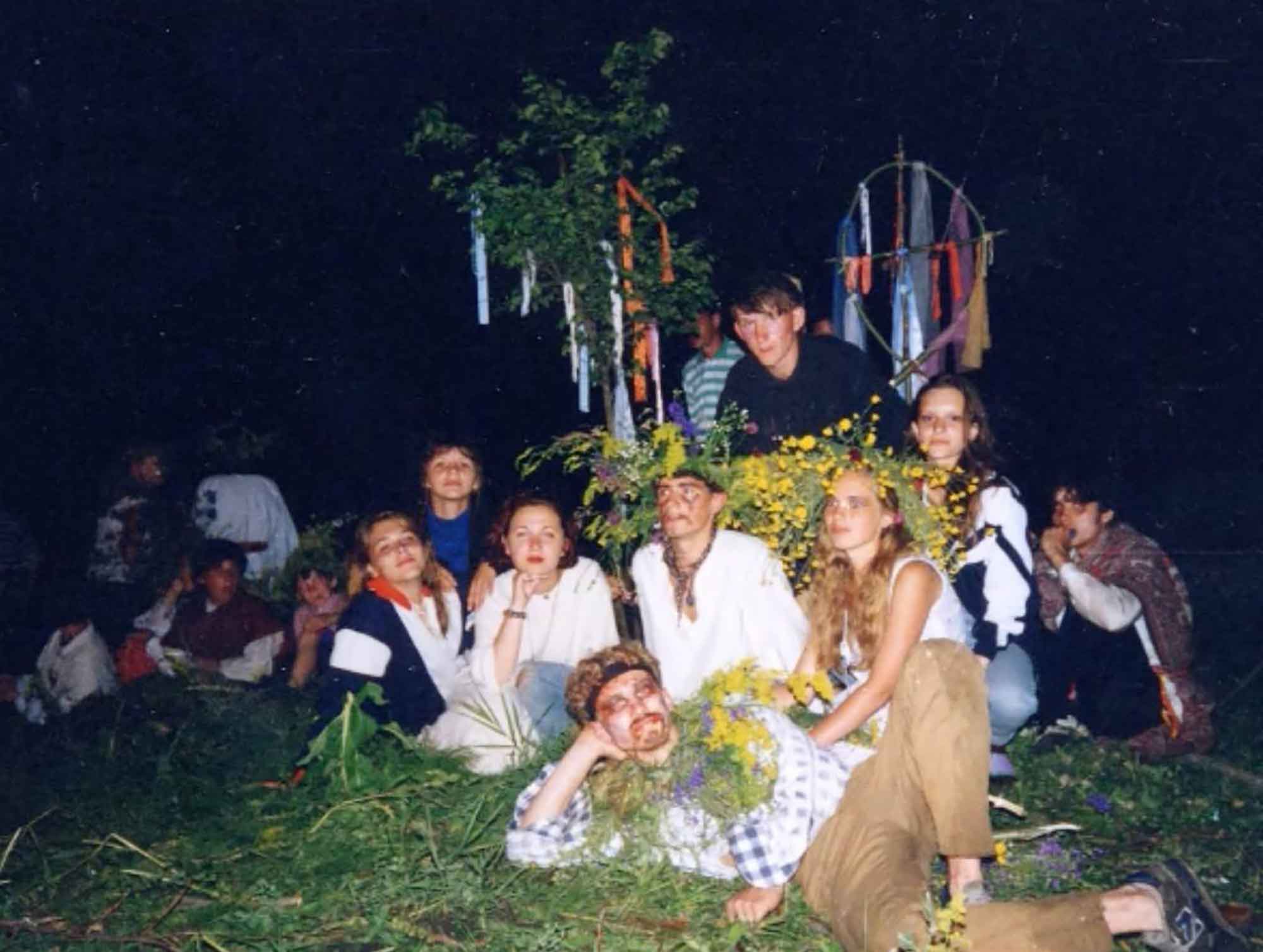
Formally, it was a summer open-air practice for students of the Sumy College of Culture. In reality, the event brought together a much wider circle of participants: artists, archaeologists, local historians, art theorists, and environmental researchers. The venue was chosen both intuitively and deliberately: the landscape near Mohrytsia—with the remnants of a Siverian settlement, chalk quarry, meadows, hills, and the River Psel—from the outset created a richly layered context for creative work.
From this point onwards, Mohrytsia began to take shape as an interdisciplinary space where artistic, local history, and environmental practices intersected.
Despite experiments with new artistic forms, the 1990s in the history of Mohrytsia were primarily a period of mimetic art. This was a stage of gradual engagement with space—both physical and imagined. Students and teachers worked as observers and researchers, immersing themselves in the environment and developing a more sensitive, conscious relationship with it.
At that stage, artistic work was mainly concentrated within the pictorial paradigm: plein-air studies, pictorial and graphic sketches, and landscape practices. Over time, however, this focus on representation began to shift. Rather than observing from the outside, there was increasing involvement in the landscape as a space for action. The image gradually lost its detached status and was “transferred” from the plane of paper directly to grass, earth, chalk, and water.
From today’s perspective, this transformation seems almost inevitable. It did not resemble borrowing or imitation, but rather a deep awareness of place. Mohrytsia land art is intuitive, yet firmly grounded. The participants of the symposium were, of course, aware of the international artistic context. They knew of the work of Richard Long, Robert Smithson, and other land art practitioners. However, for Mohrytsia, the continuous presence of participants in the location itself became a defining factor. In this consistent movement—from image to interaction, from object to process—lay the essence of the symposium.
From the outset, the Mohrytsia symposium, although arising as a self-organised initiative, also received some institutional support. At the end of the first plein-air session in 1997, representatives of the Sumy Art Museum, as well as the head of the village council, visited the site. Their interest in the process formed the basis for consolidating the results in the form of a small exhibition of decorative and applied arts in the regional museum, and for the further development of the symposium as a regular artistic practice.