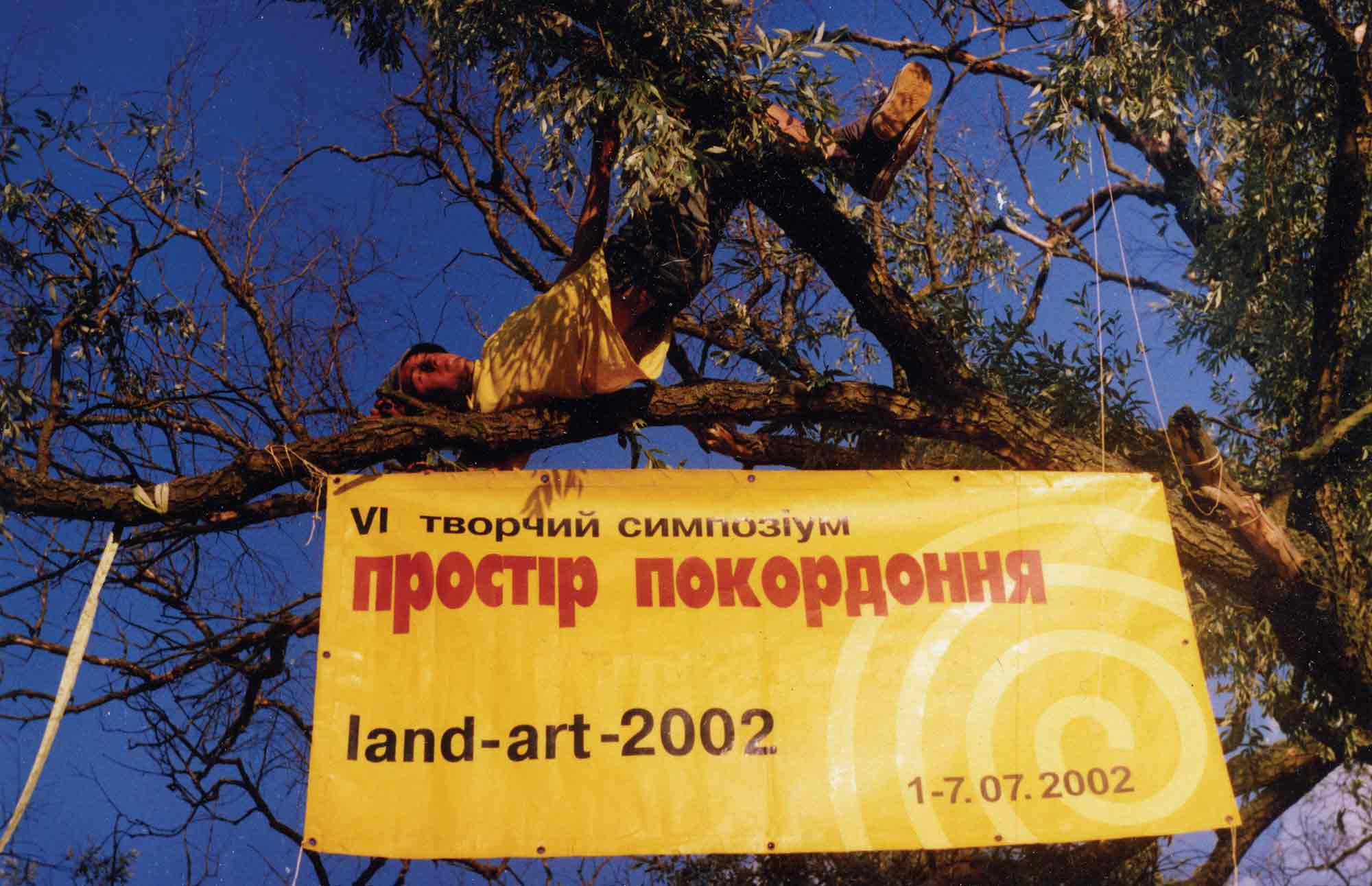
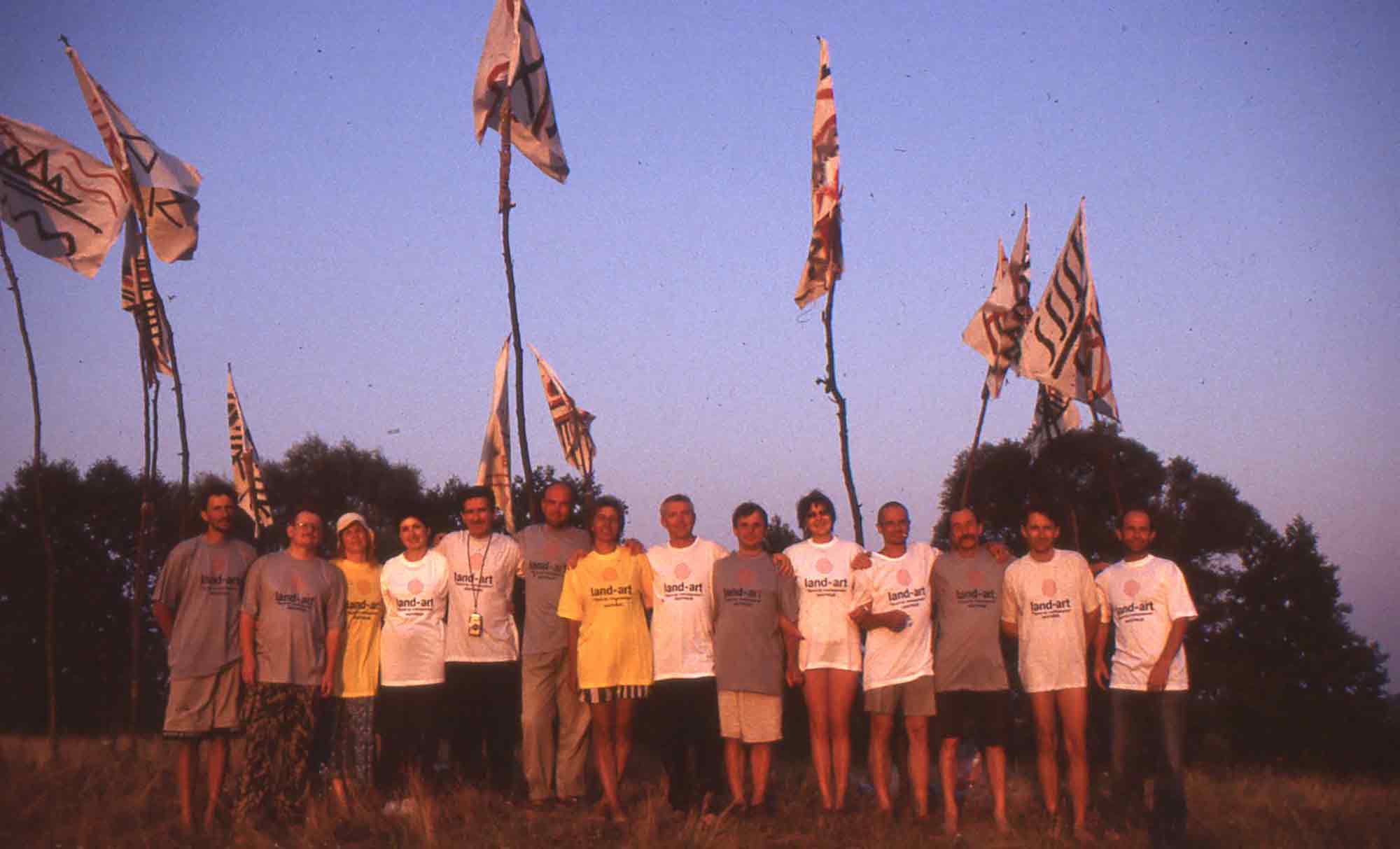
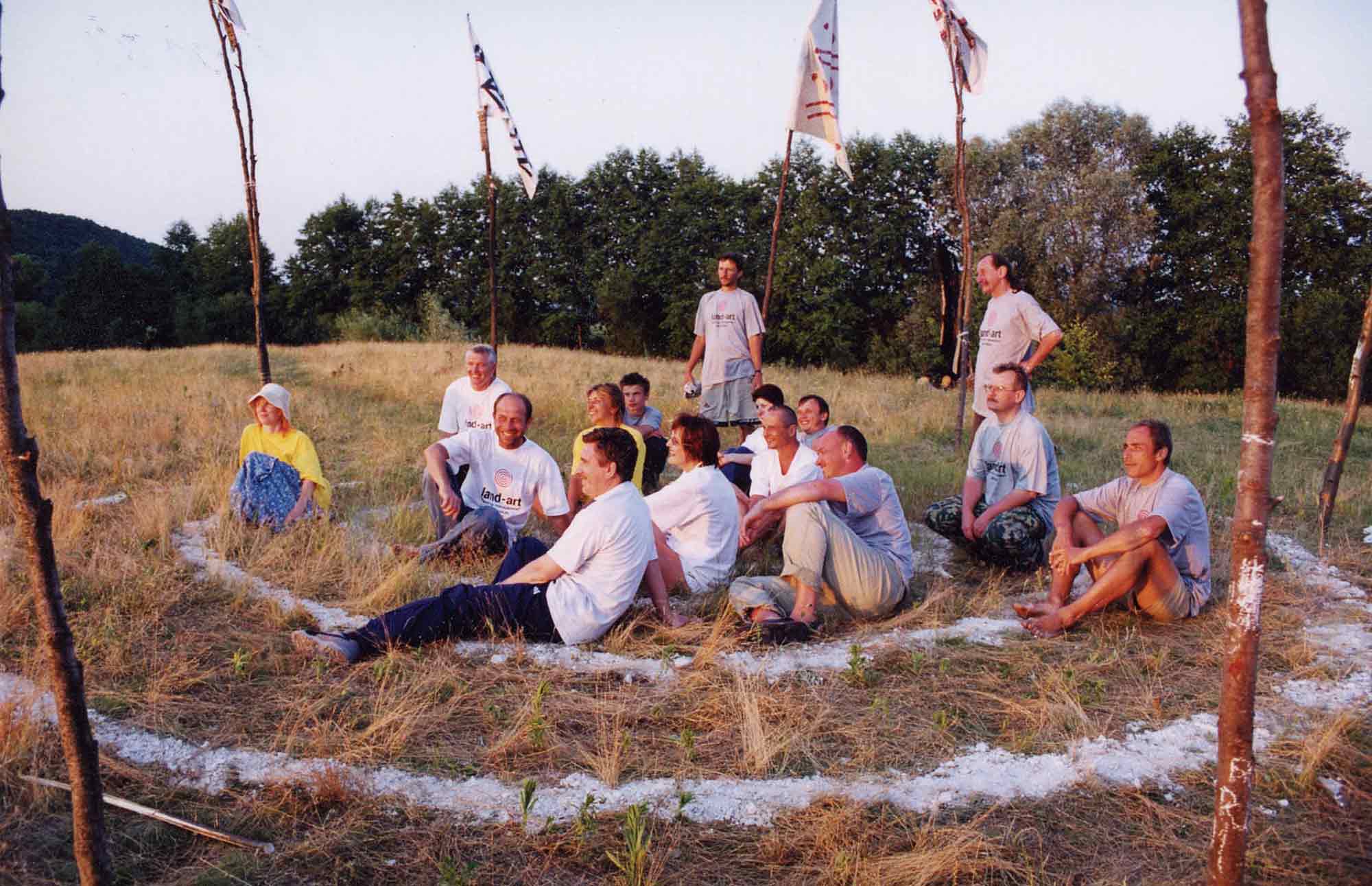
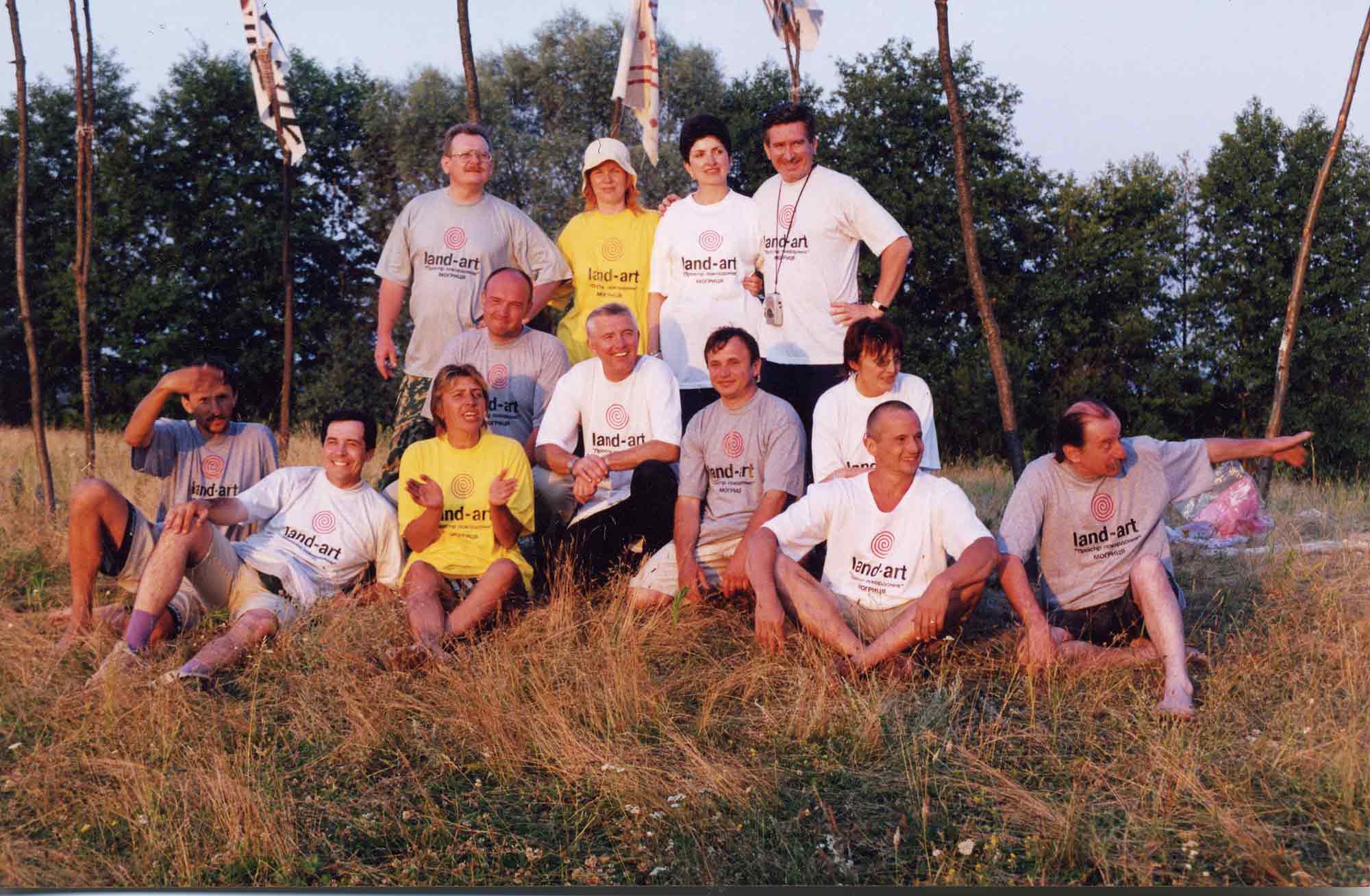
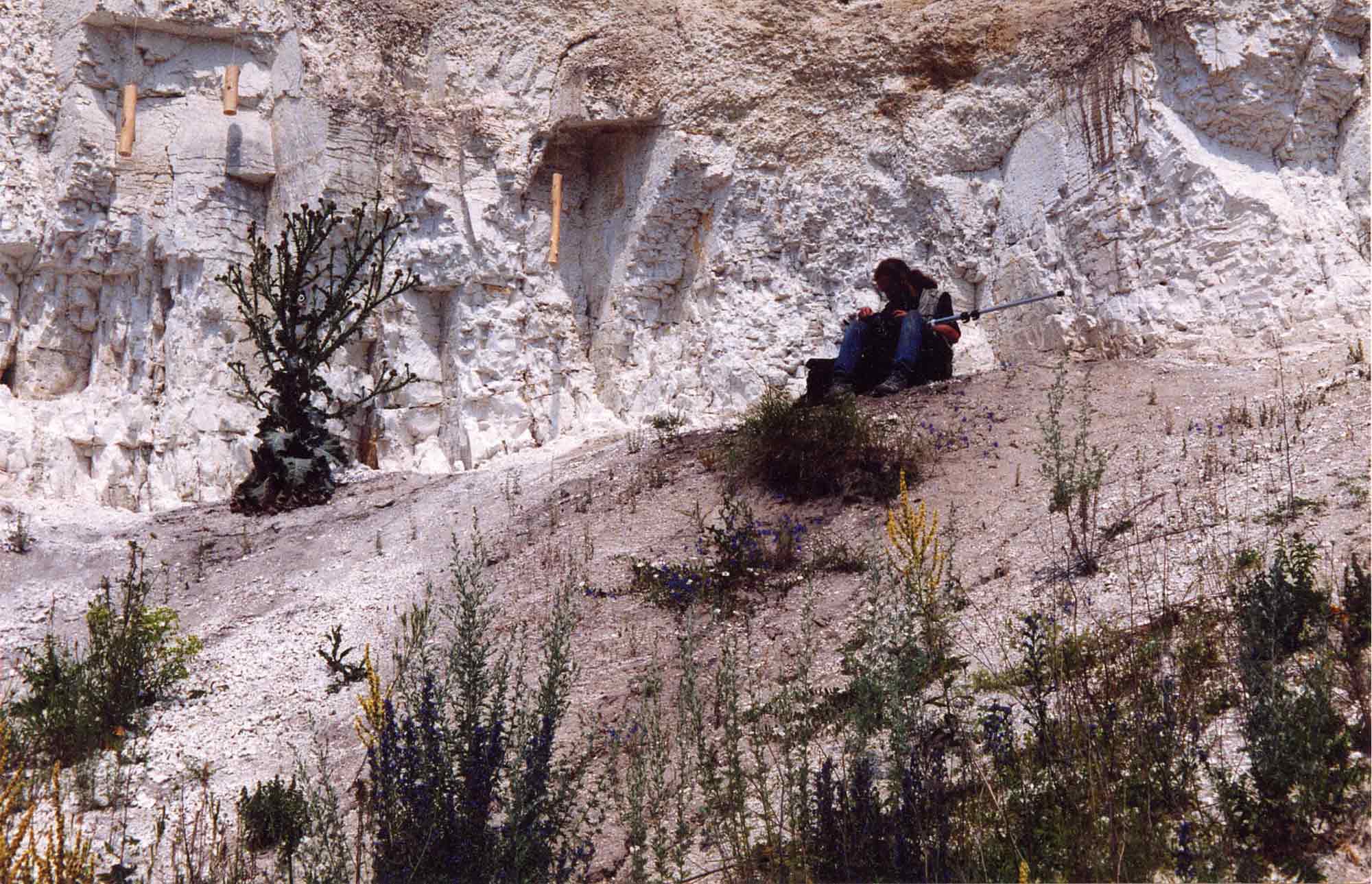
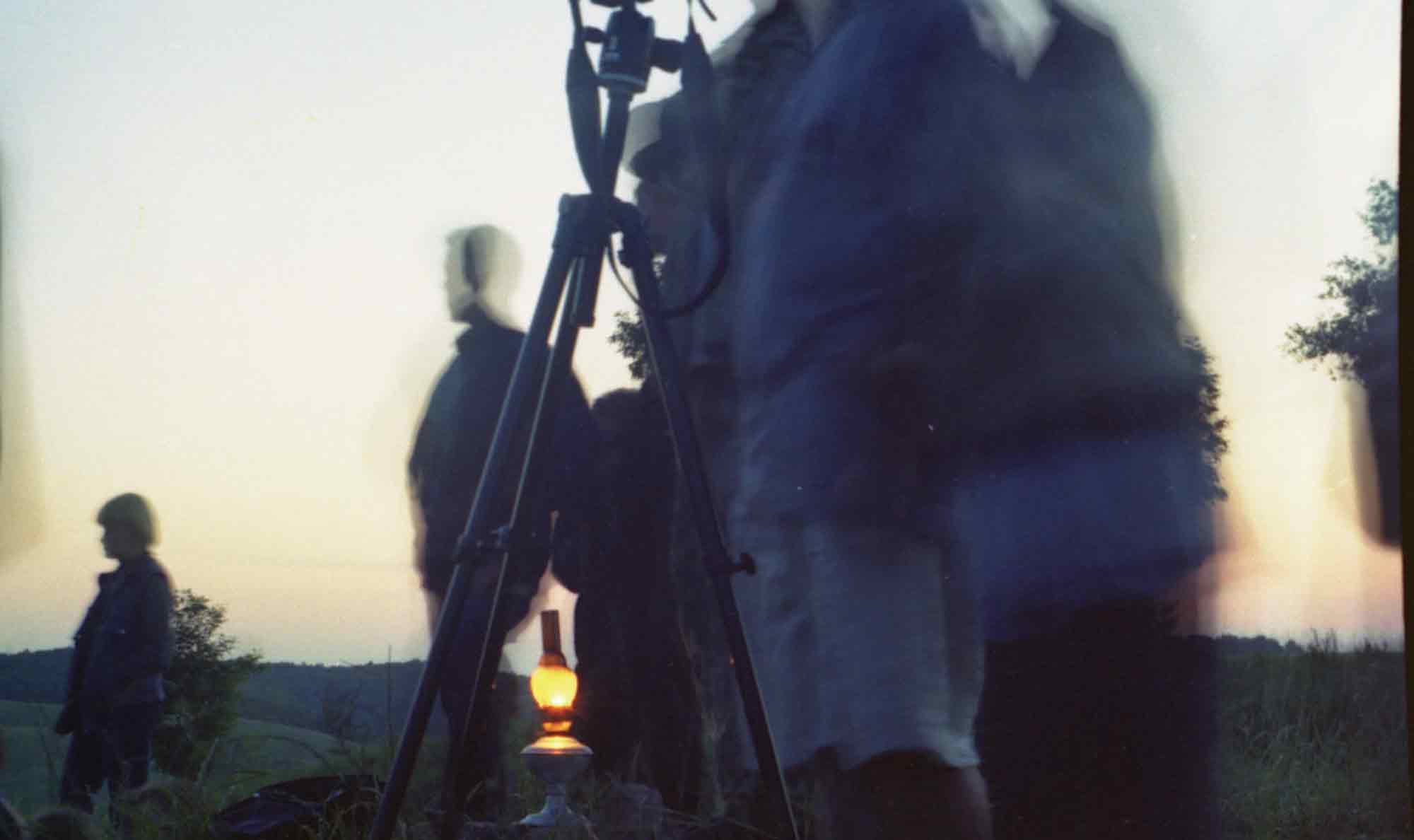
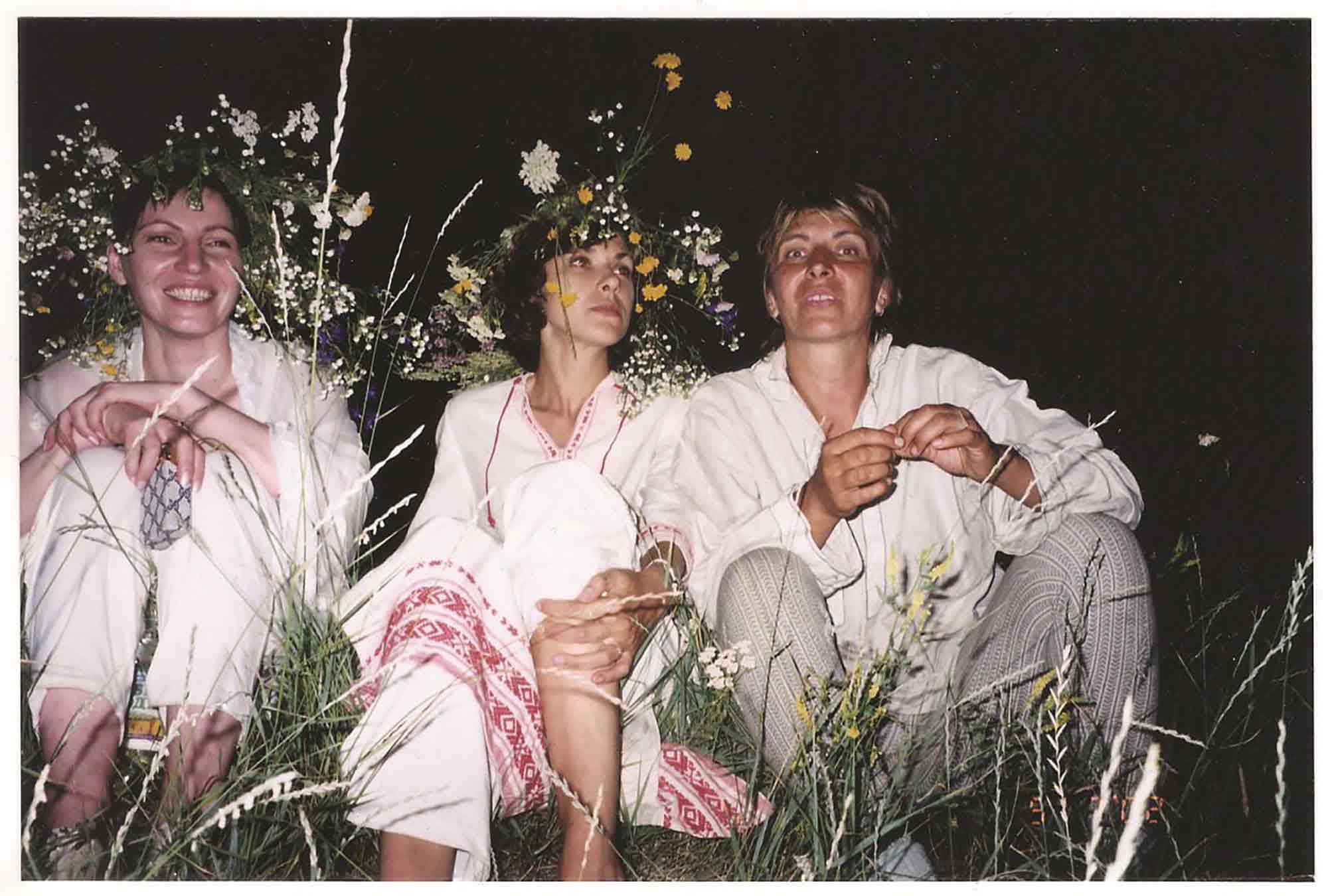
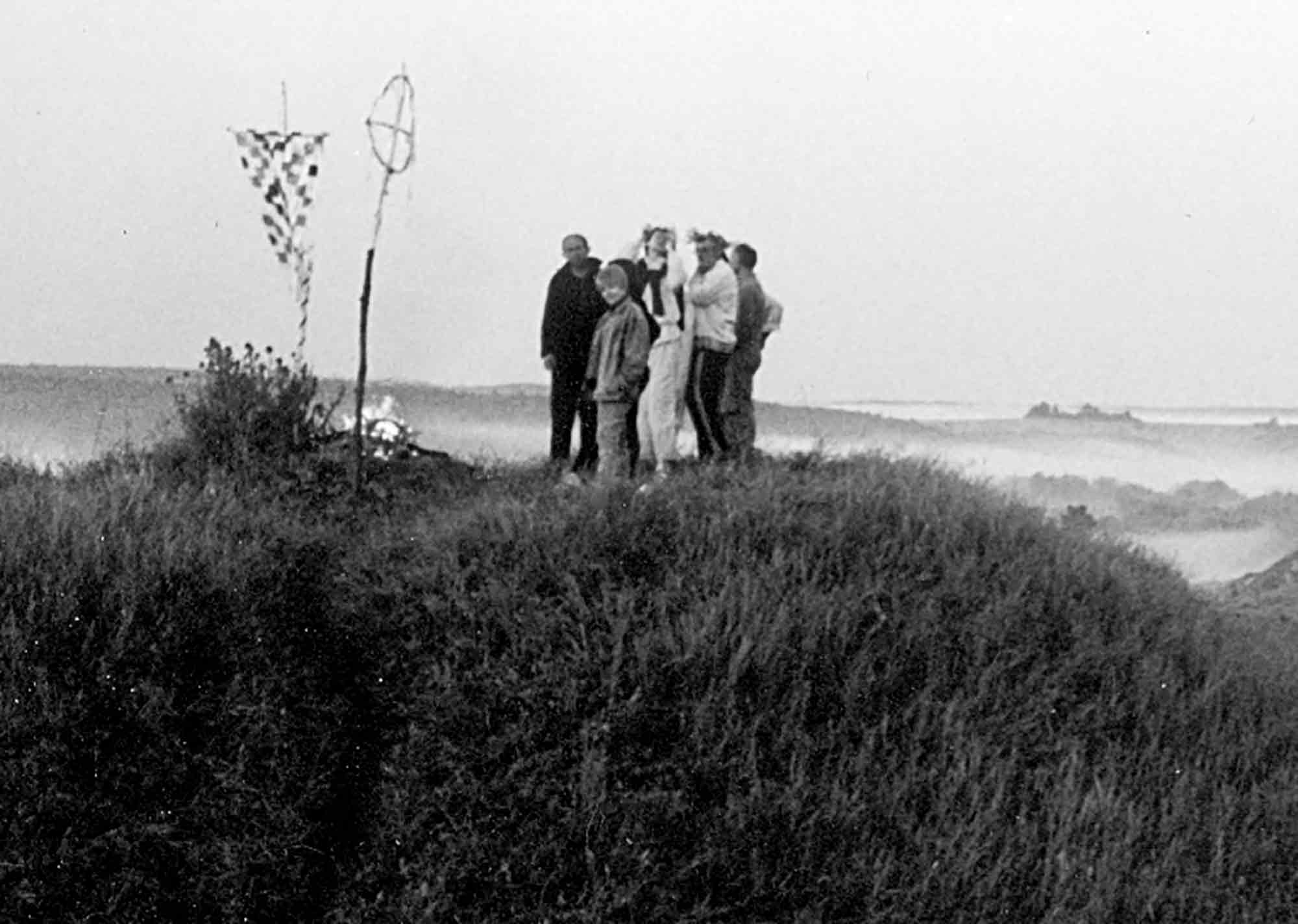
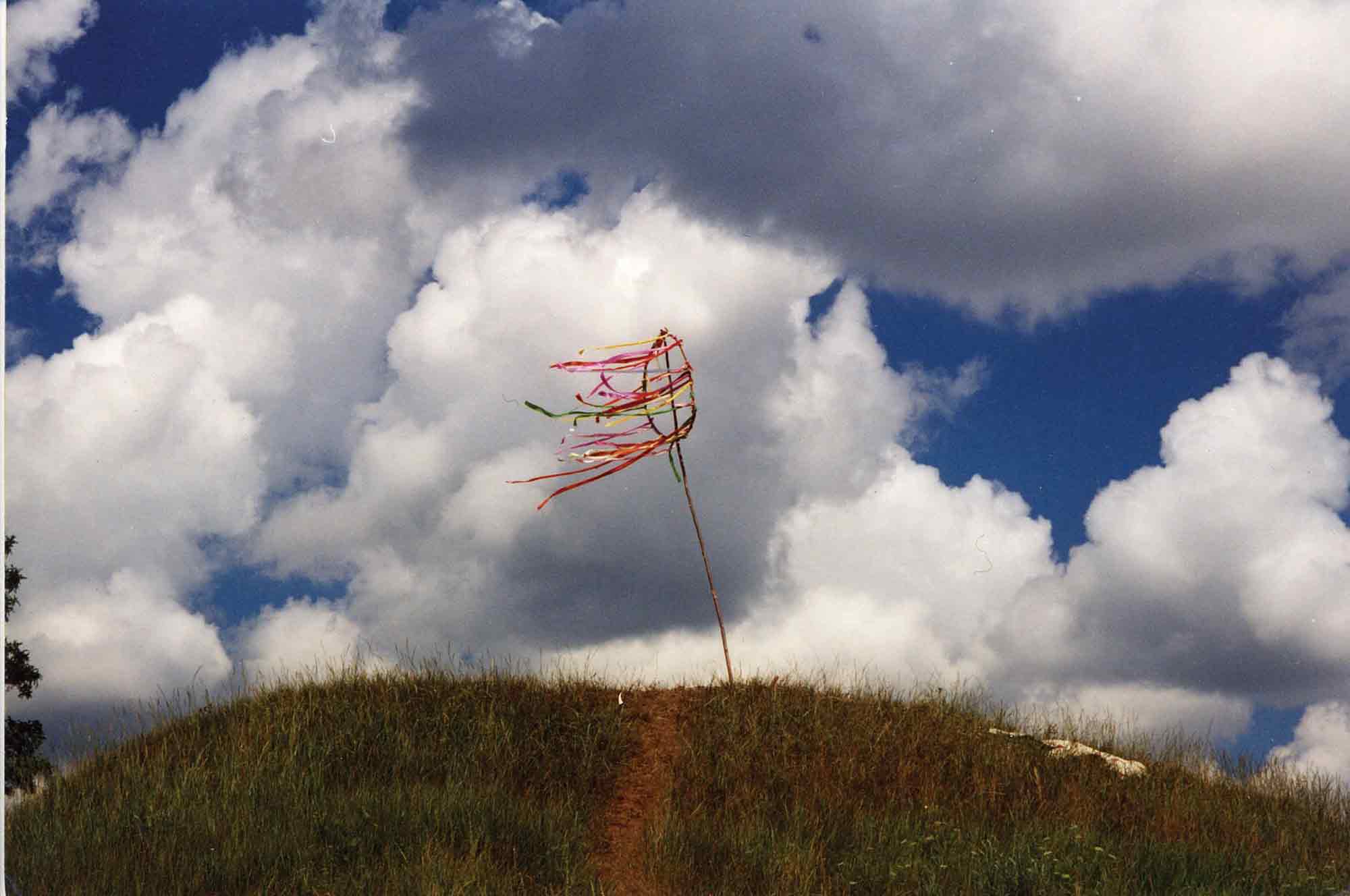
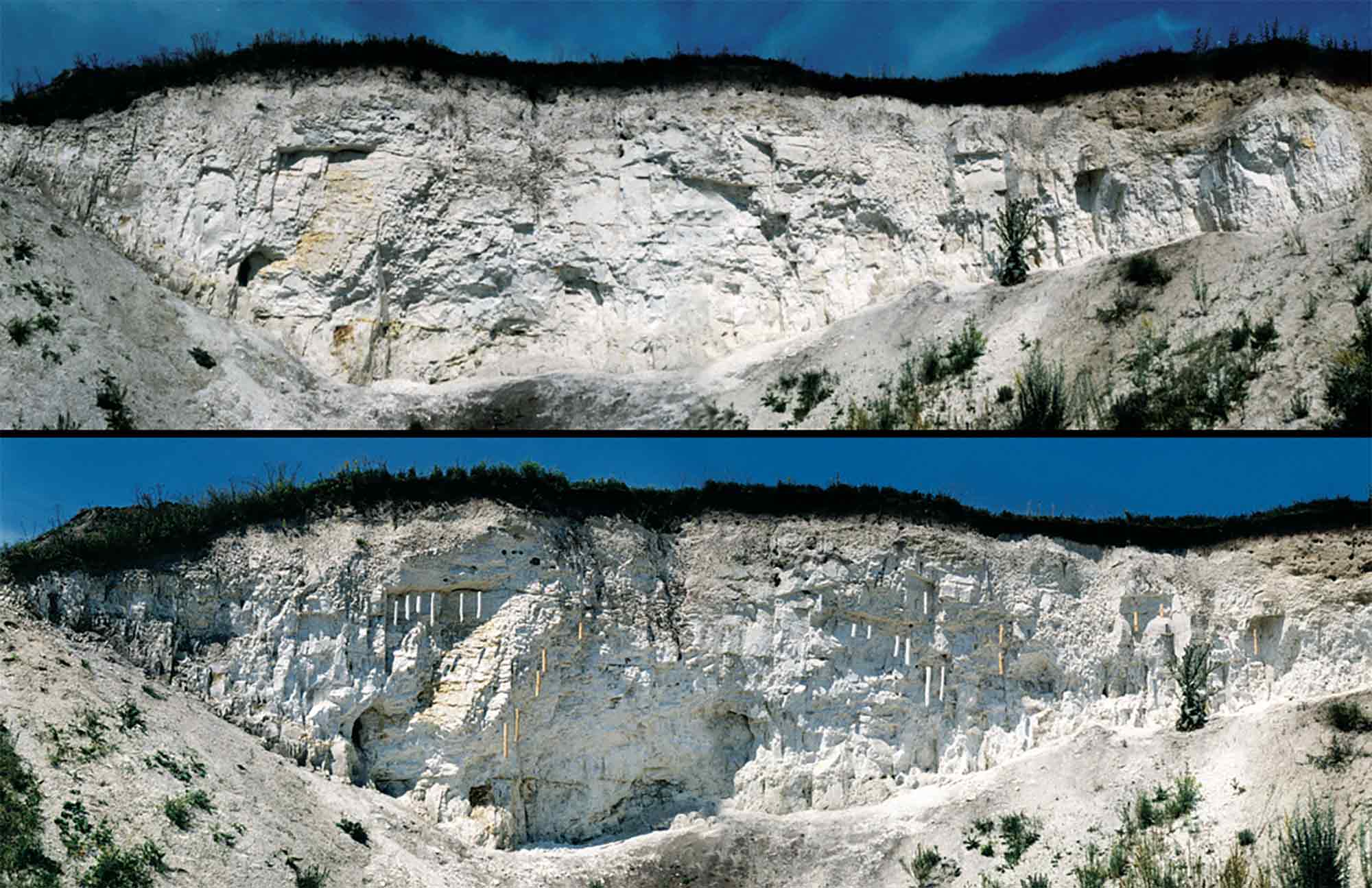
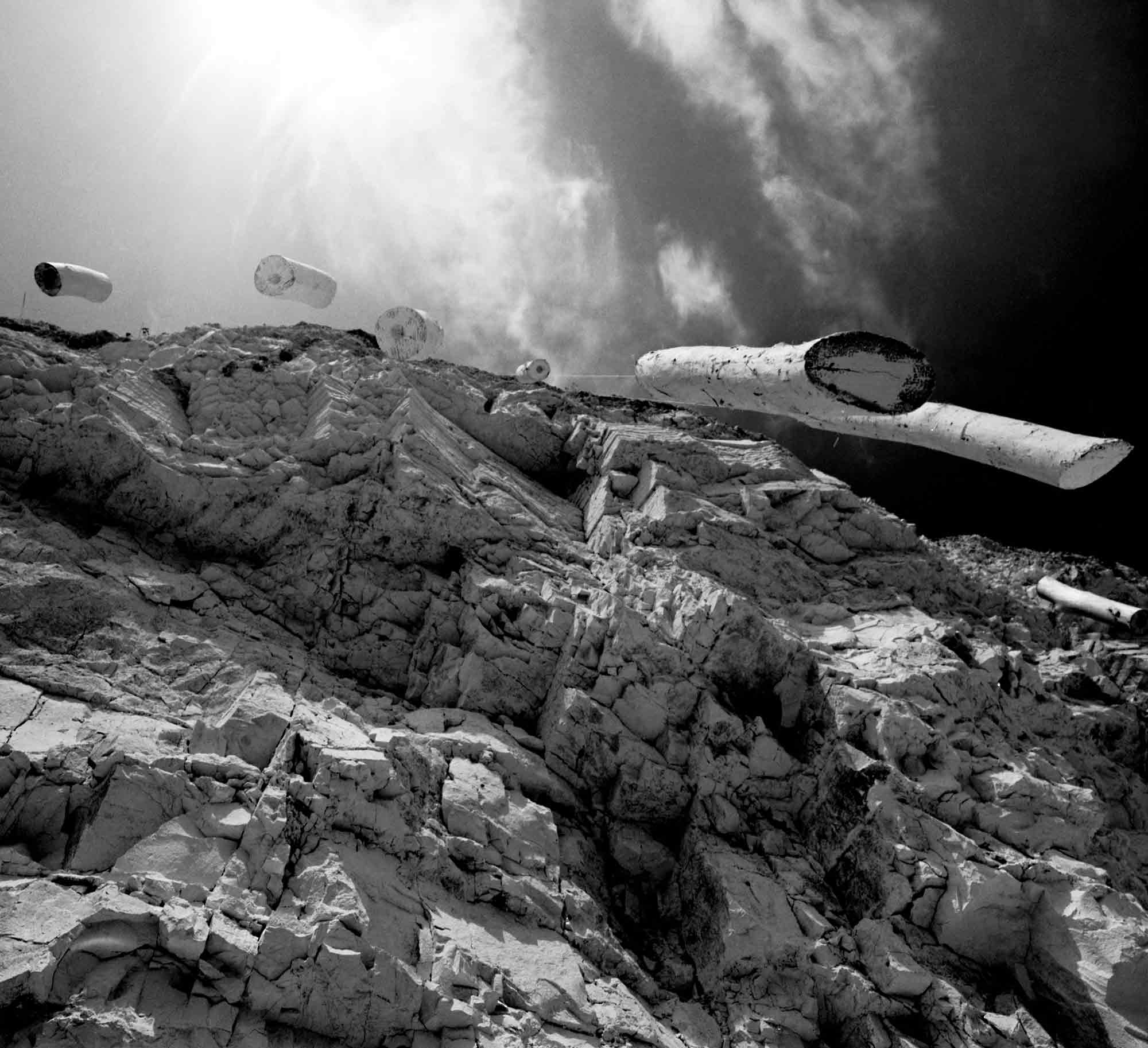
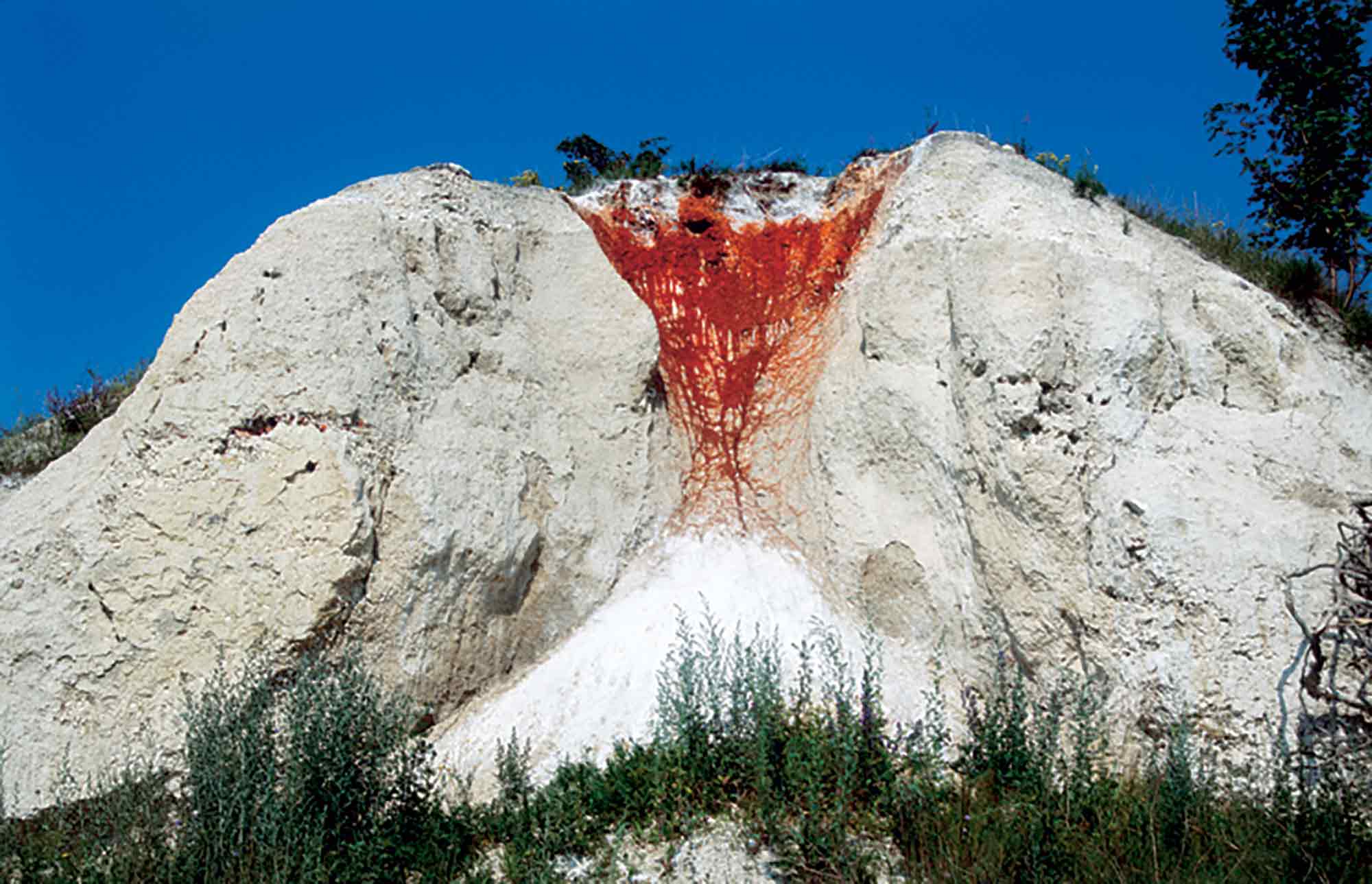
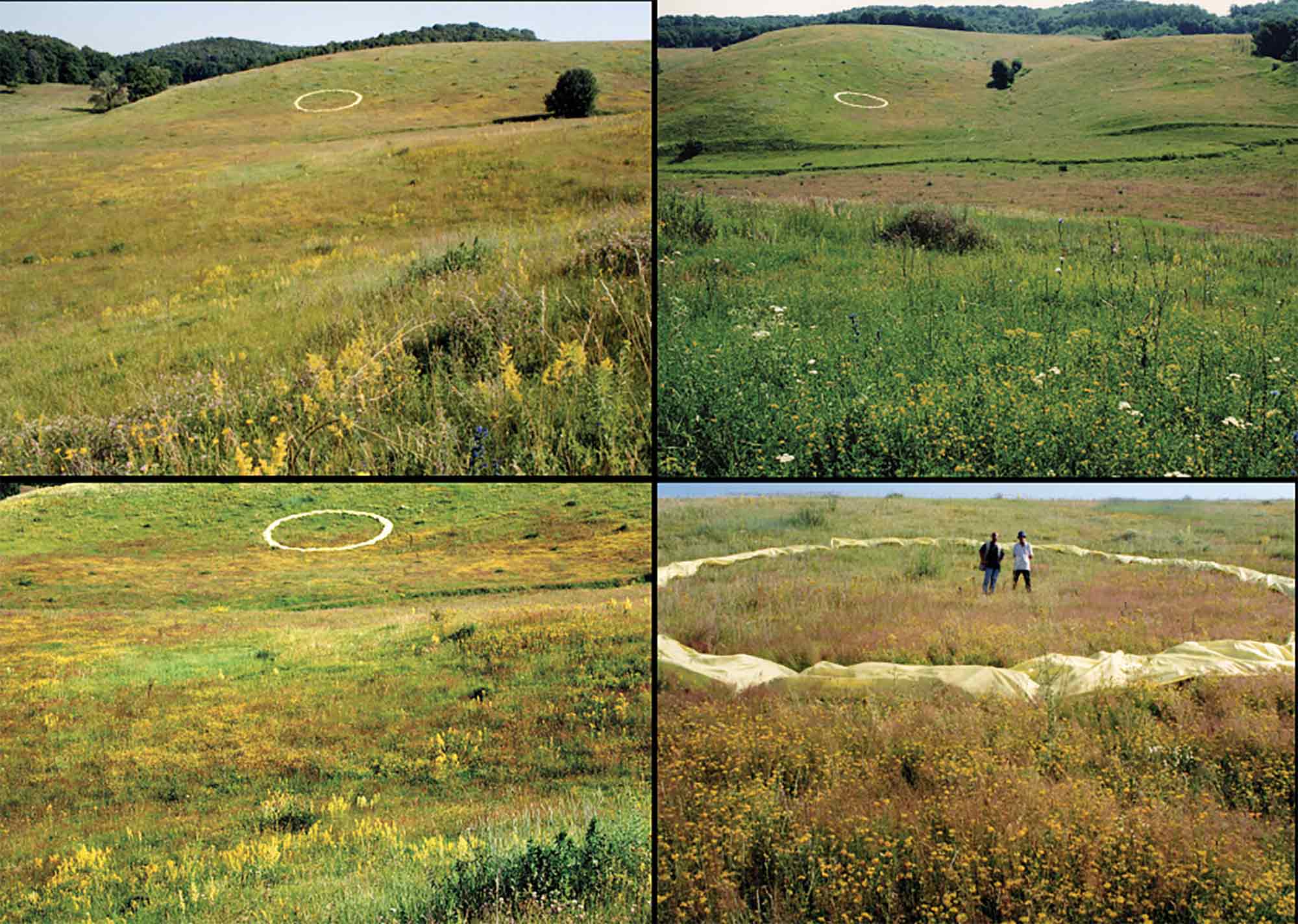
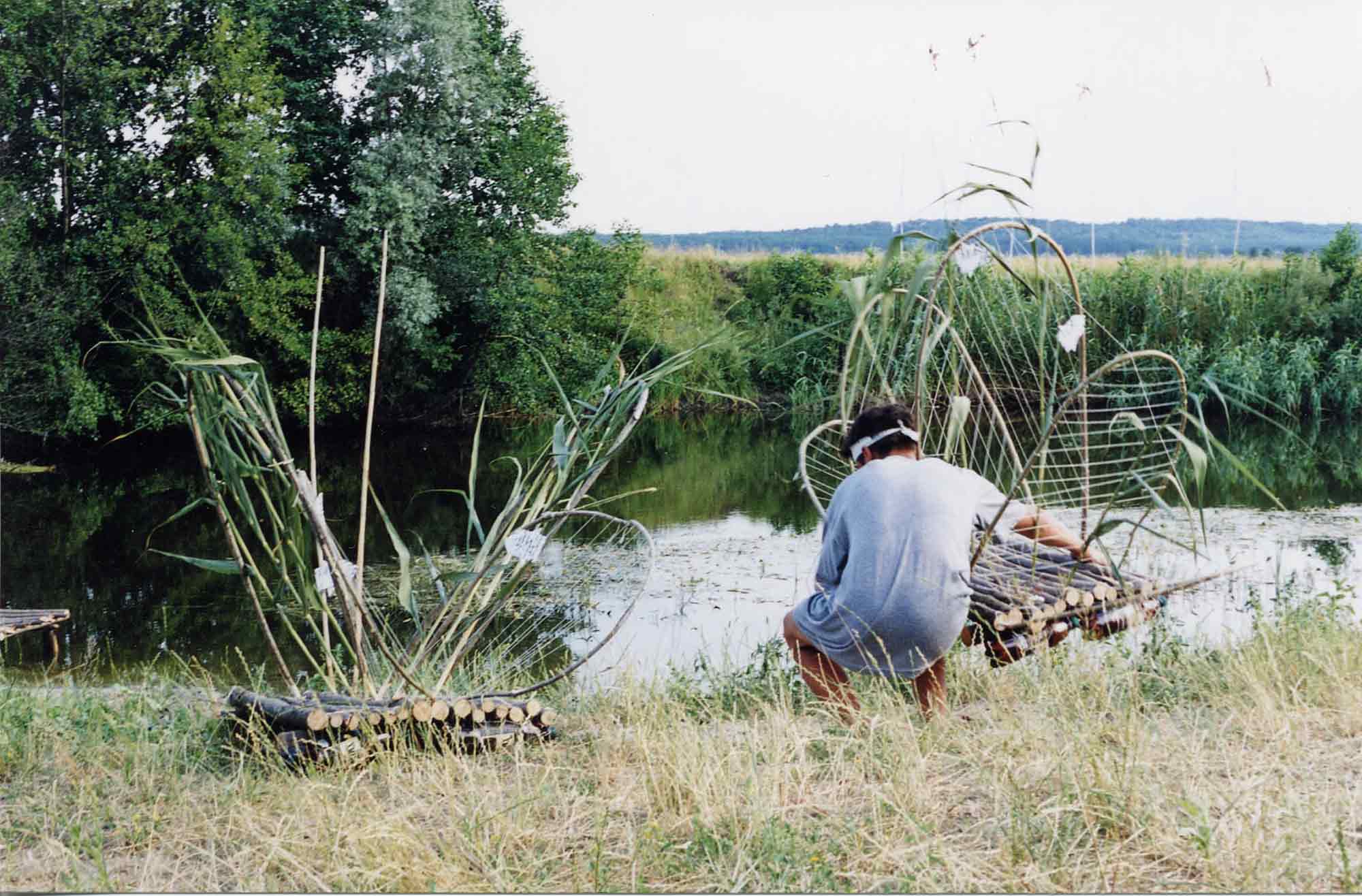
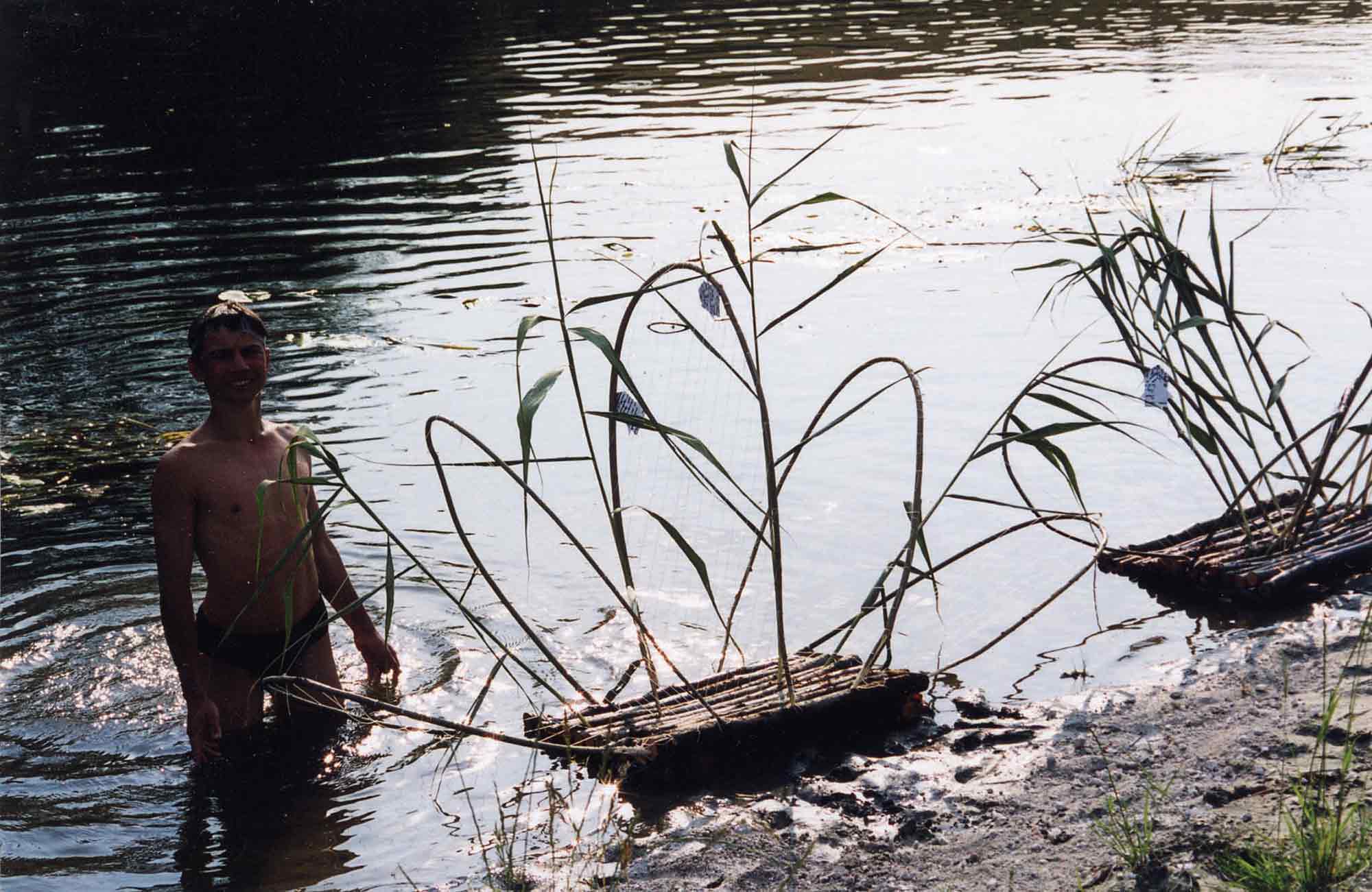
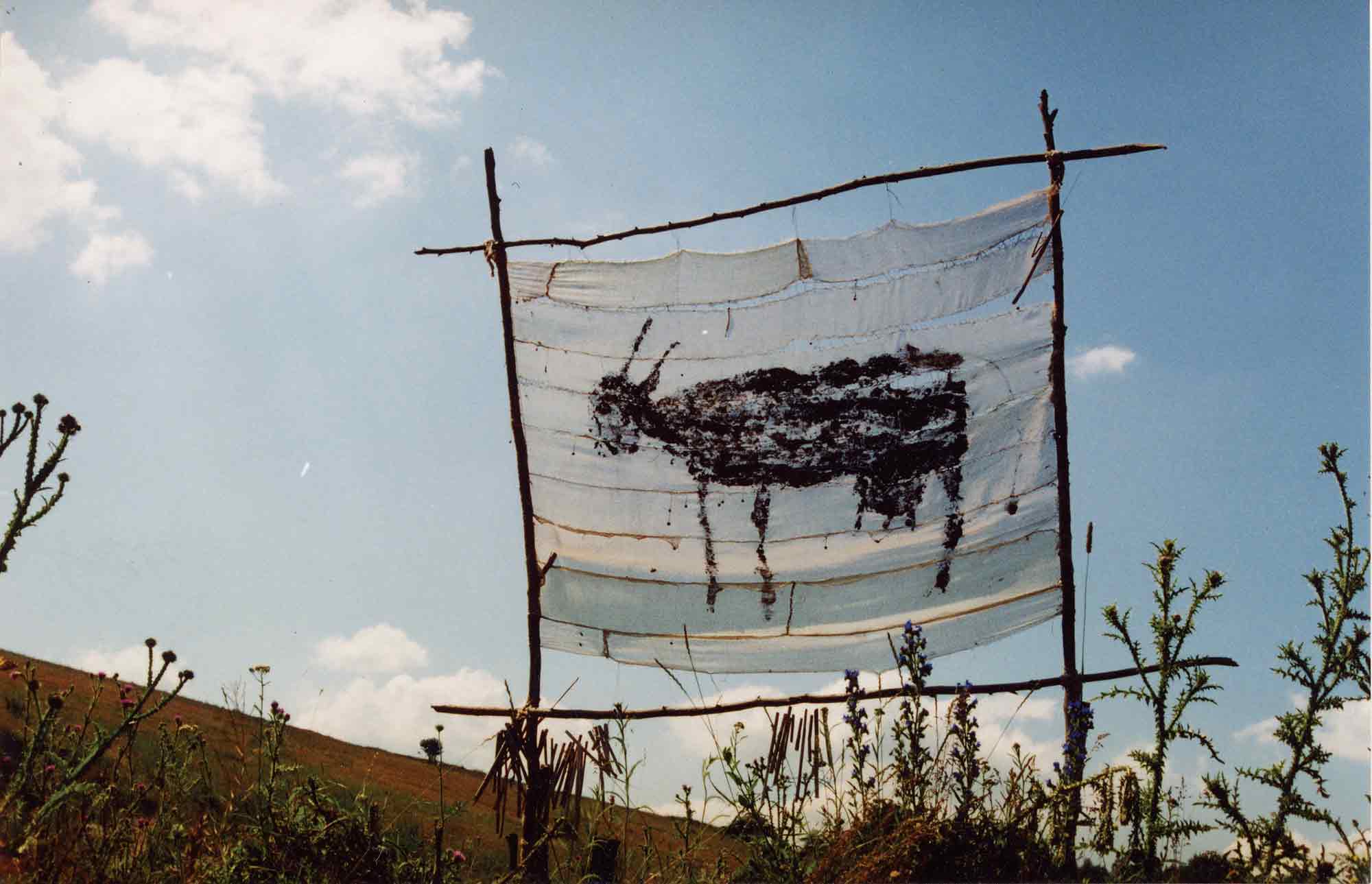
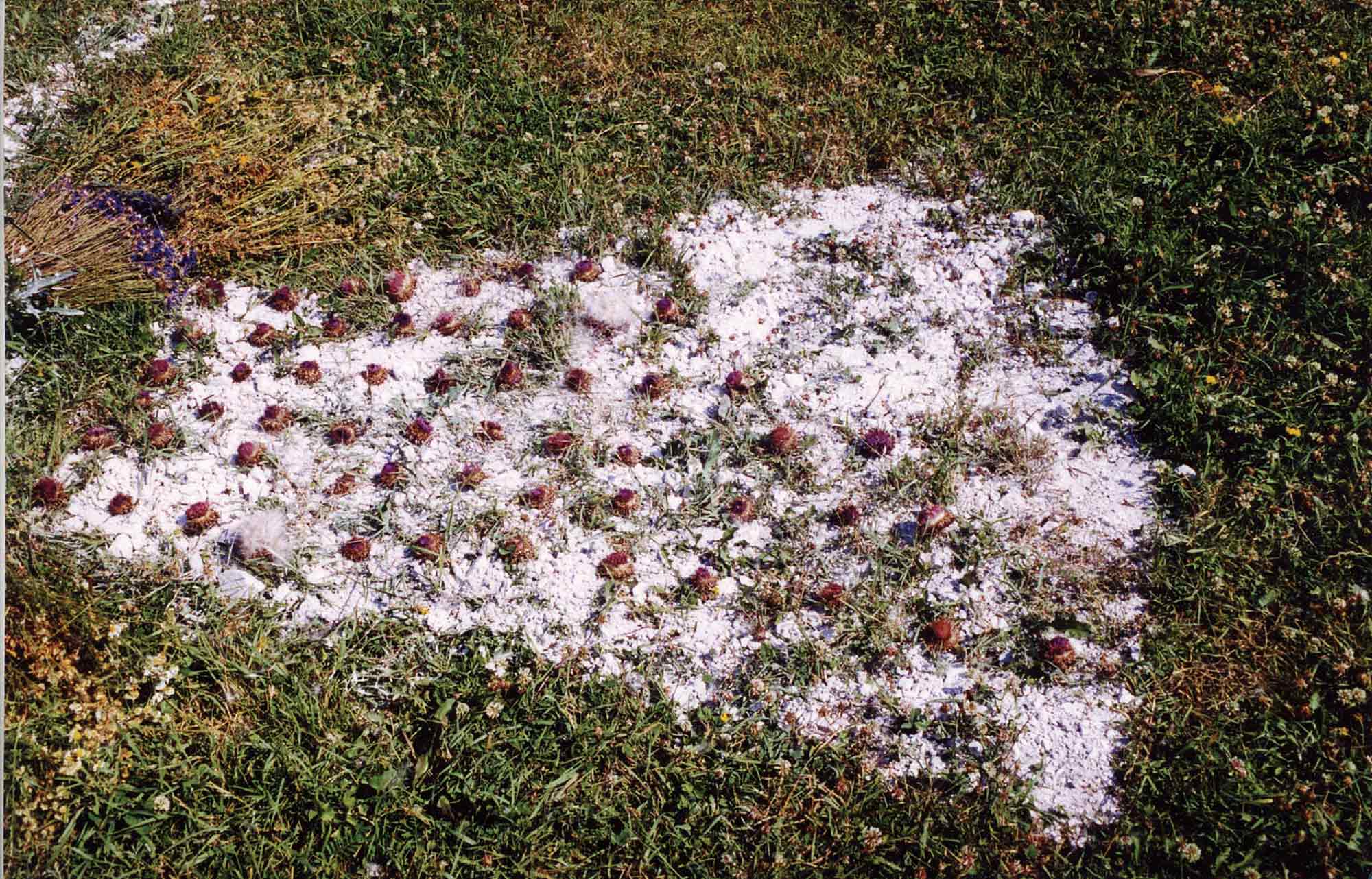
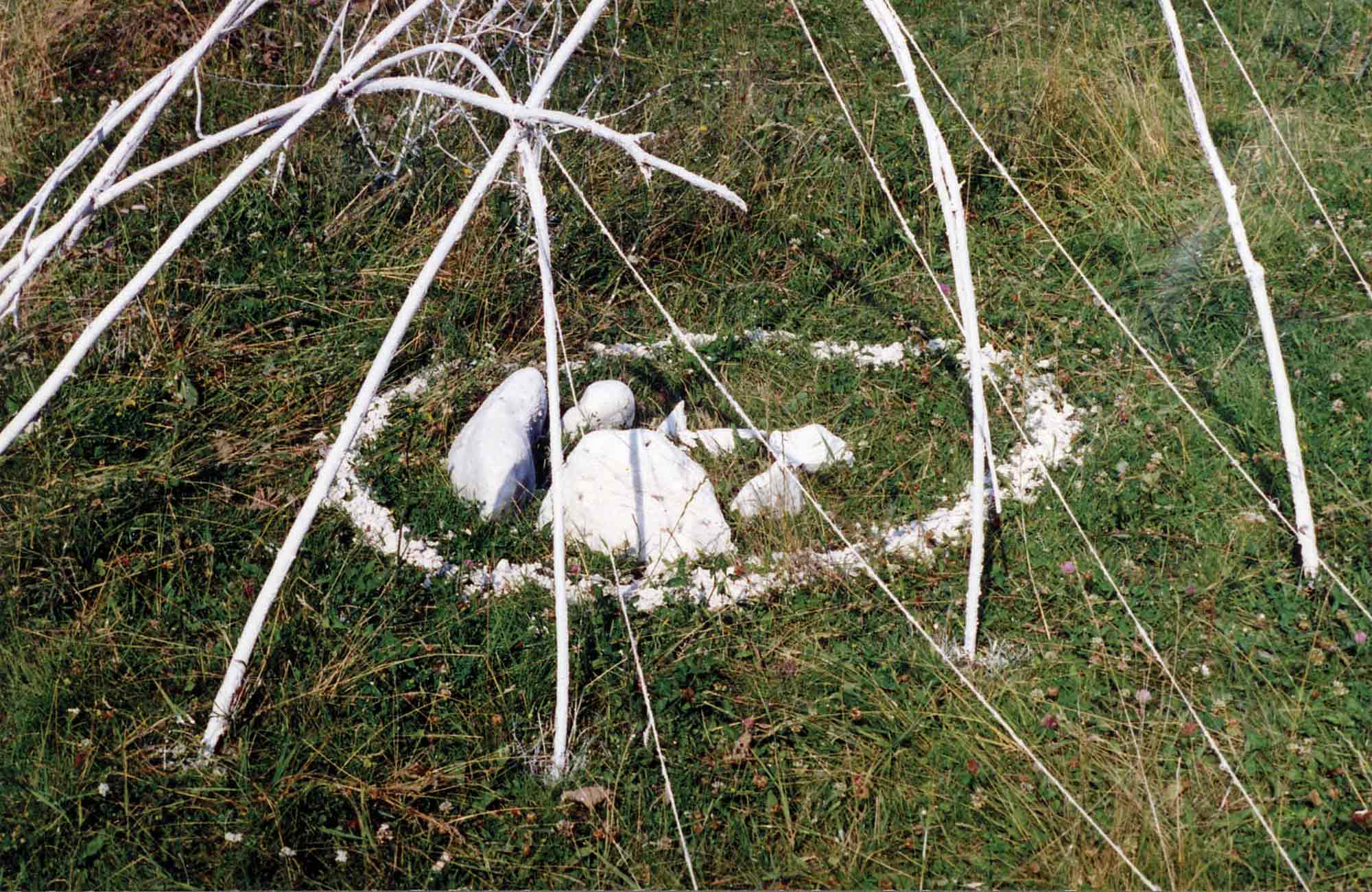
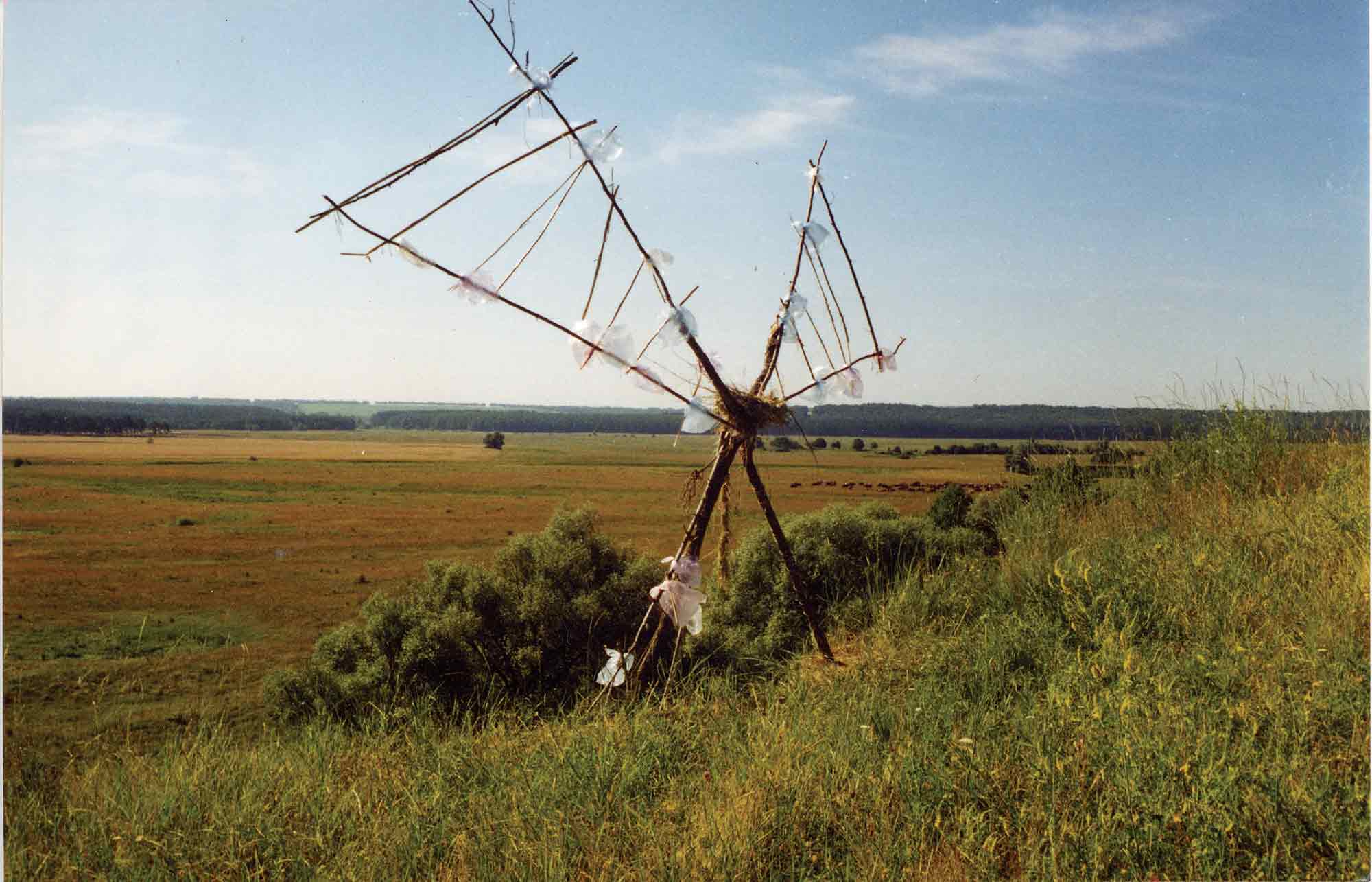
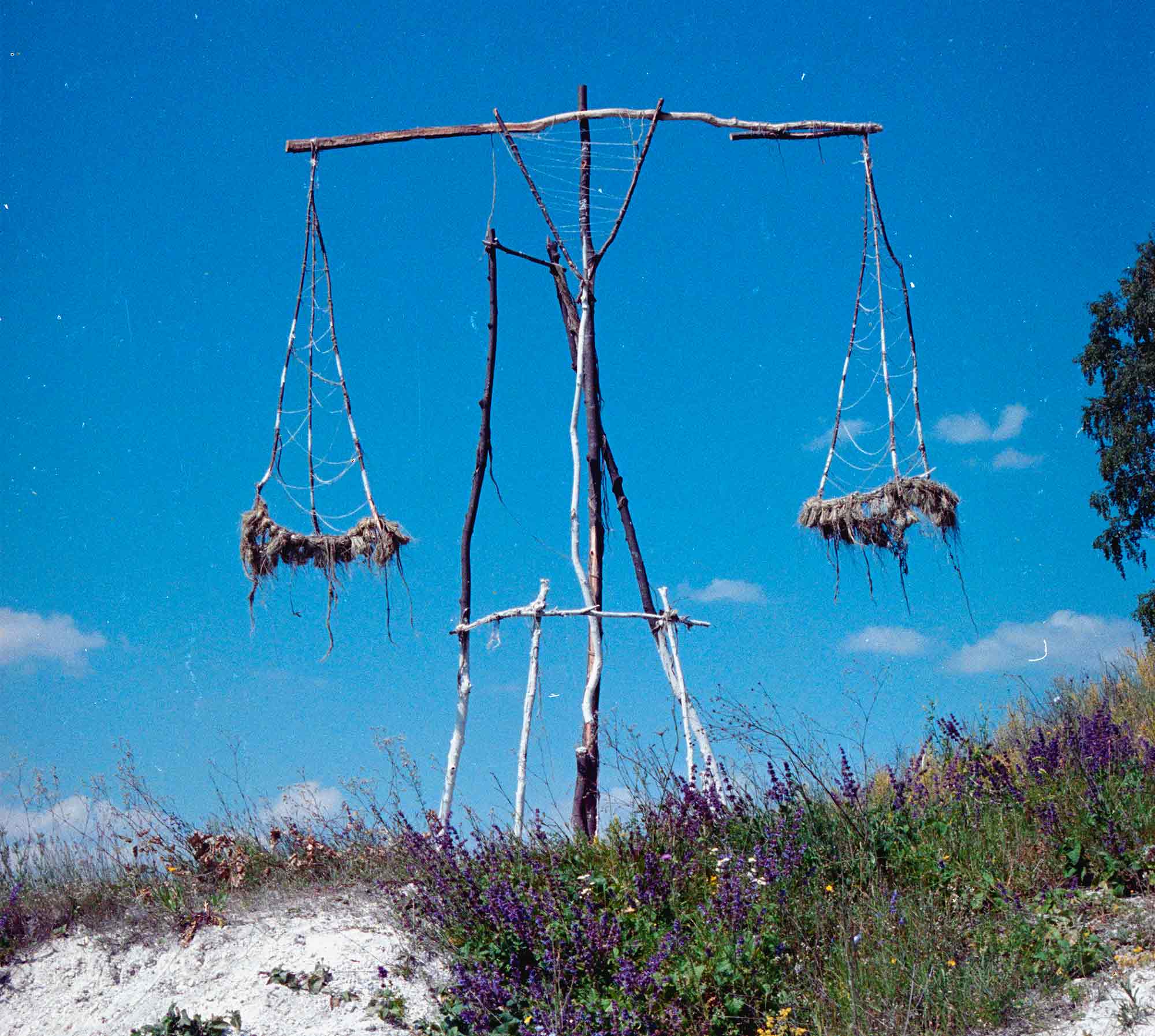
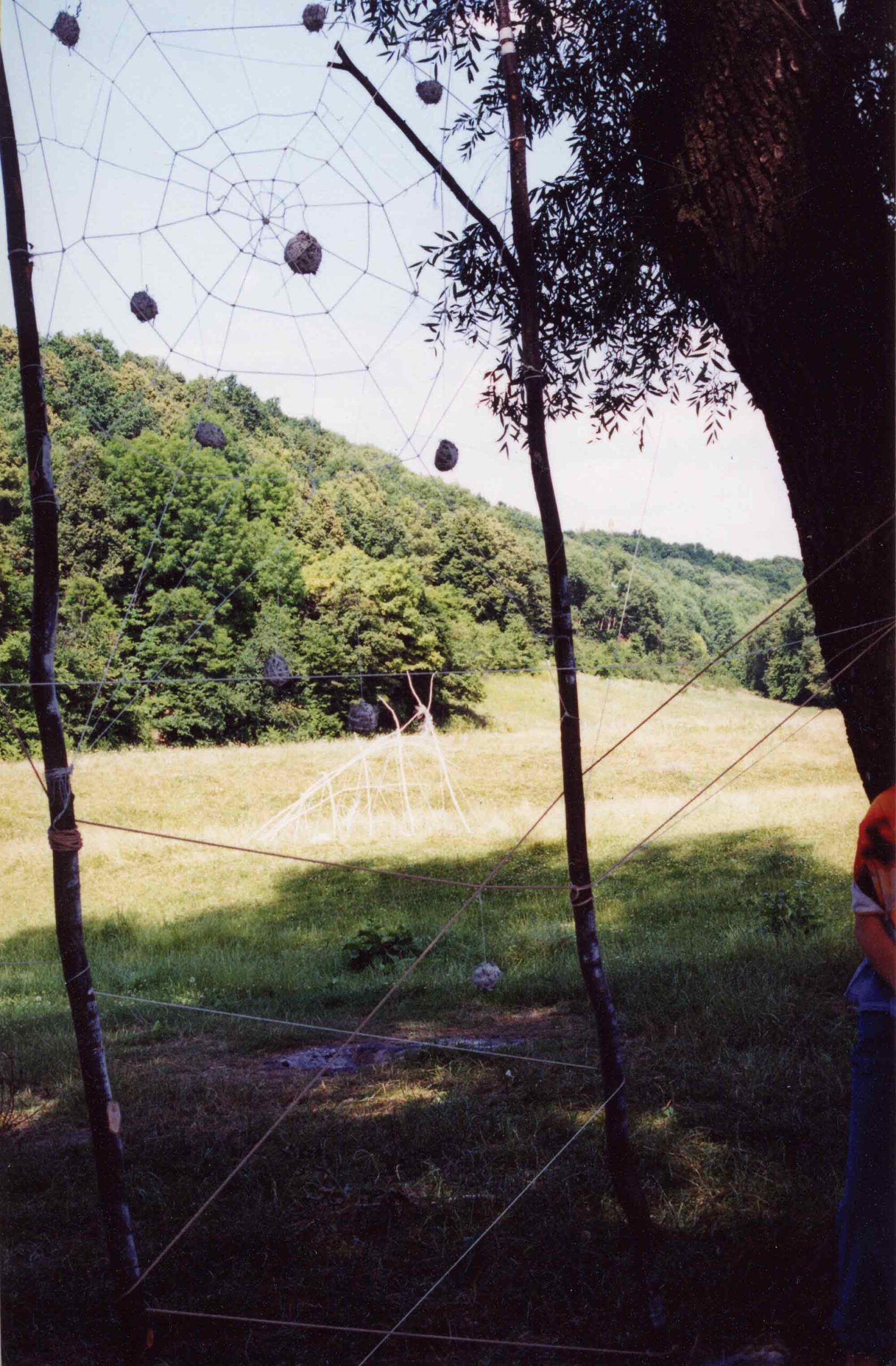
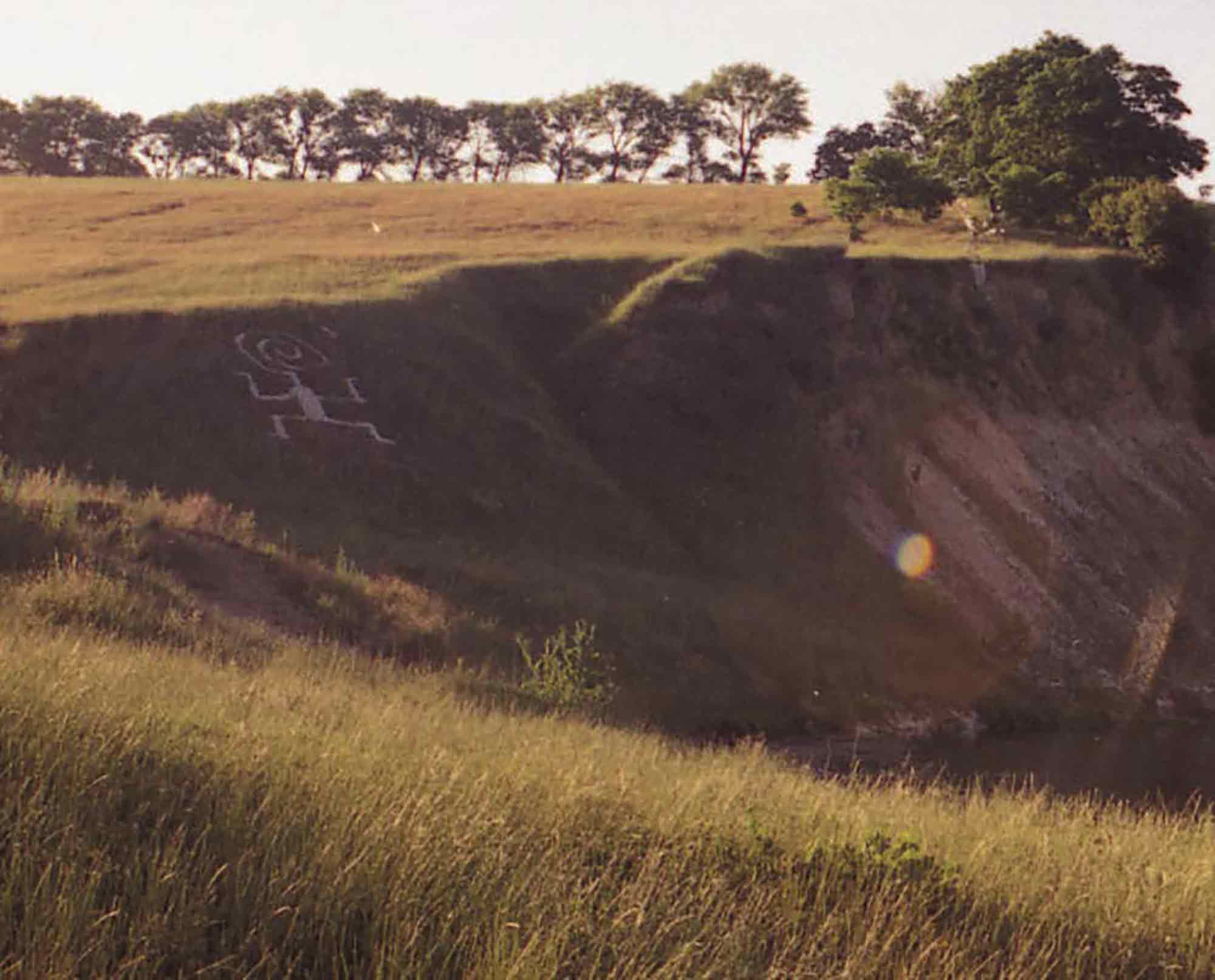
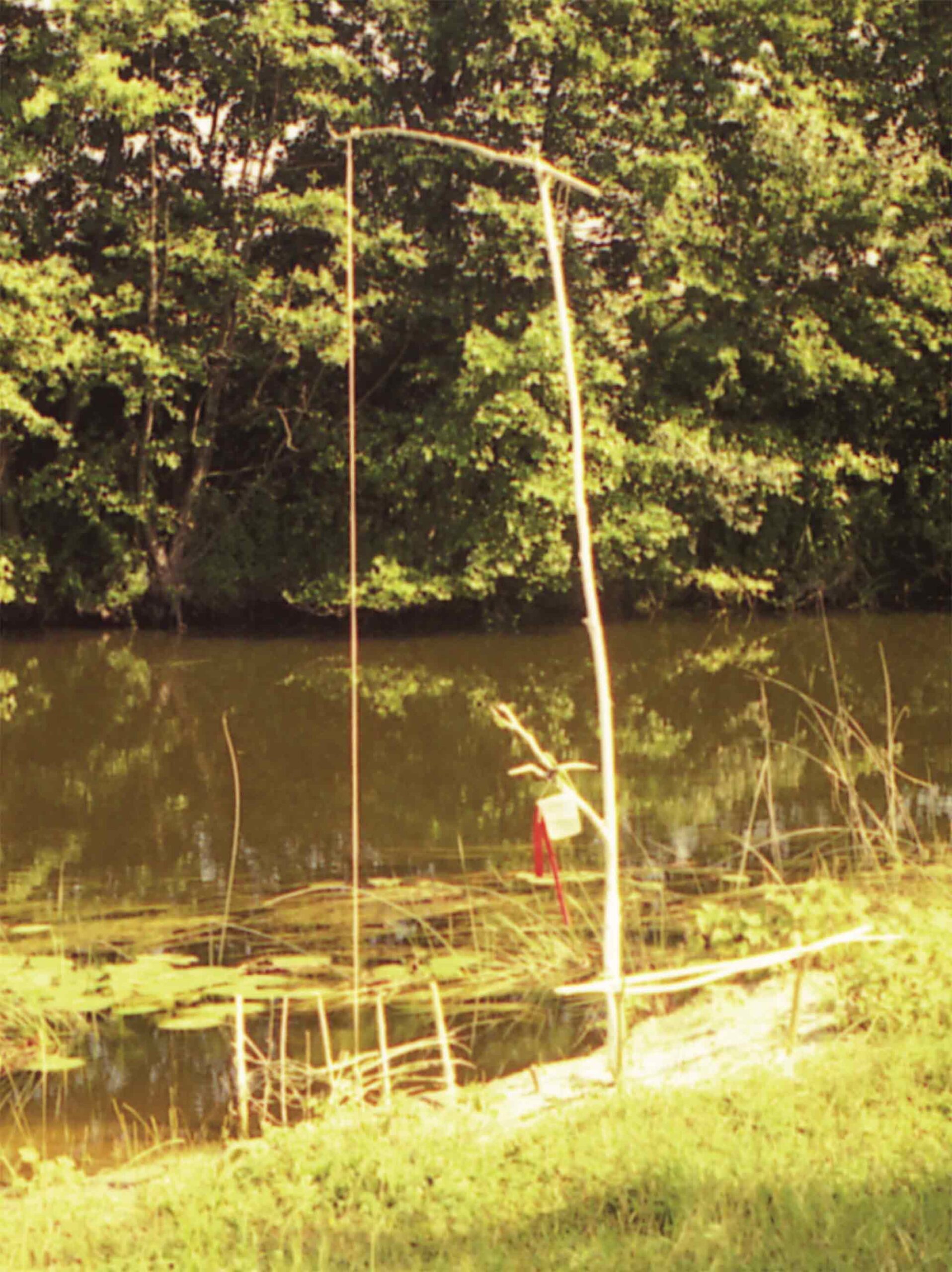
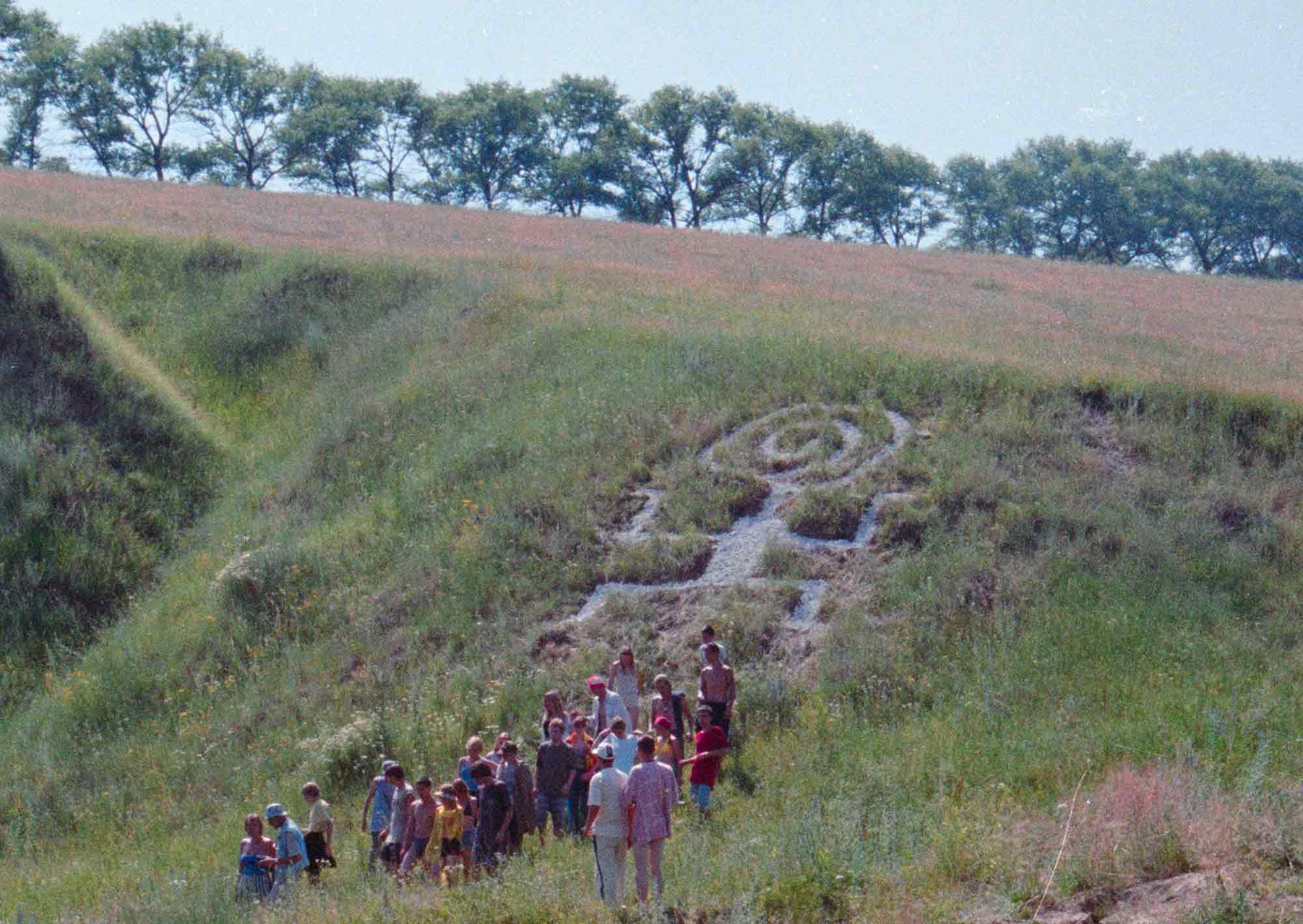
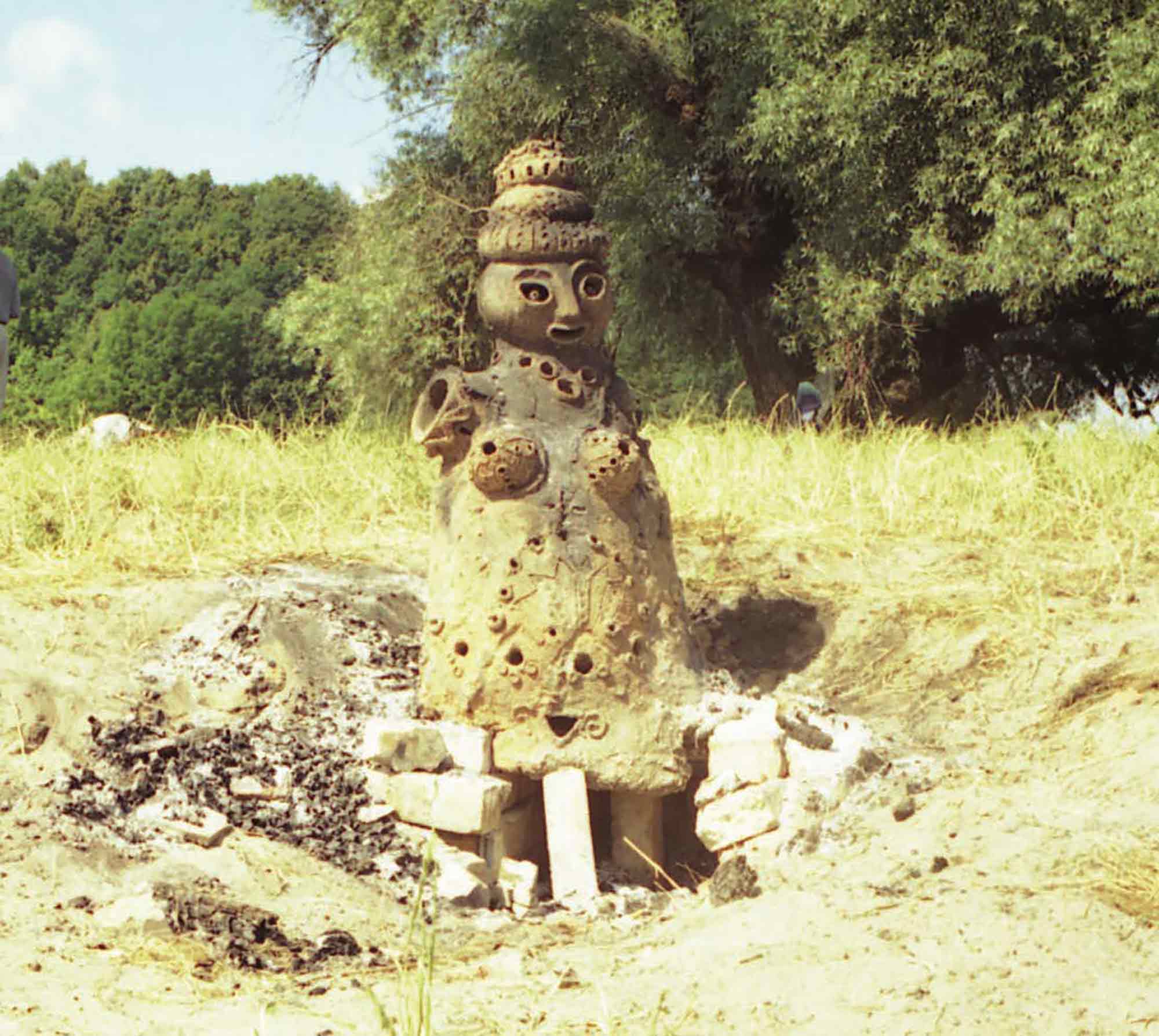
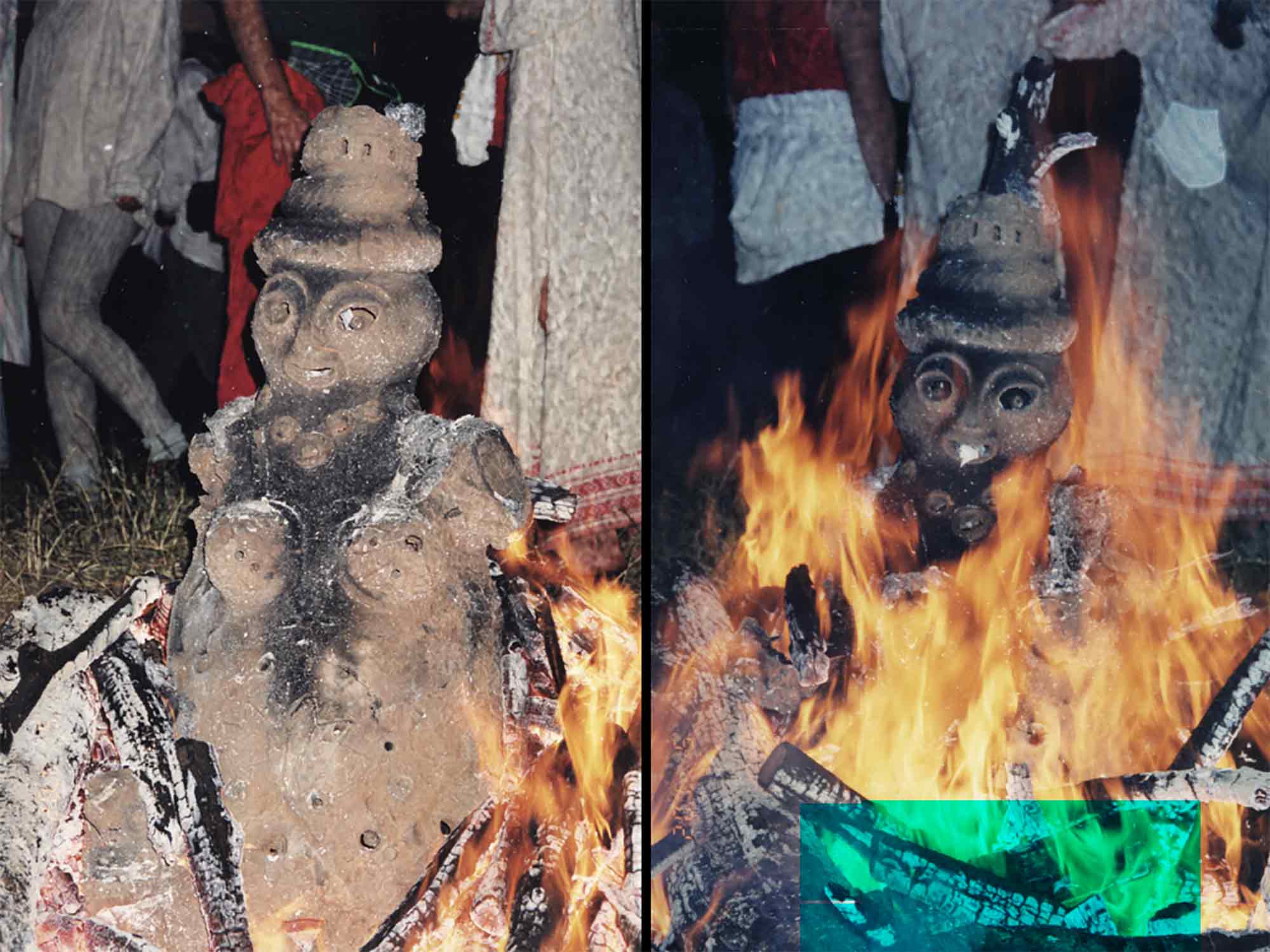
The year 2002 developed the theme of the landscape as a bearer of time and place, where nature became not only a backdrop but also a material and an active participant in the process. The symposium acquired greater conceptual depth: artists worked directly with chalk slopes, reliefs and natural processes. Significantly, this year also saw the first major institutional changes: the symposium received a grant from the International Renaissance Foundation, which enabled the purchase of materials, the preparation of printed materials including a poster and catalogue, and the implementation of a large-scale exhibition programme. Presentations of works in 2002 took place not only in Sumy and Kyiv but also in Lviv, at the Dzyga Gallery. This expansion of the symposium’s geography facilitated the involvement of new participants, in particular Lviv artists Myroslav Vaida, Oleksii Konoshenko and Stanislav Turina. Oleksii Kravtsov, then a student at the Lviv Academy of Arts, who actively promoted the event among colleagues and teachers, inviting new participants to Mohrytsia, played a key role in this process.
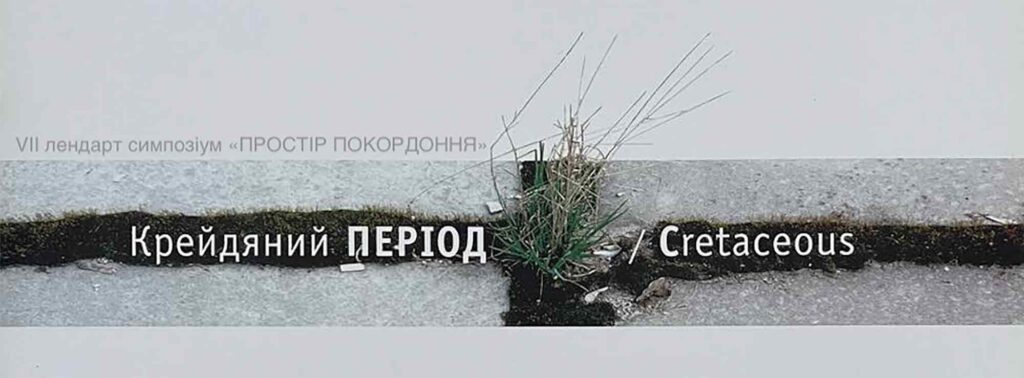
This year also marked the beginning of international dialogue: “METRONOME presents: the International Land Art Symposium ‘Cretaceous Period’ (Mohrytsia, Ukraine)” and “Objects in the Environment” of the Hakone Open-Air Museum (Kanagawa, Japan). This exchange positioned Mohrytsia within the wider context of international environmental art practices.
text continues below
PROJECT PRESENTATION
WORKS
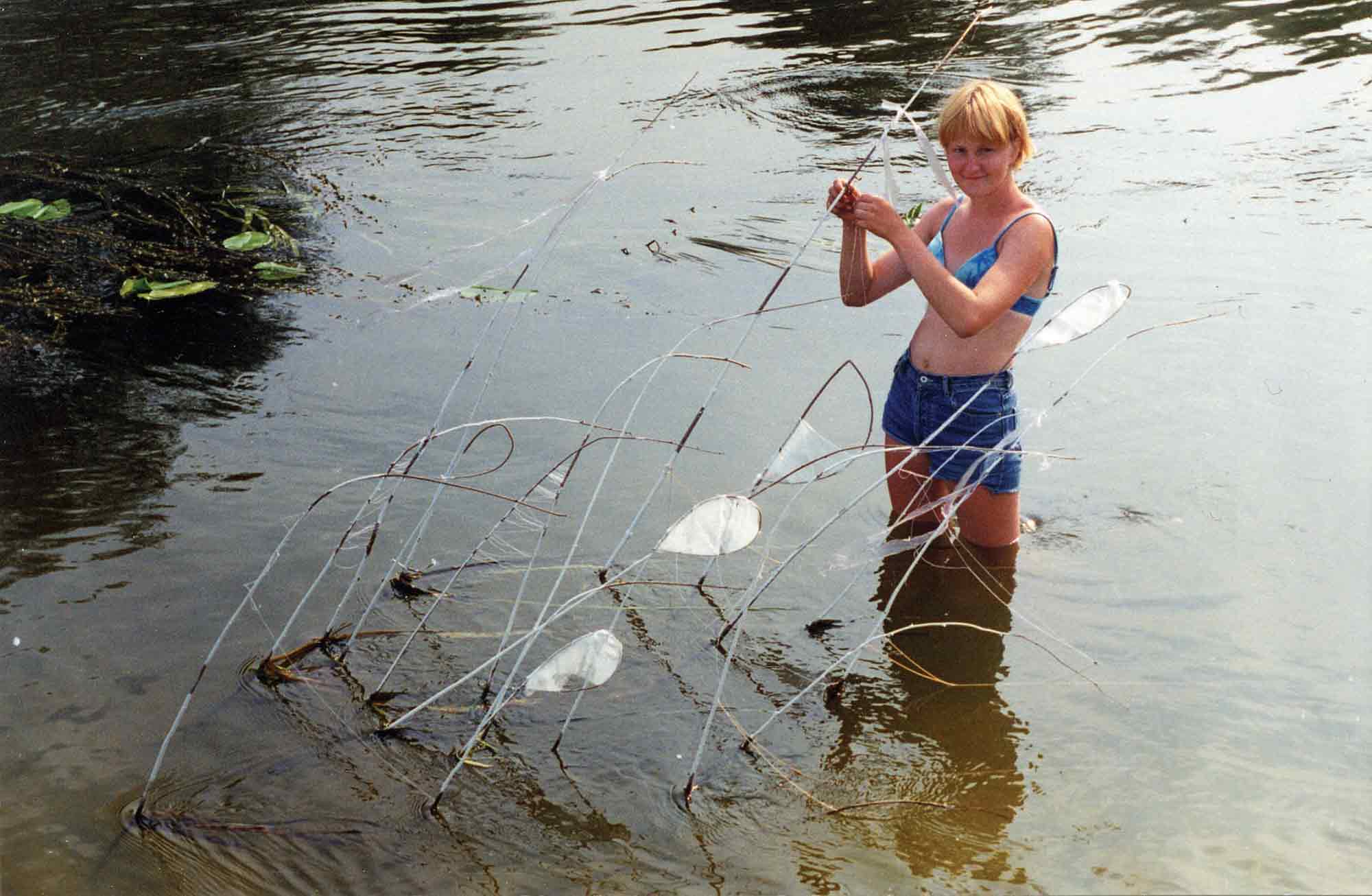
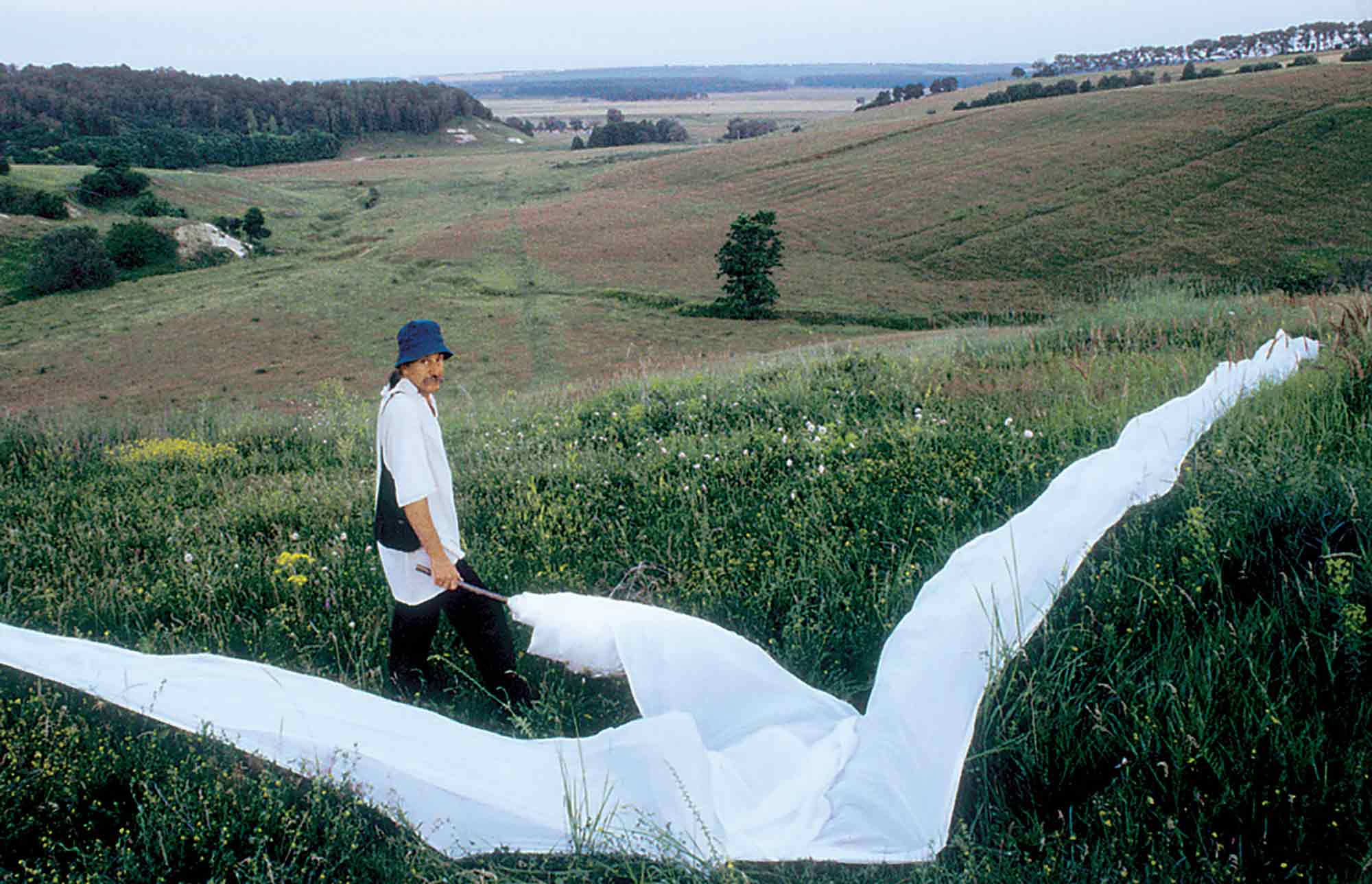
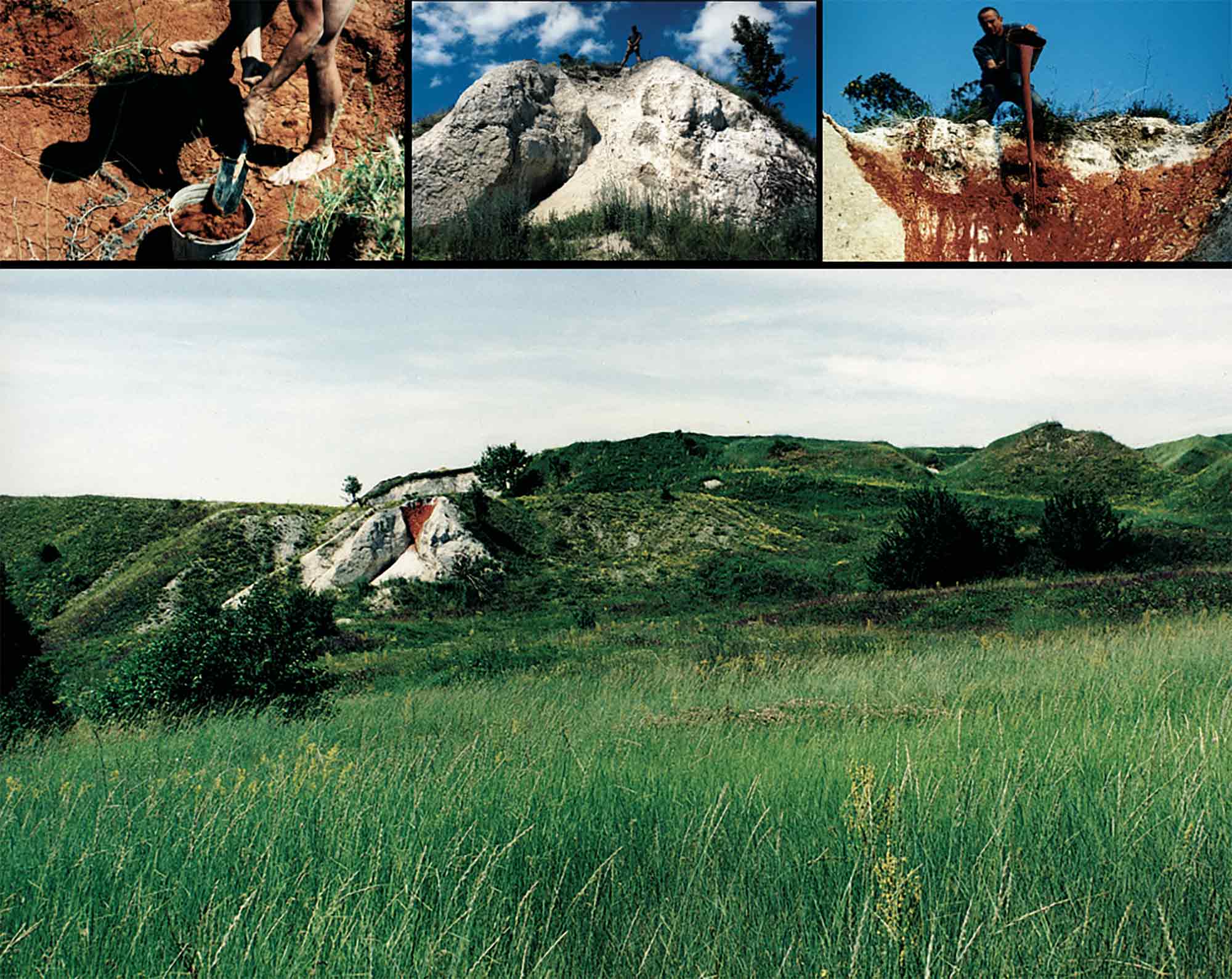
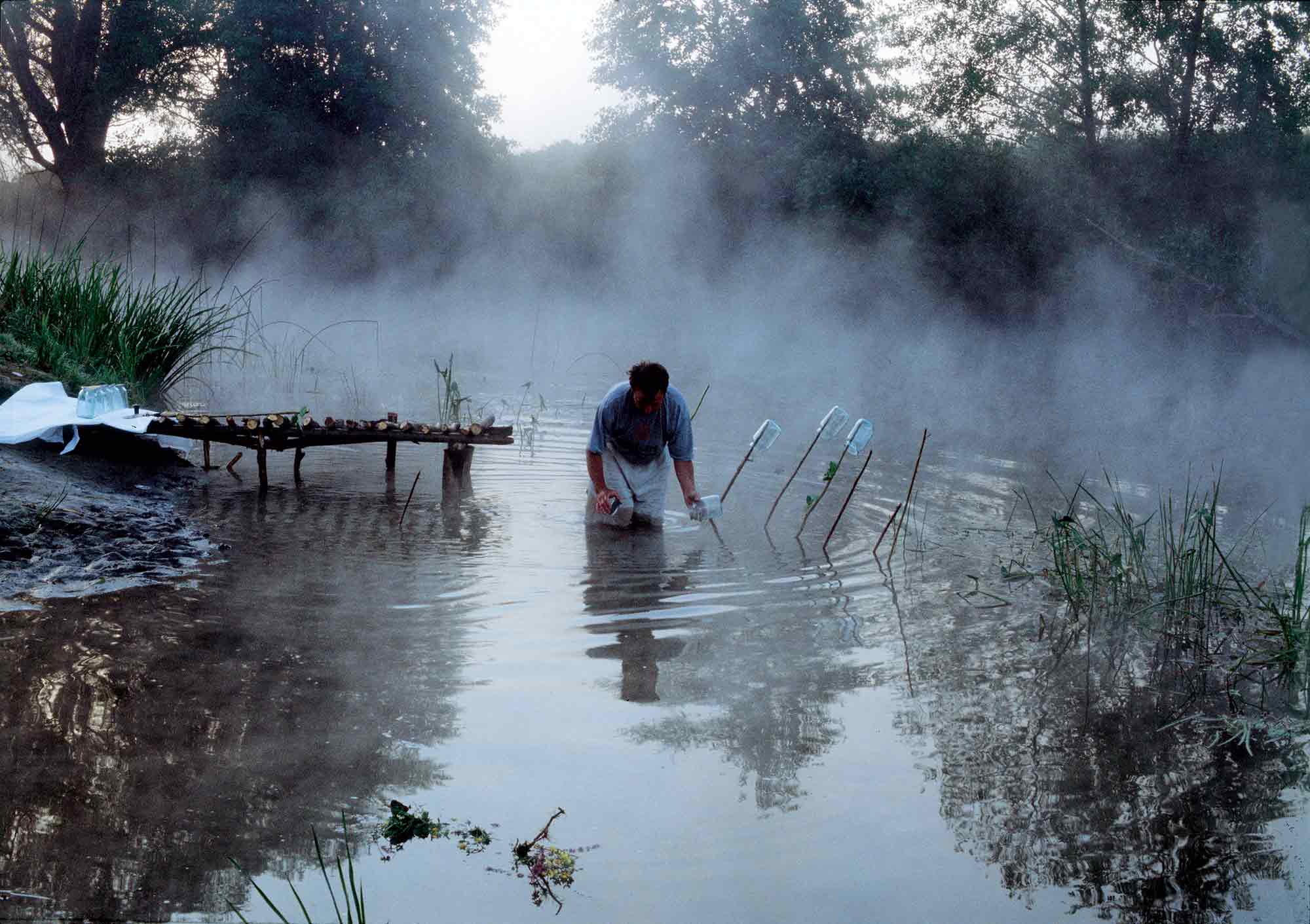
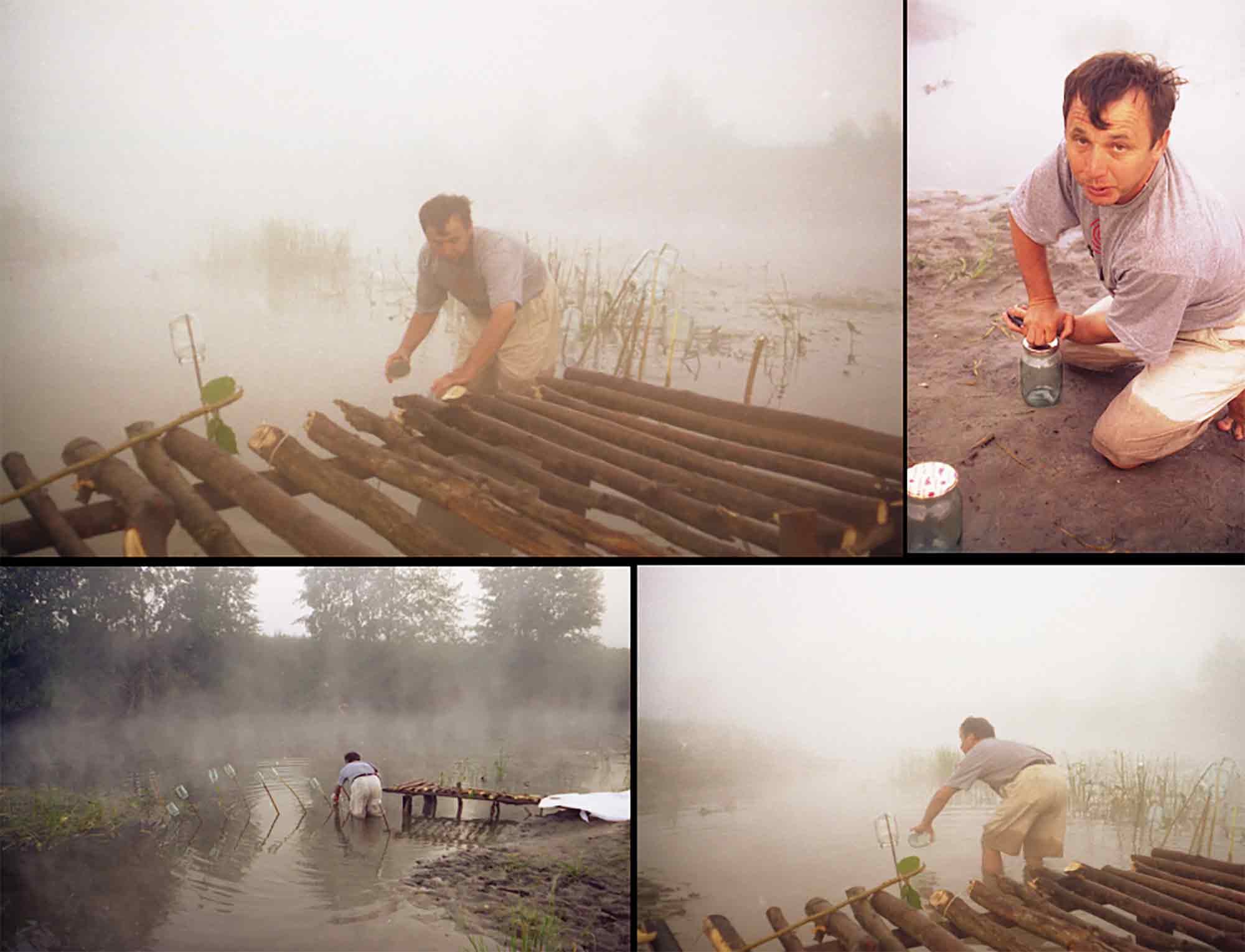
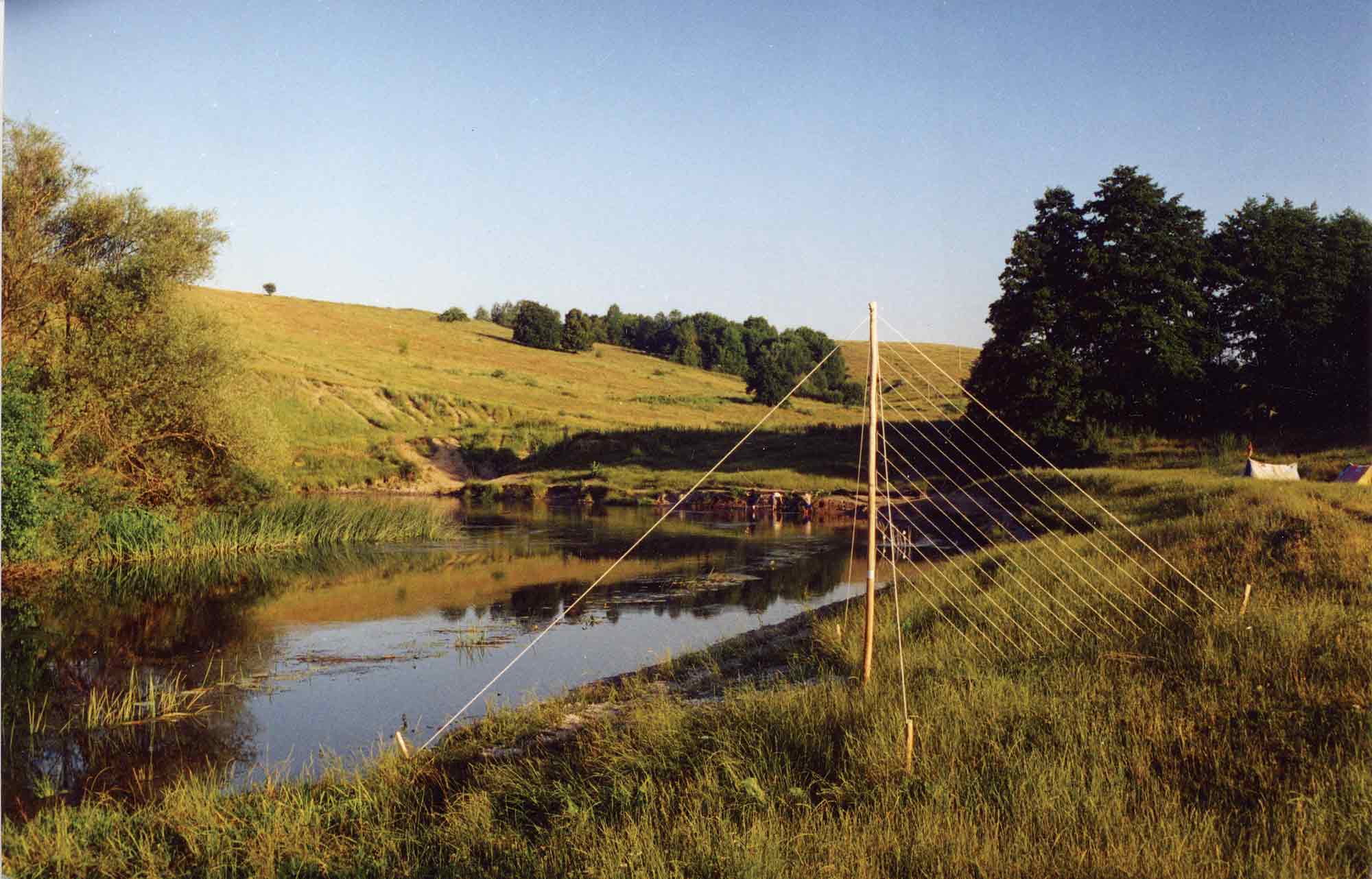
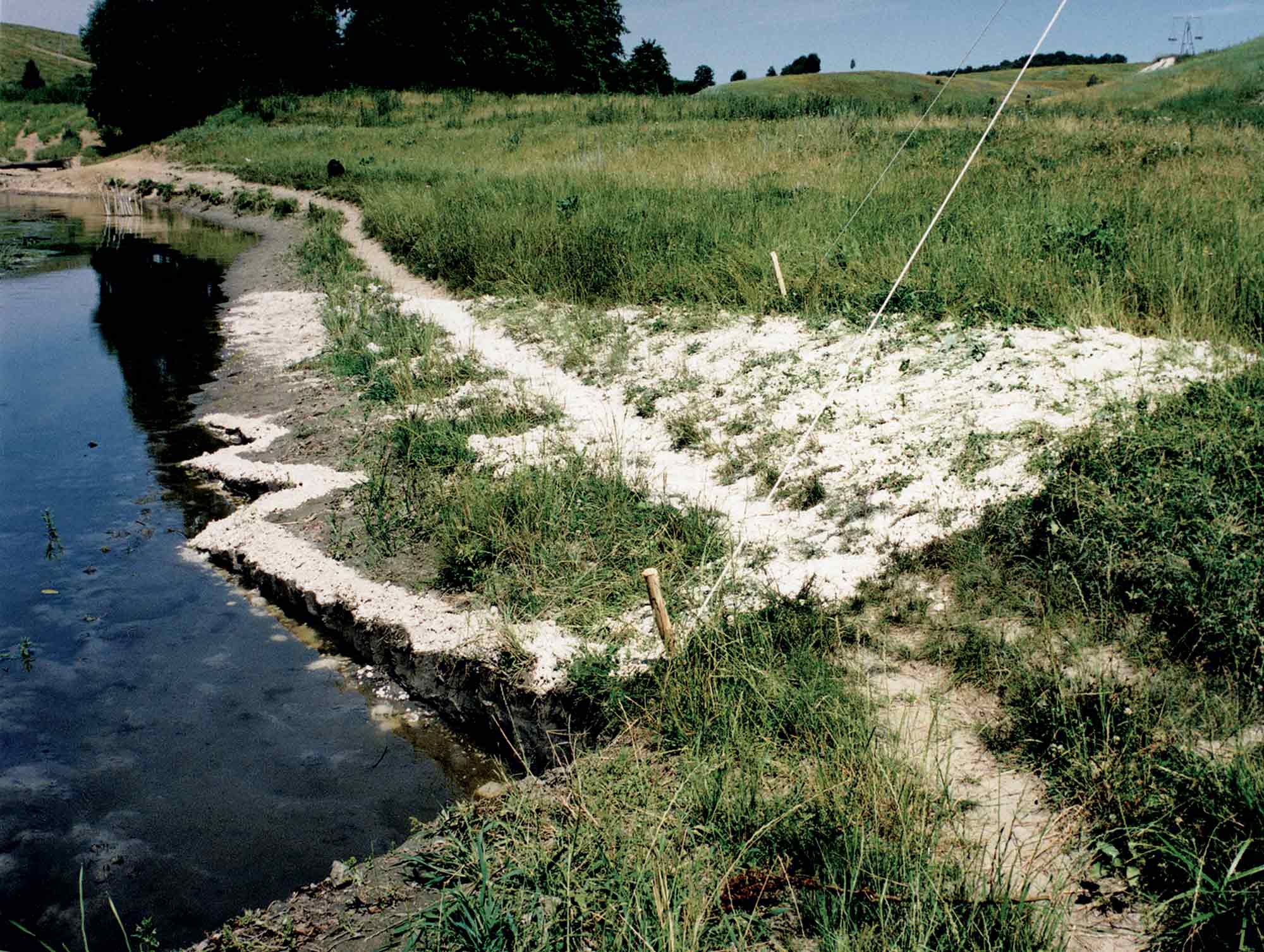
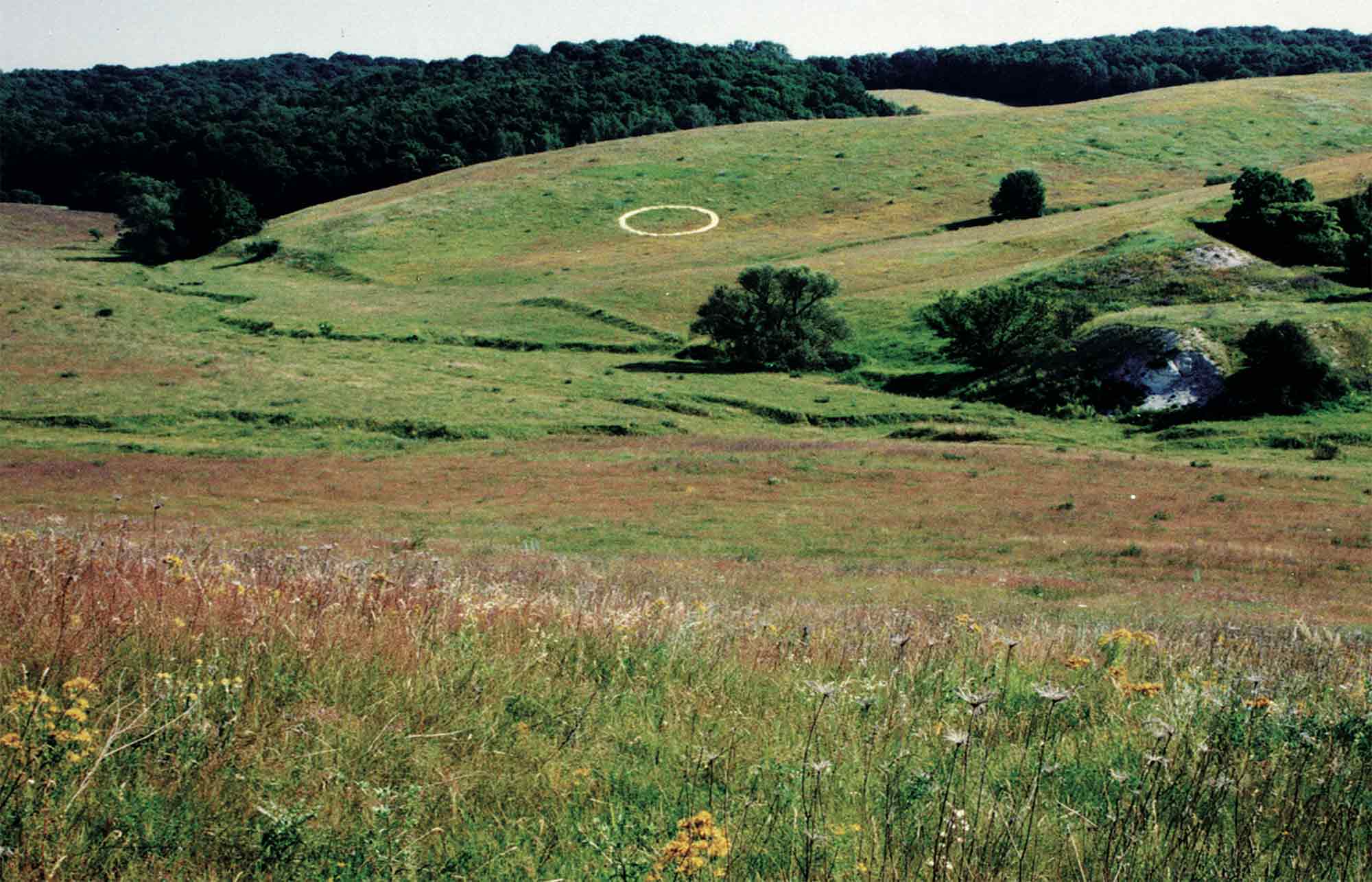
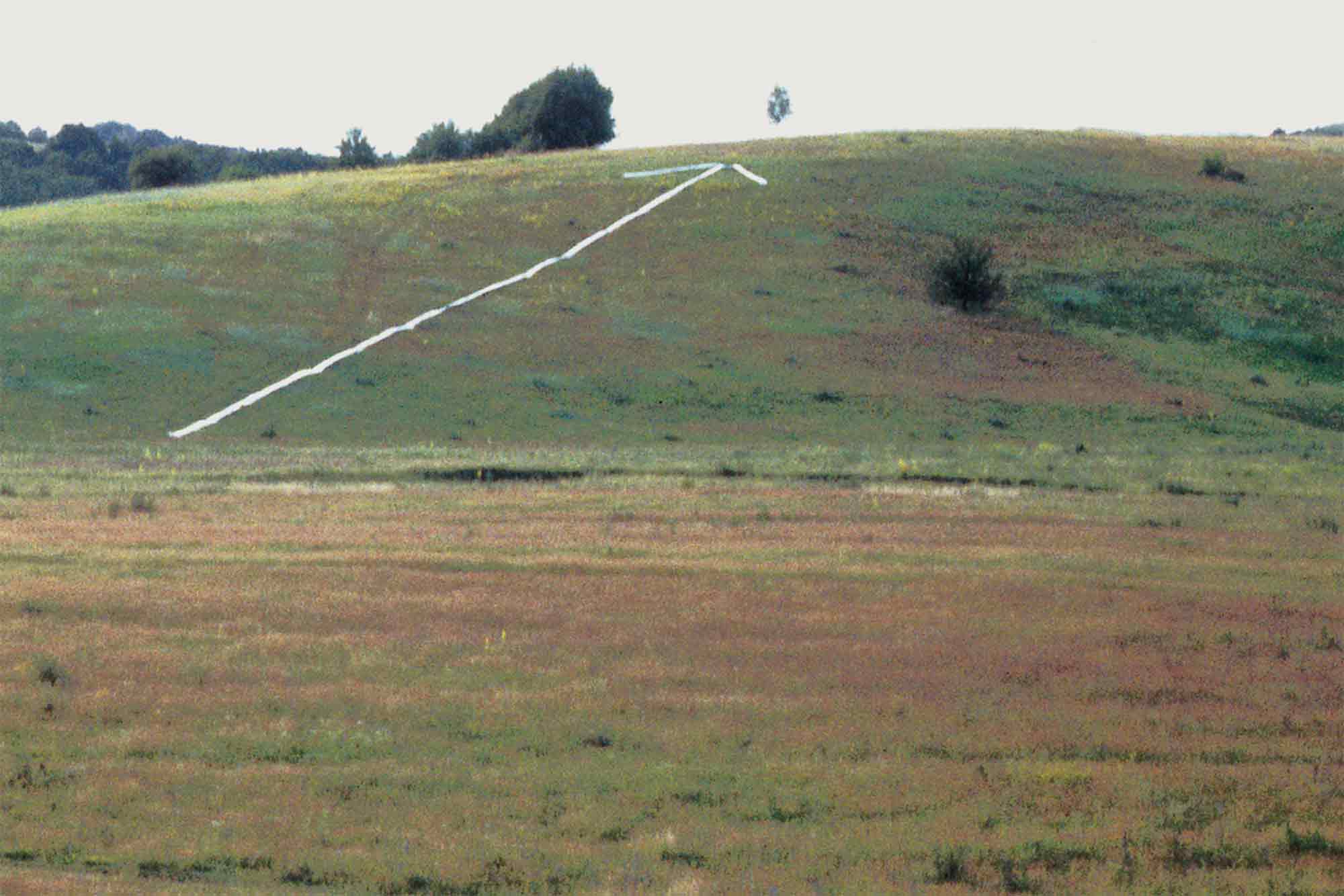
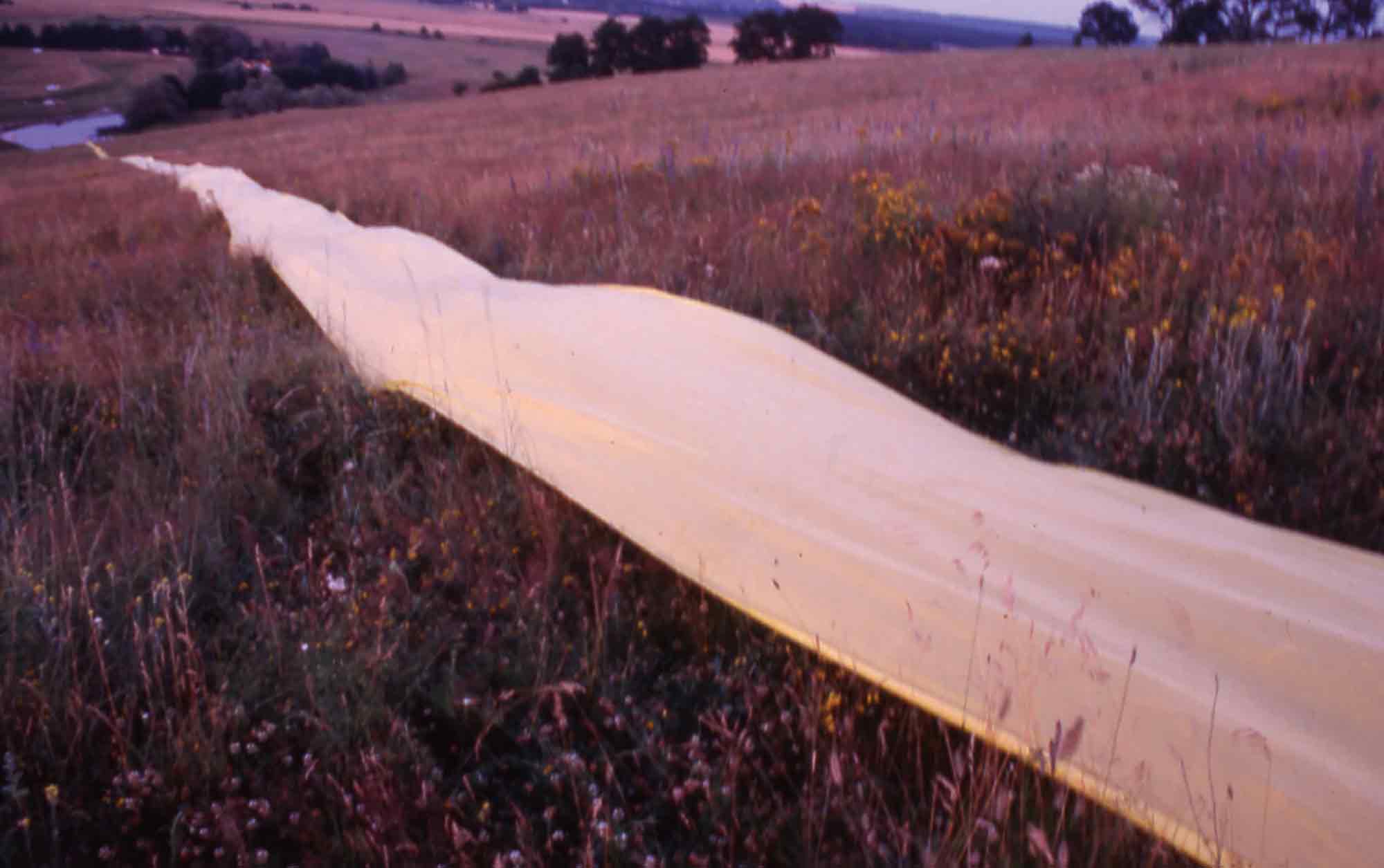
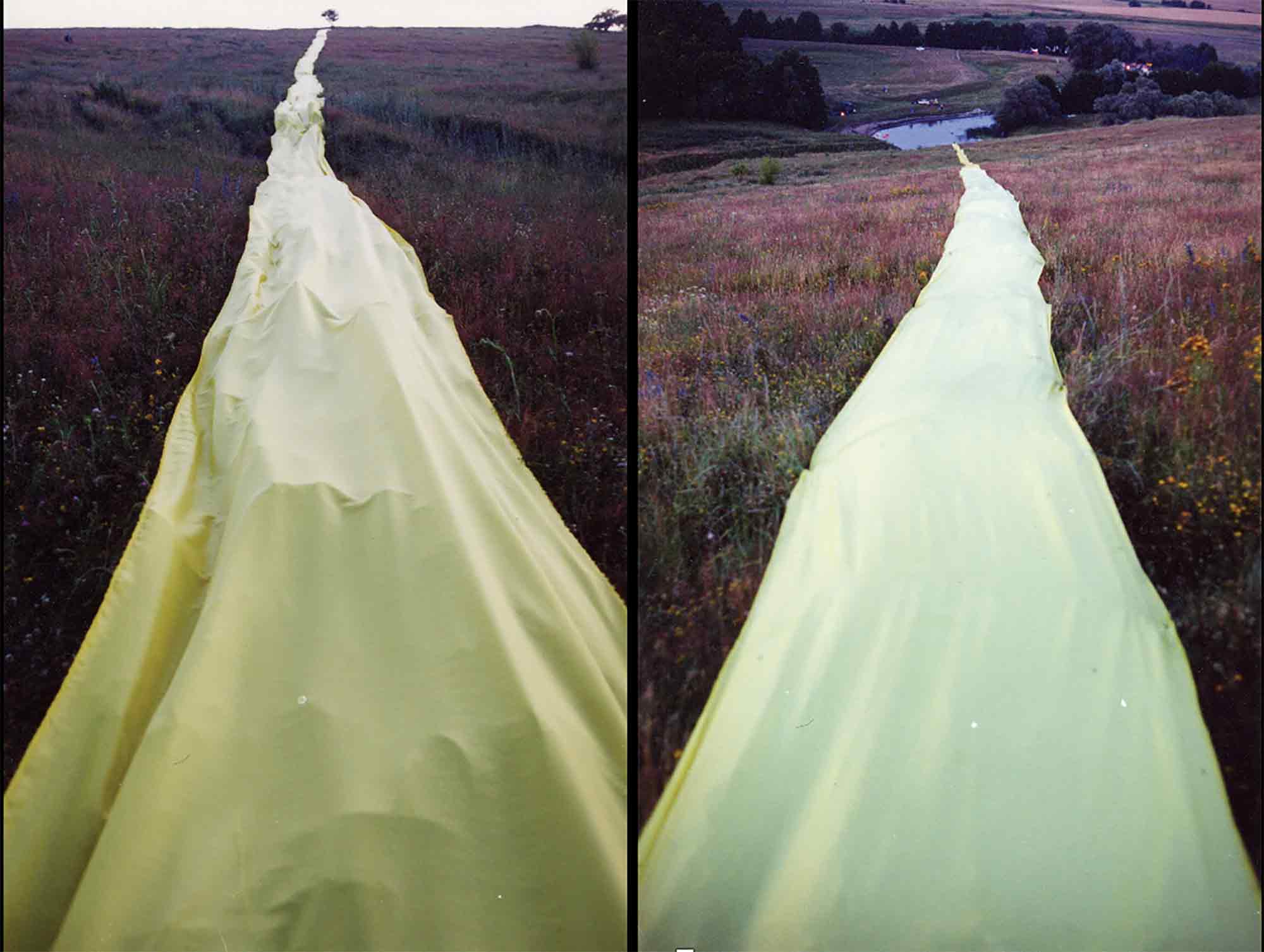
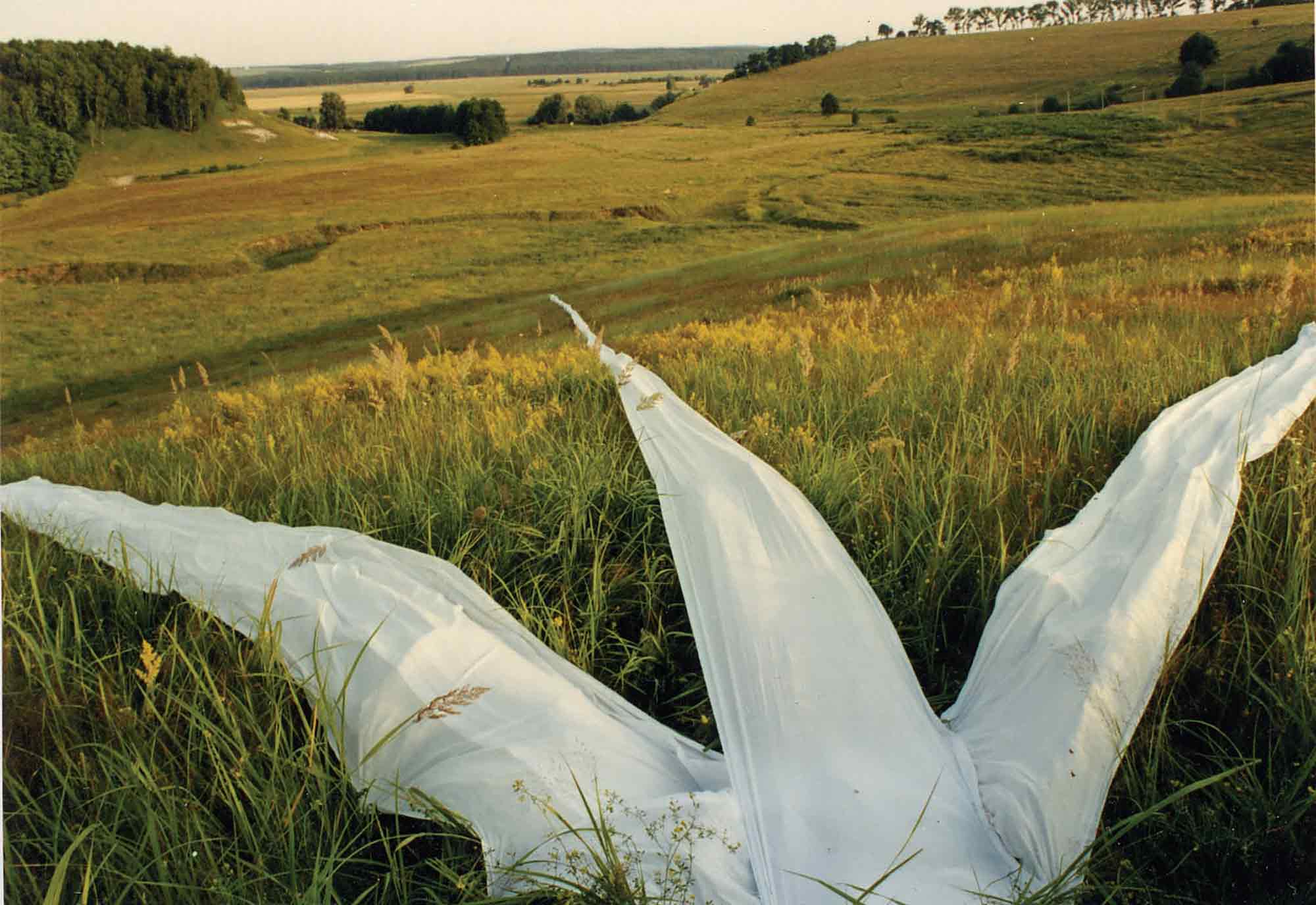
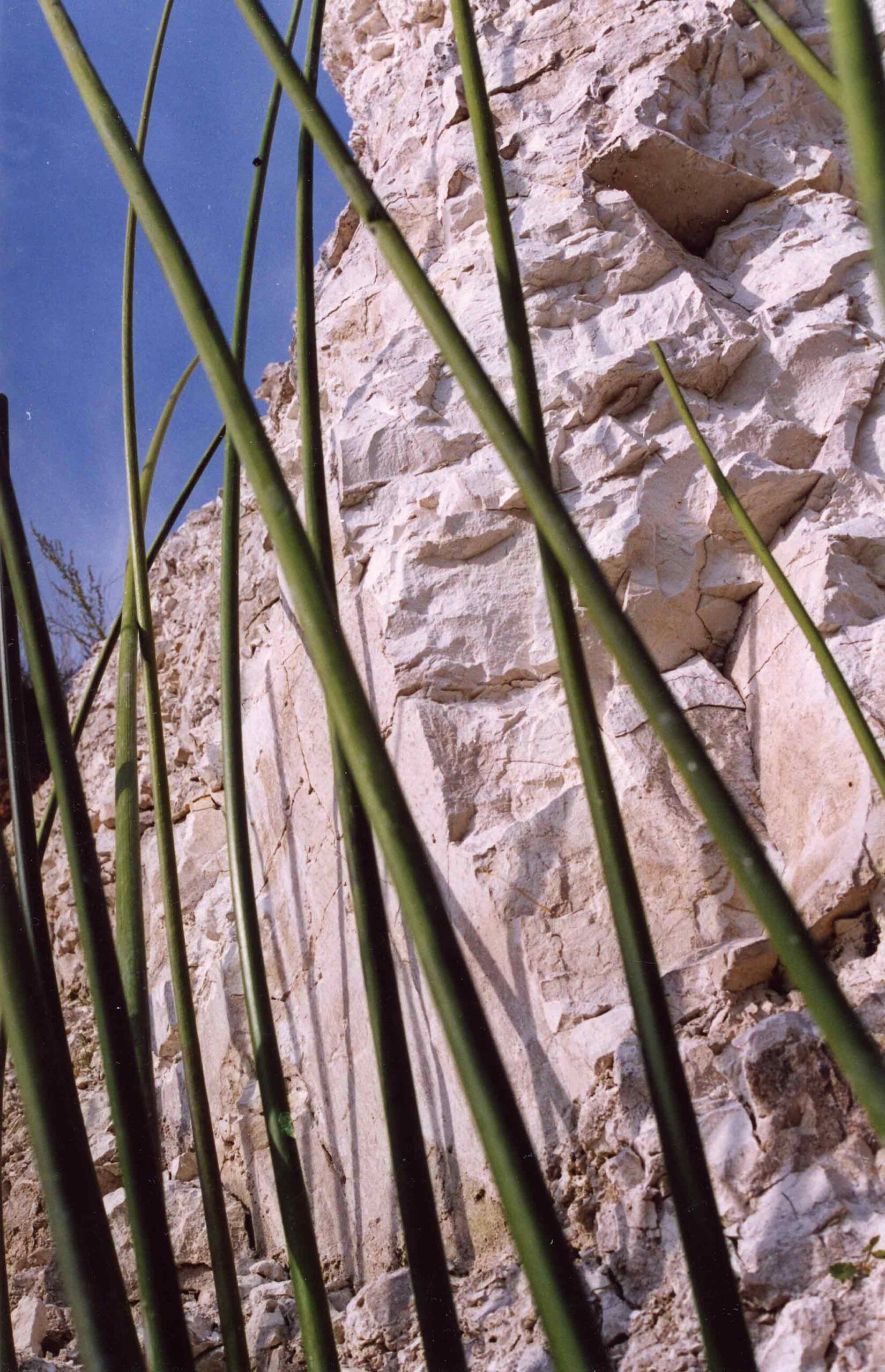
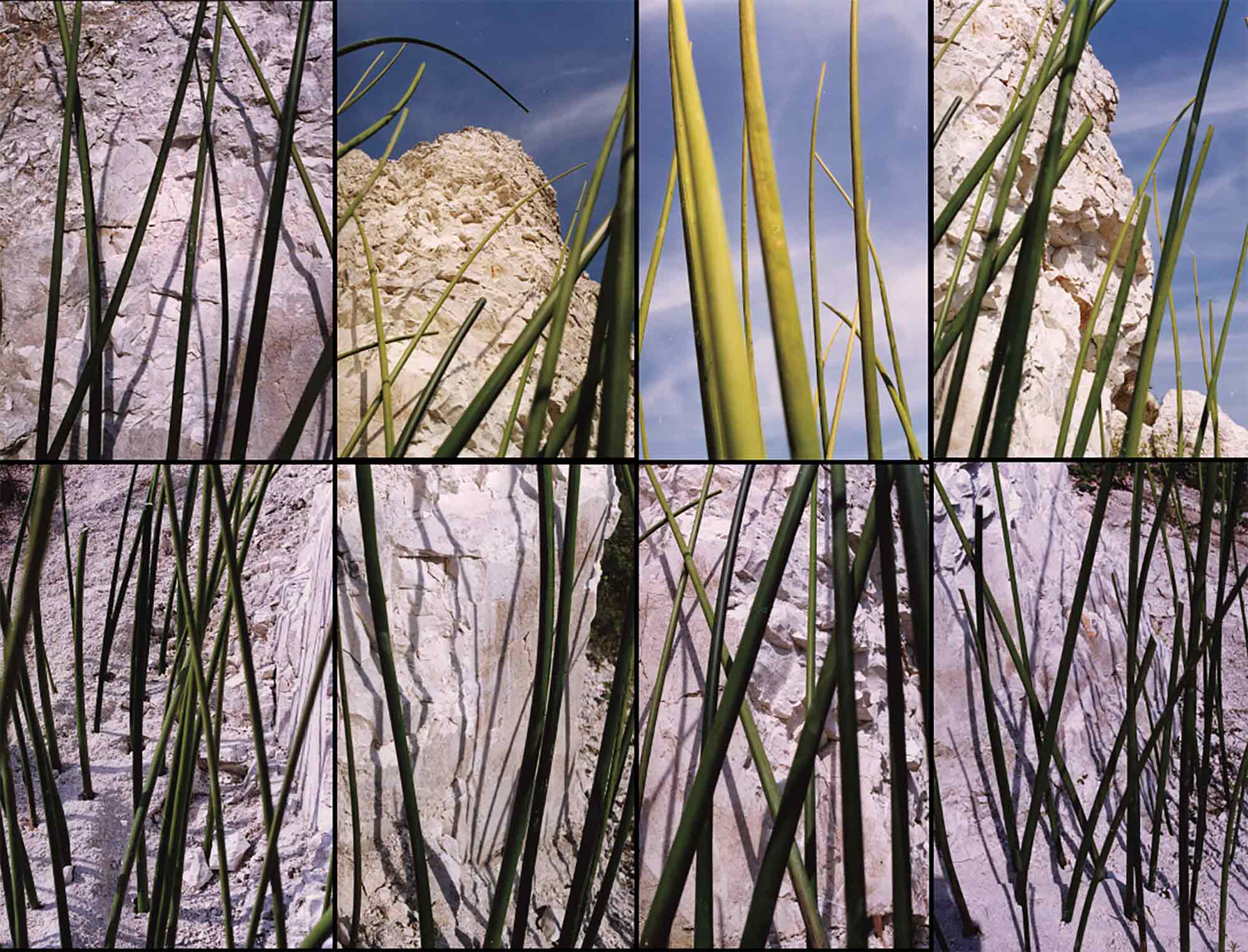
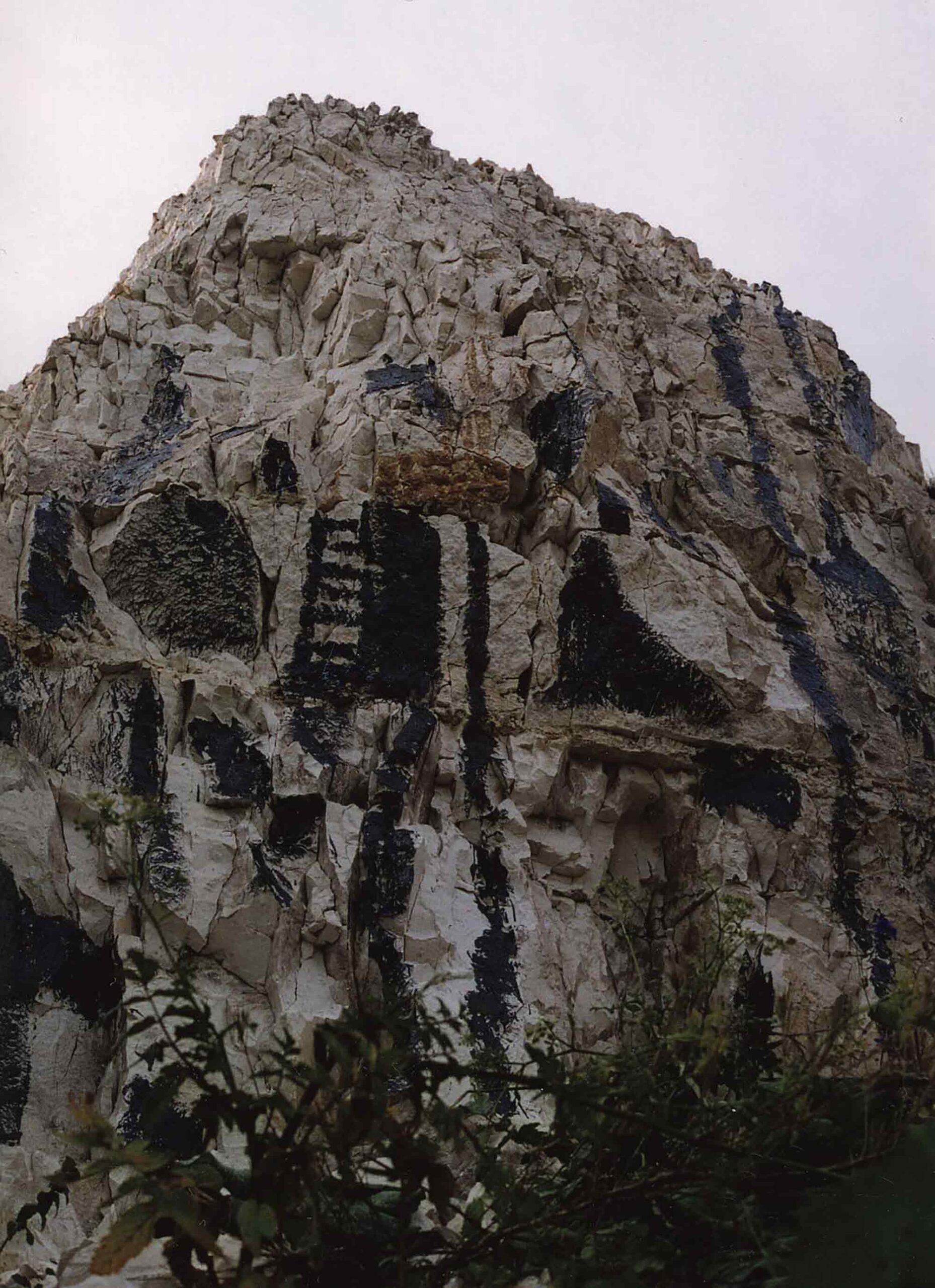
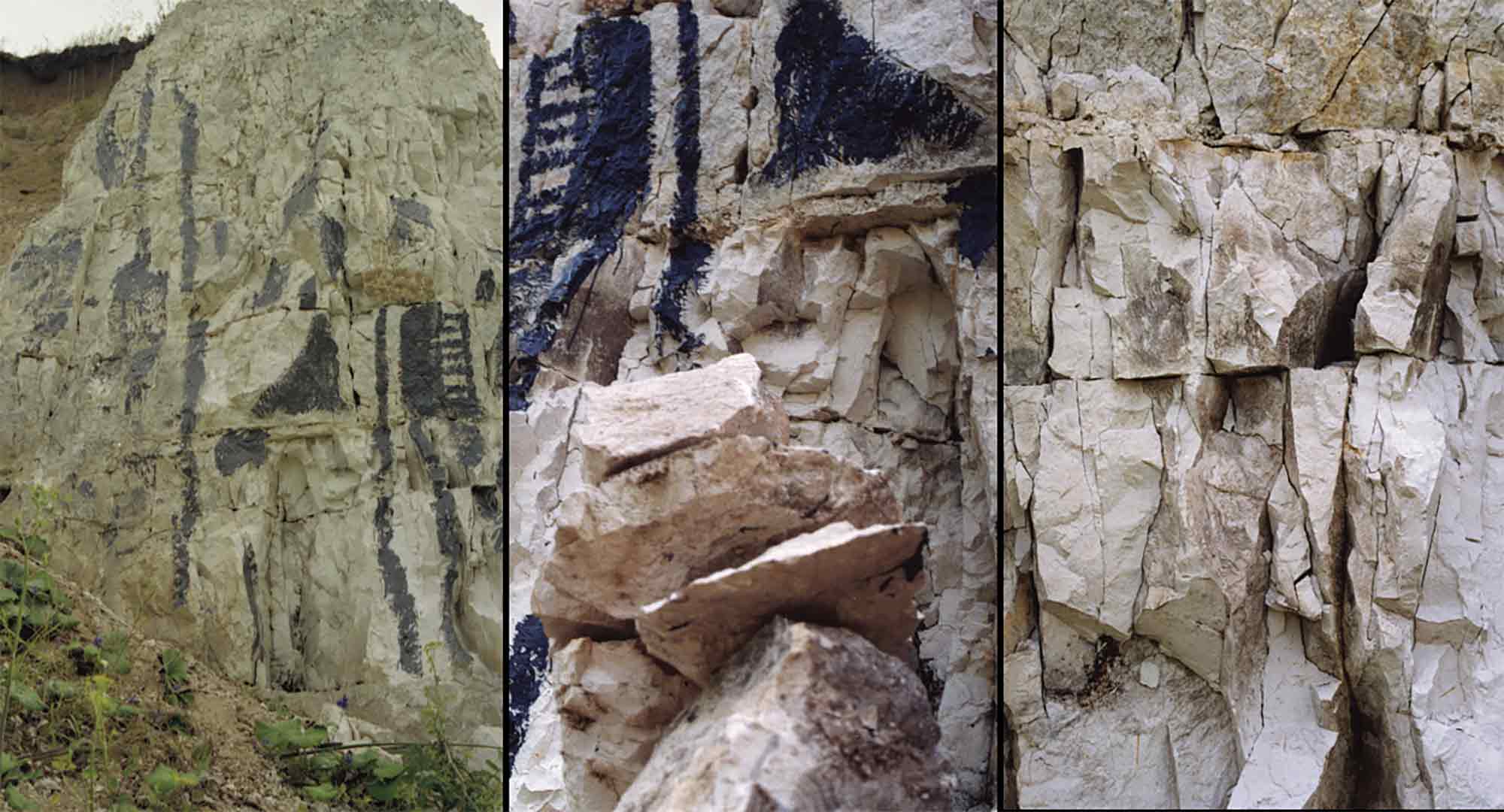
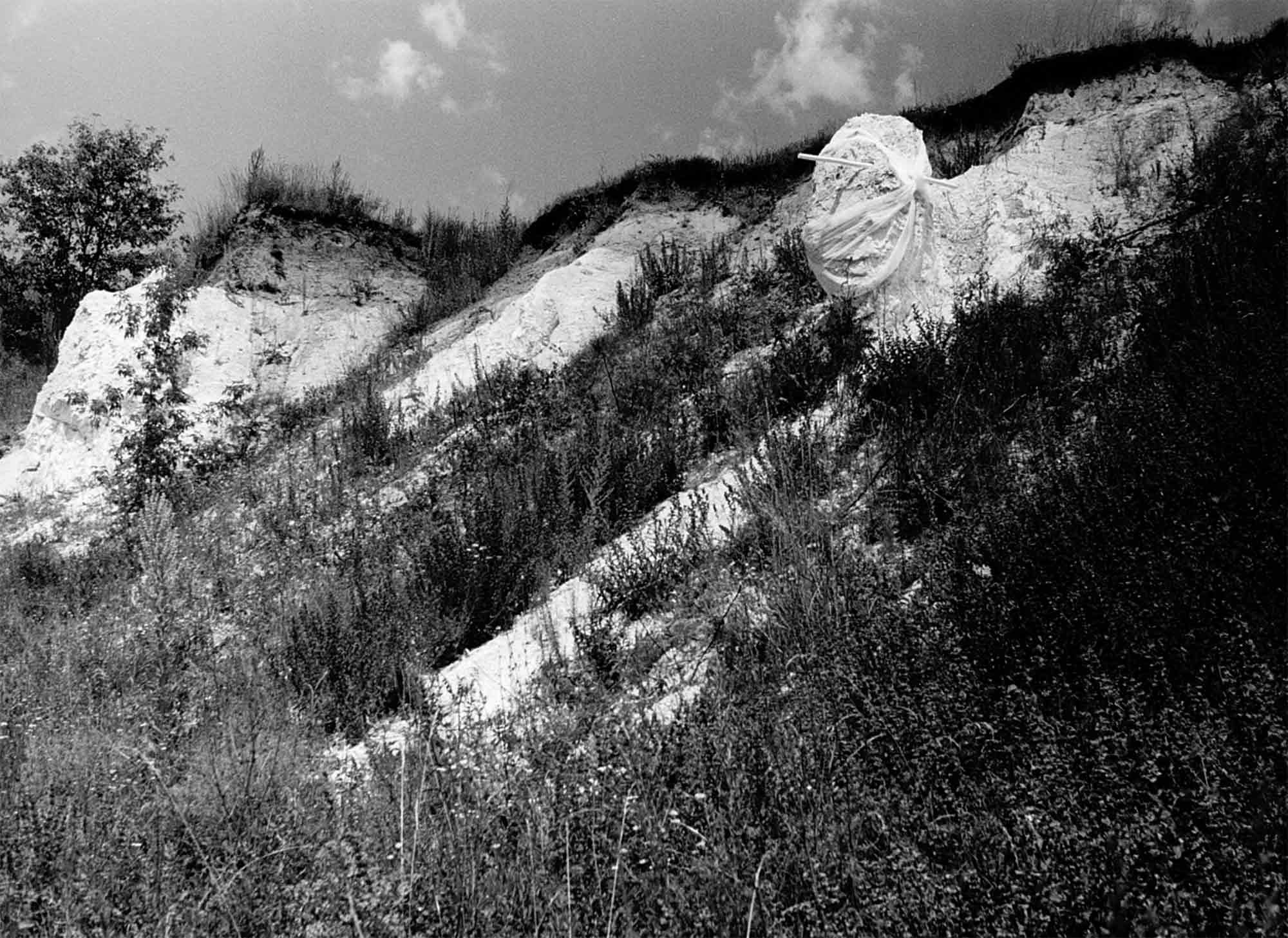
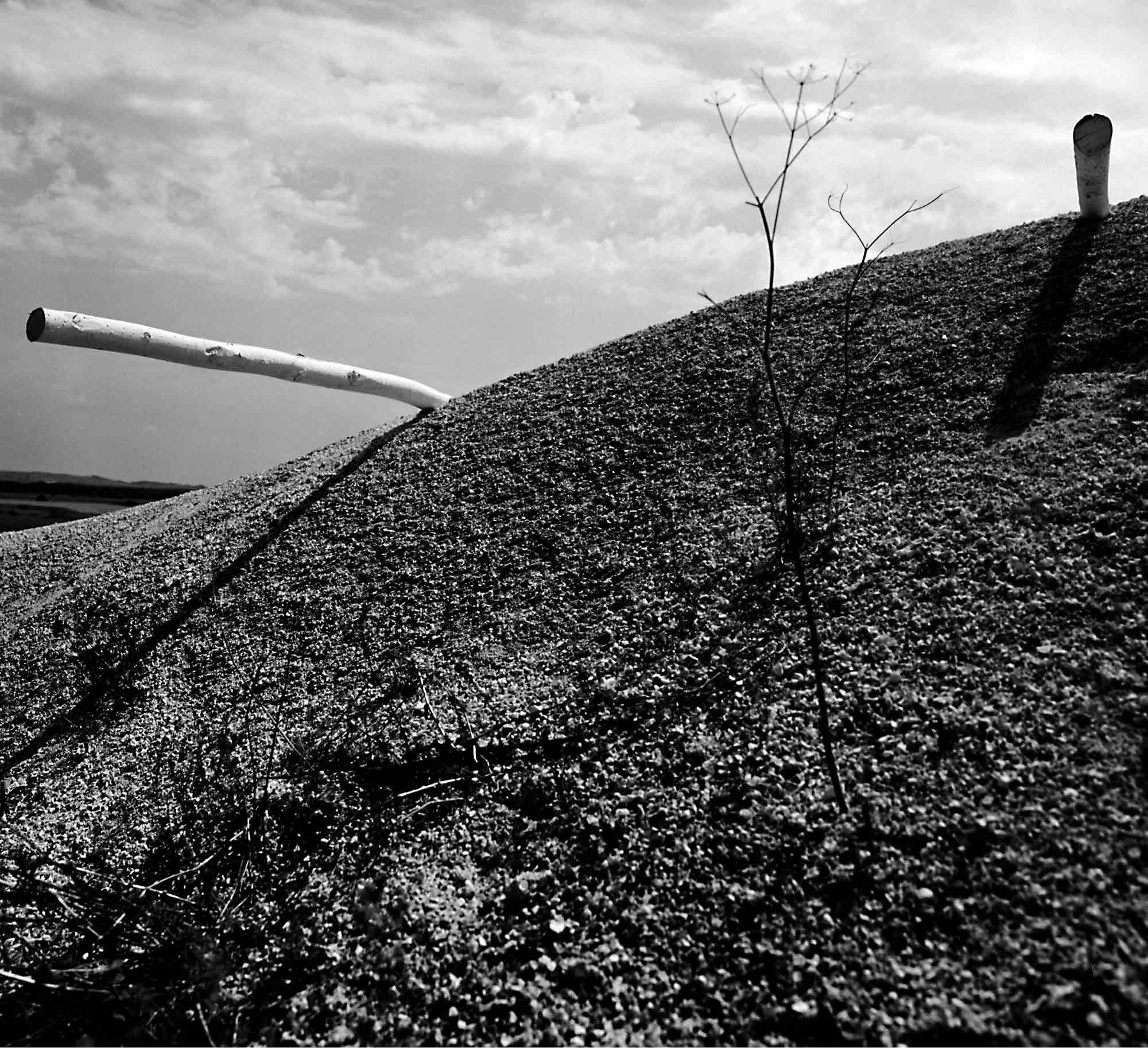
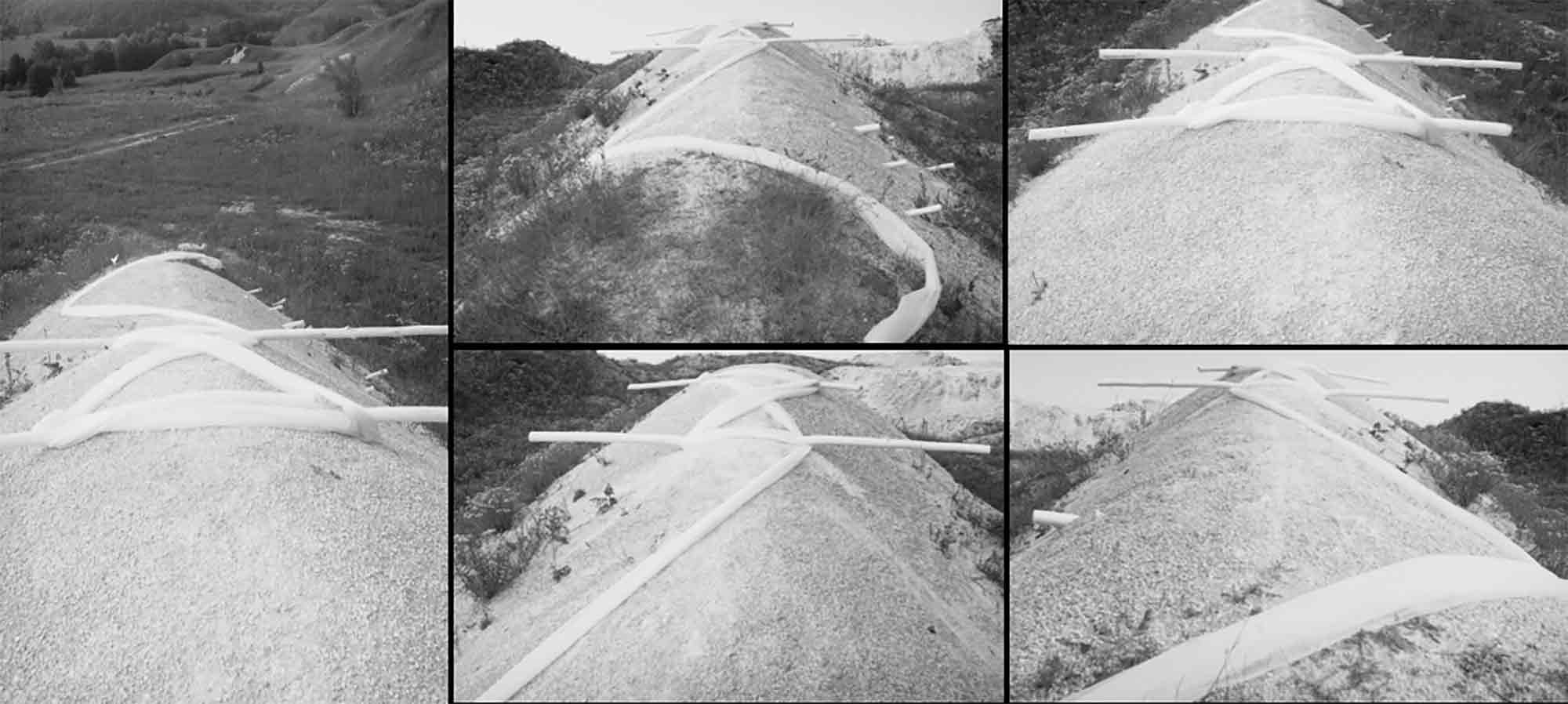
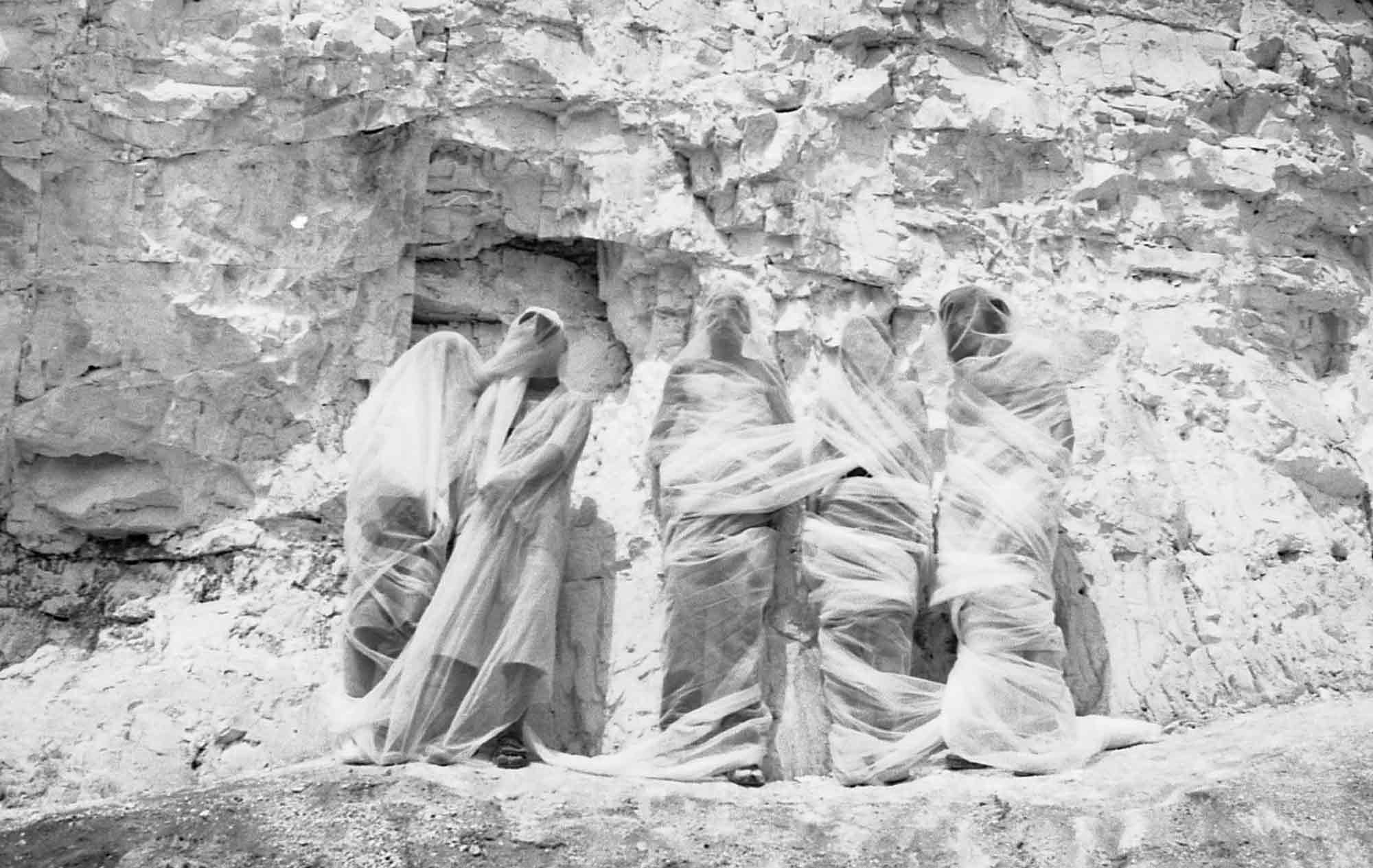
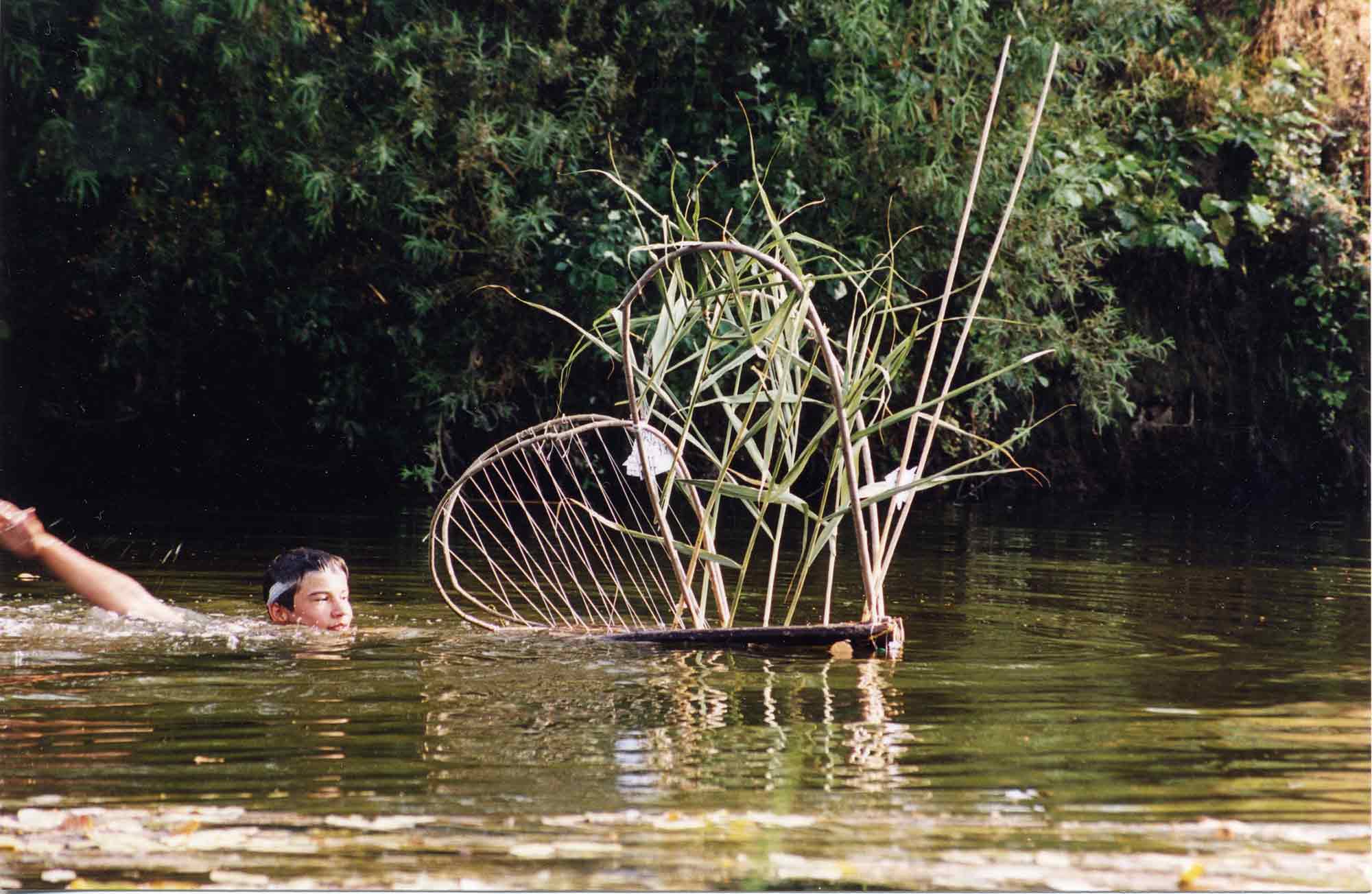
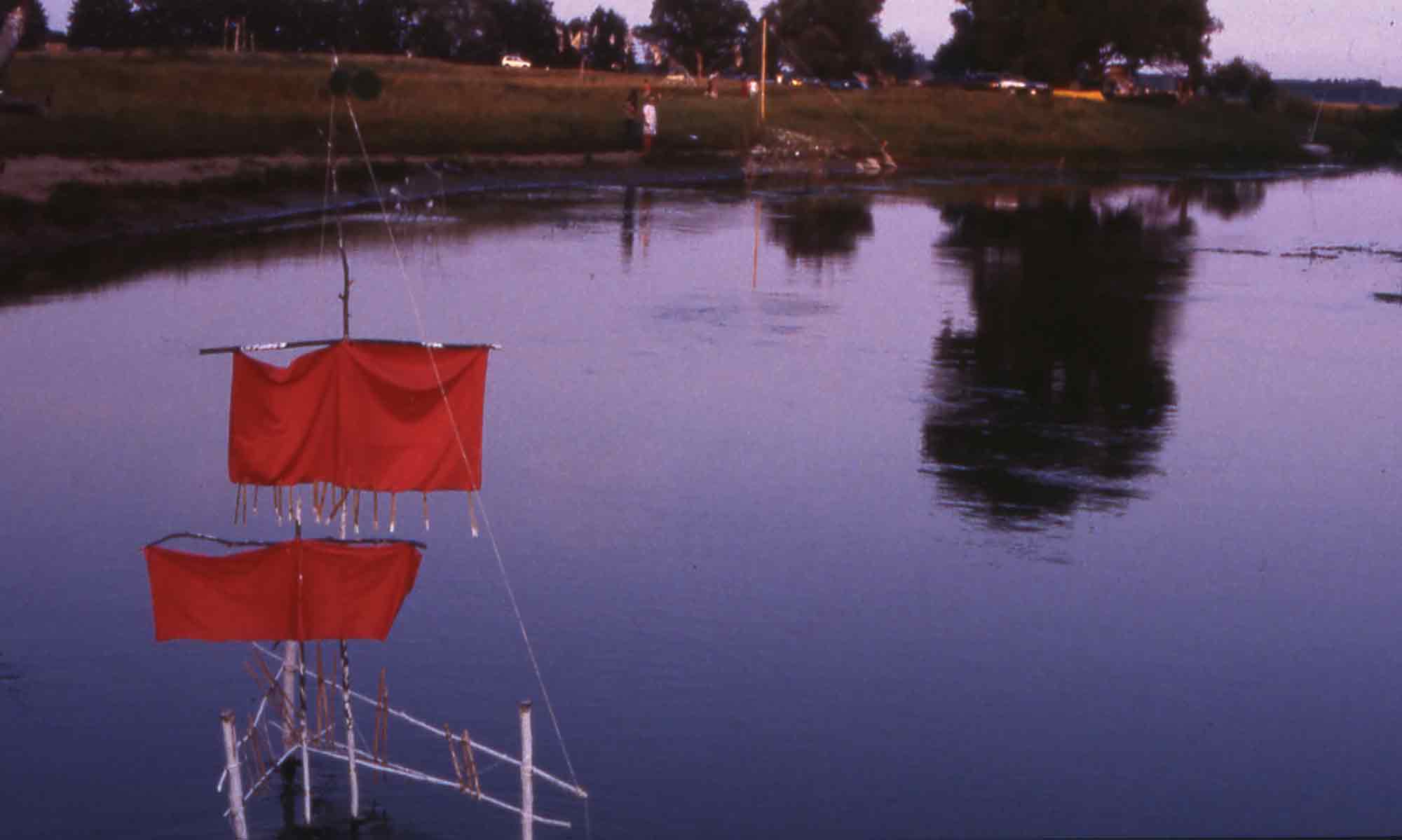
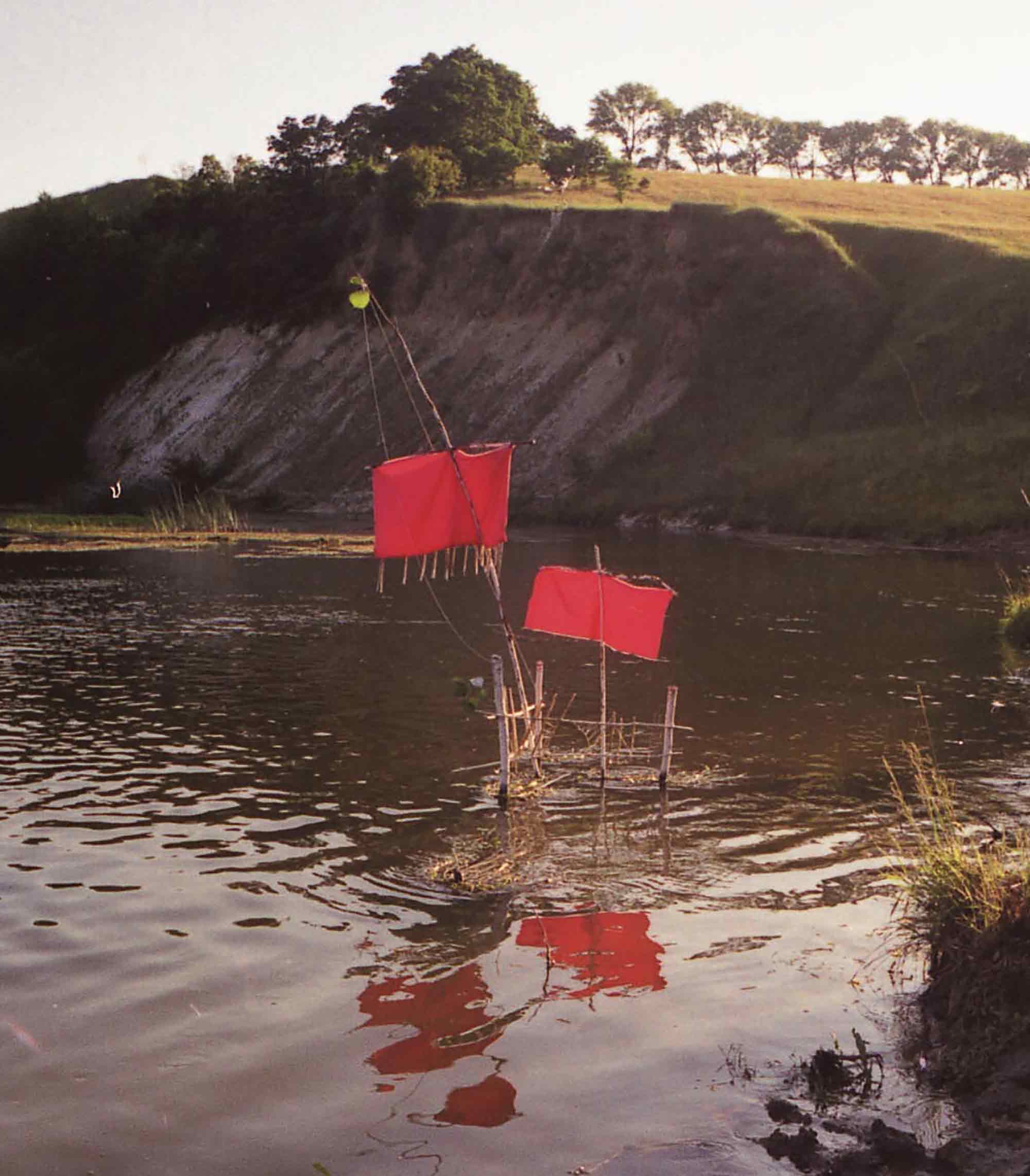
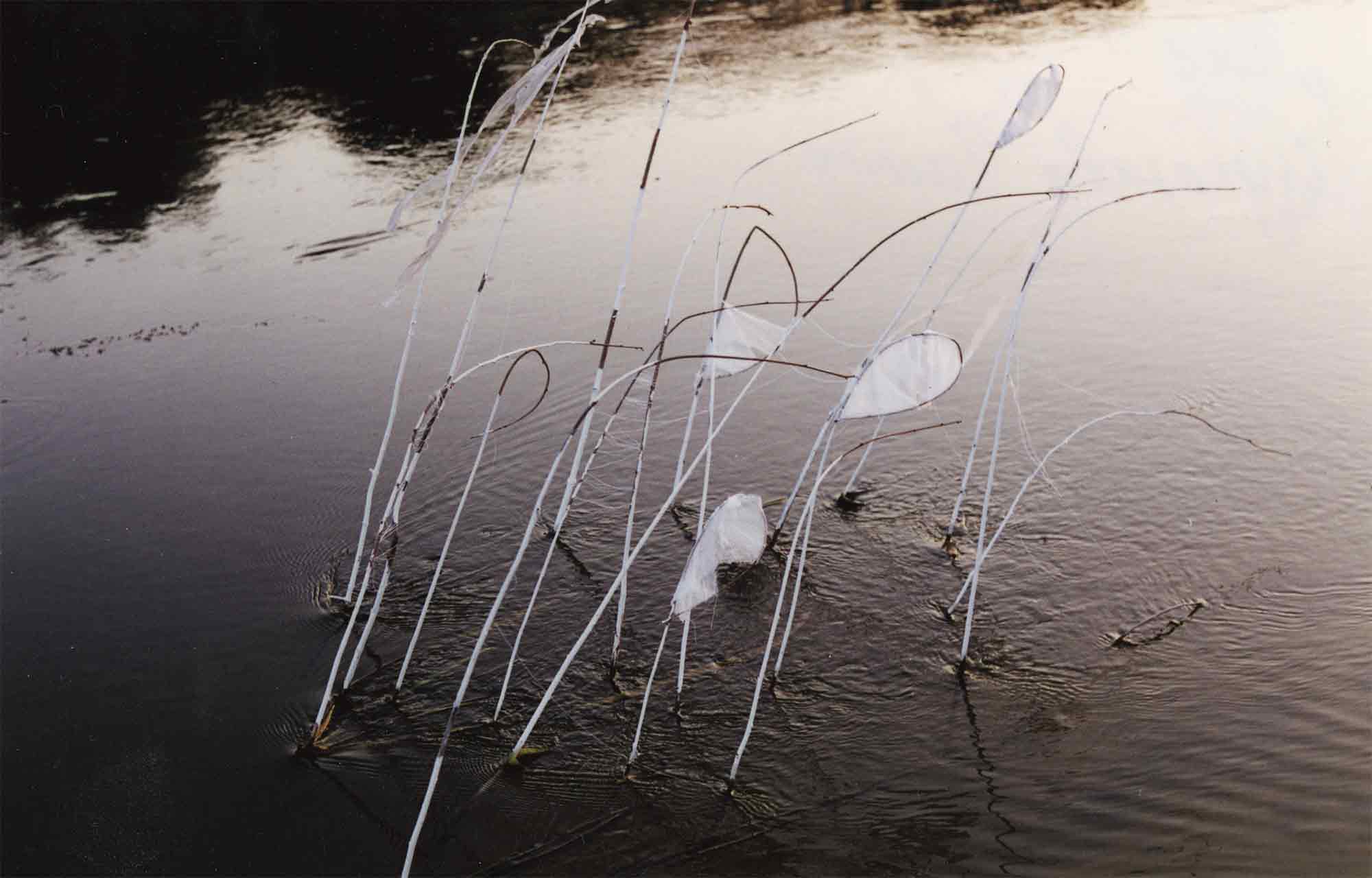
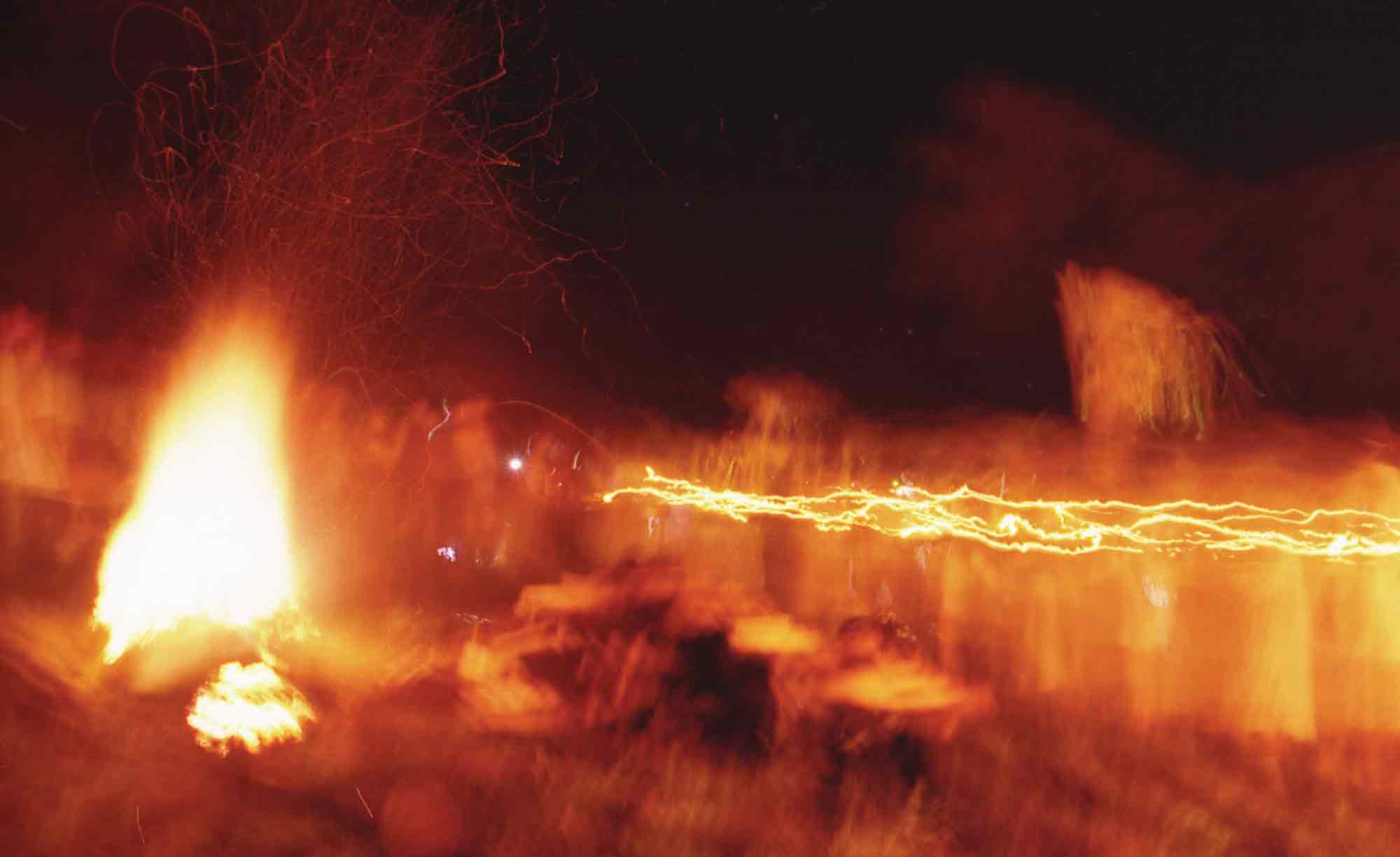
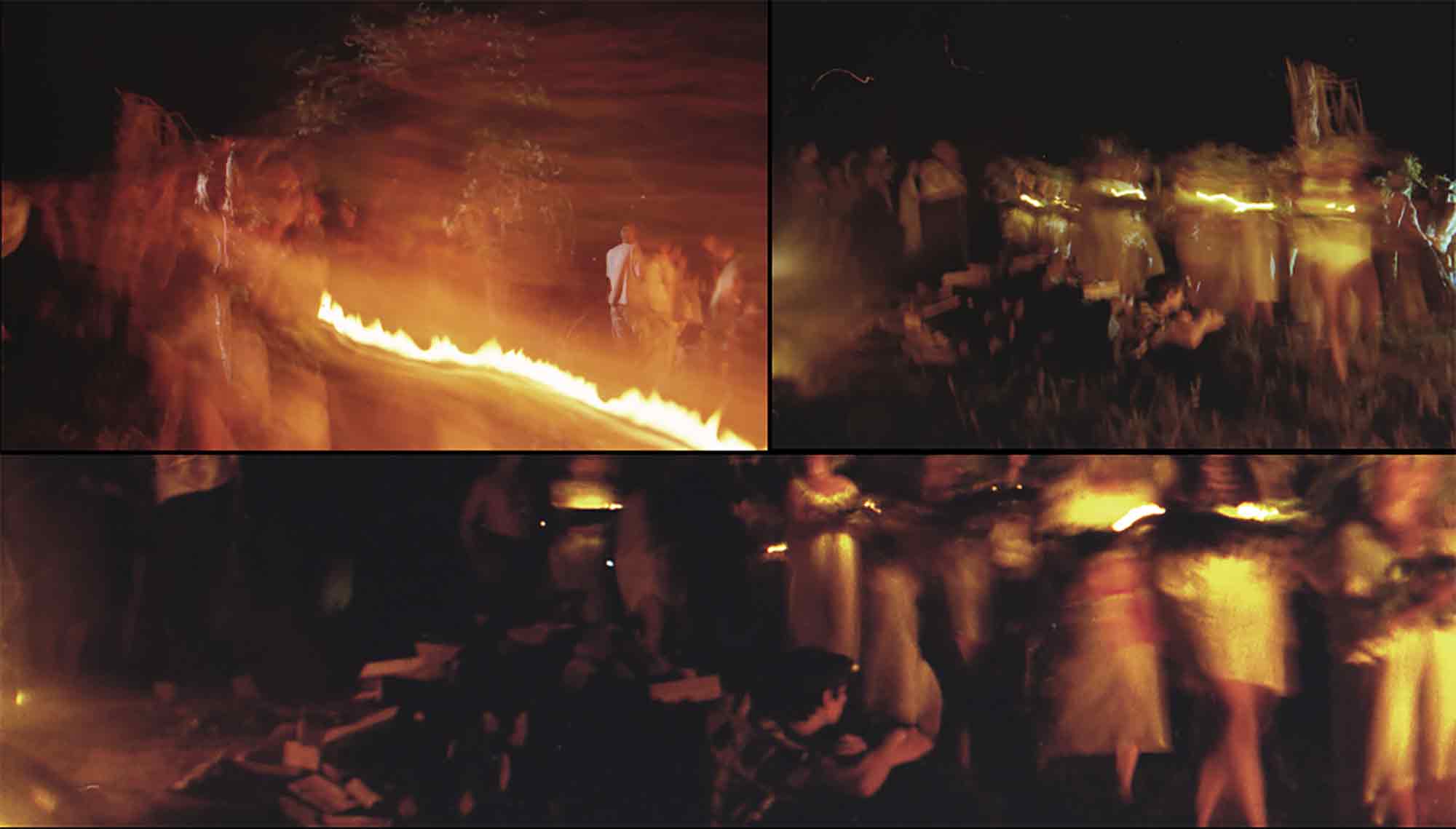
The works of Ganna Gidora, Petro Bevza, Oleksii Lytvynenko, Mykola Zhuravel, Andrii Bludov, Valerii Shkarupa, Yurii Firsik, Ihor Shvachunov, and the Kokhans marked the inclusion of natural phenomena—wind, fire, fog, precipitation—in artistic practice and their influence on form-generating processes within the landscape. “Shadows of White Walls” and “Shadows of the Wind” by Ganna Gidora, “Conservation of Fog” by Mykola Zhuravel, and “Cretaceous Time” by Petro Bevza and Oleksii Lytvynenko integrated atmospheric phenomena into the field of artistic expression, thereby emphasising ideas of fluidity and process. These works reflected a key methodological shift—from static object making to a dynamic understanding of land art as a practice embedded in environment, time, and natural interaction.
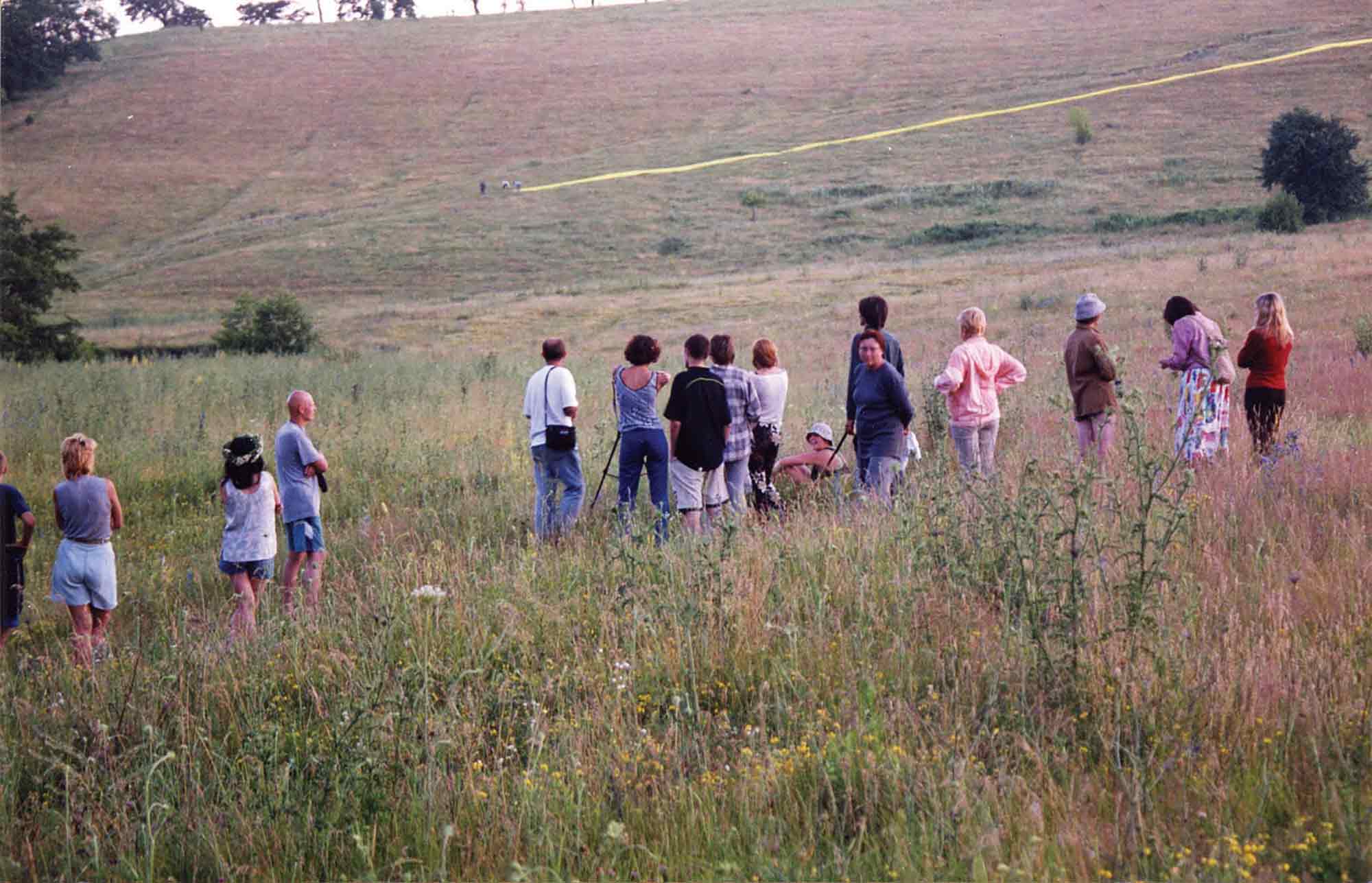
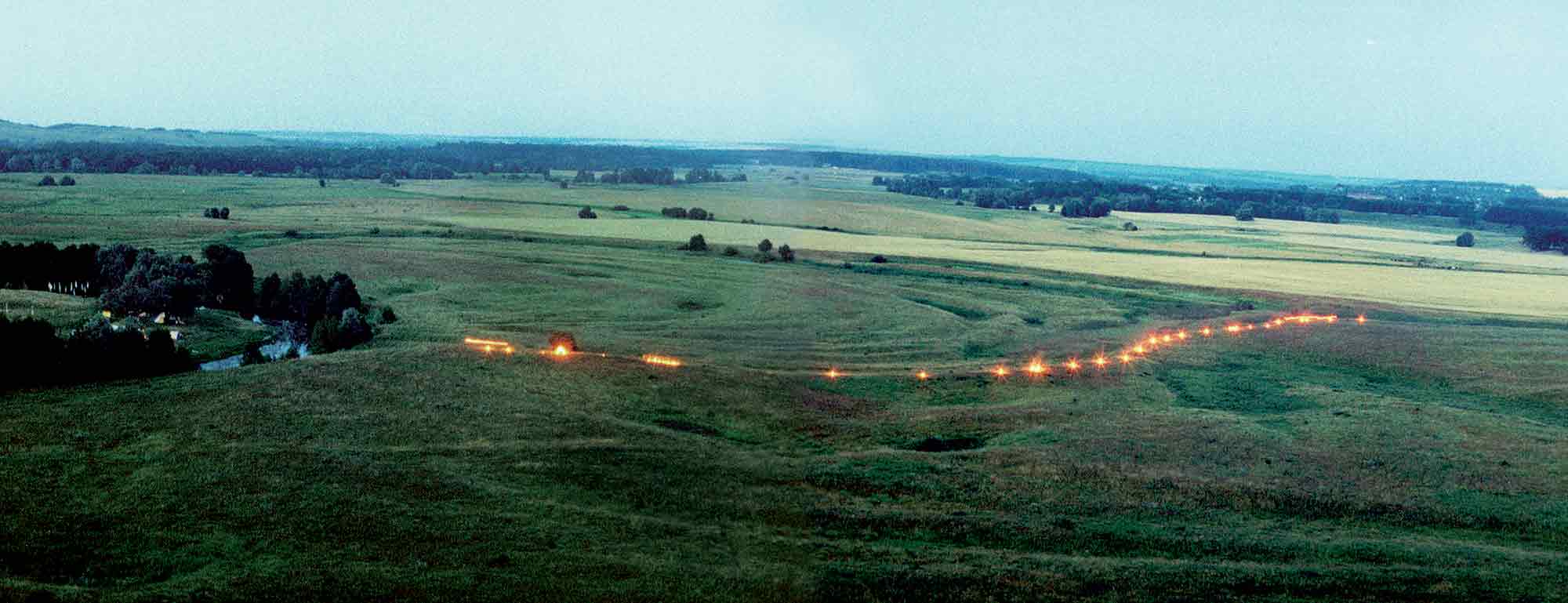
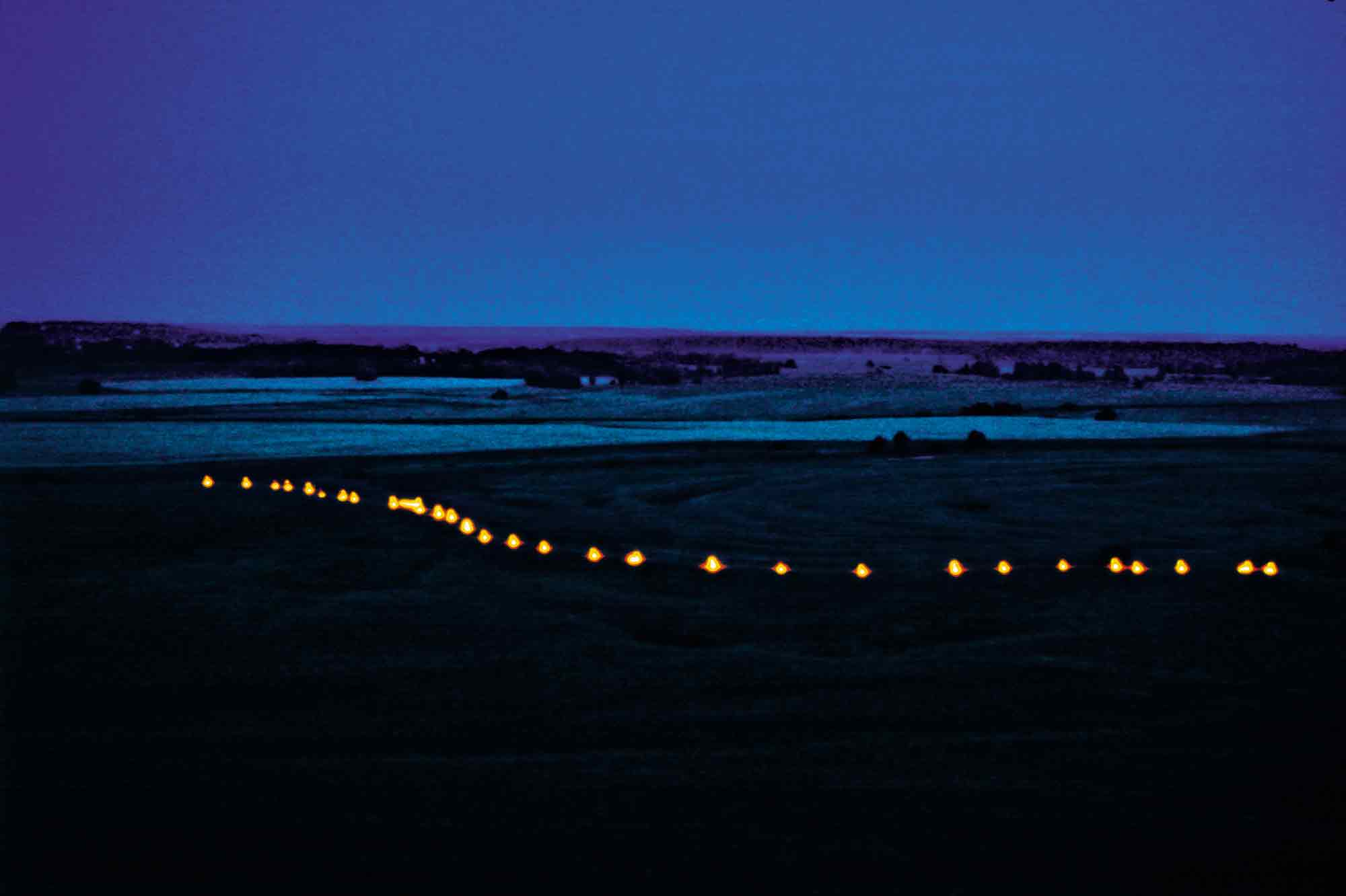
Particular attention should be paid to Andrii Bludov’s “Line-Transition”, which stood out not only for its large-scale engagement with the landscape but also for the mass involvement of all participants.
It was in 2002 that Petro Bevza first introduced the concept of “environmental art”, which gradually became established as a key term for defining the practices that took shape in Mohrytsia.