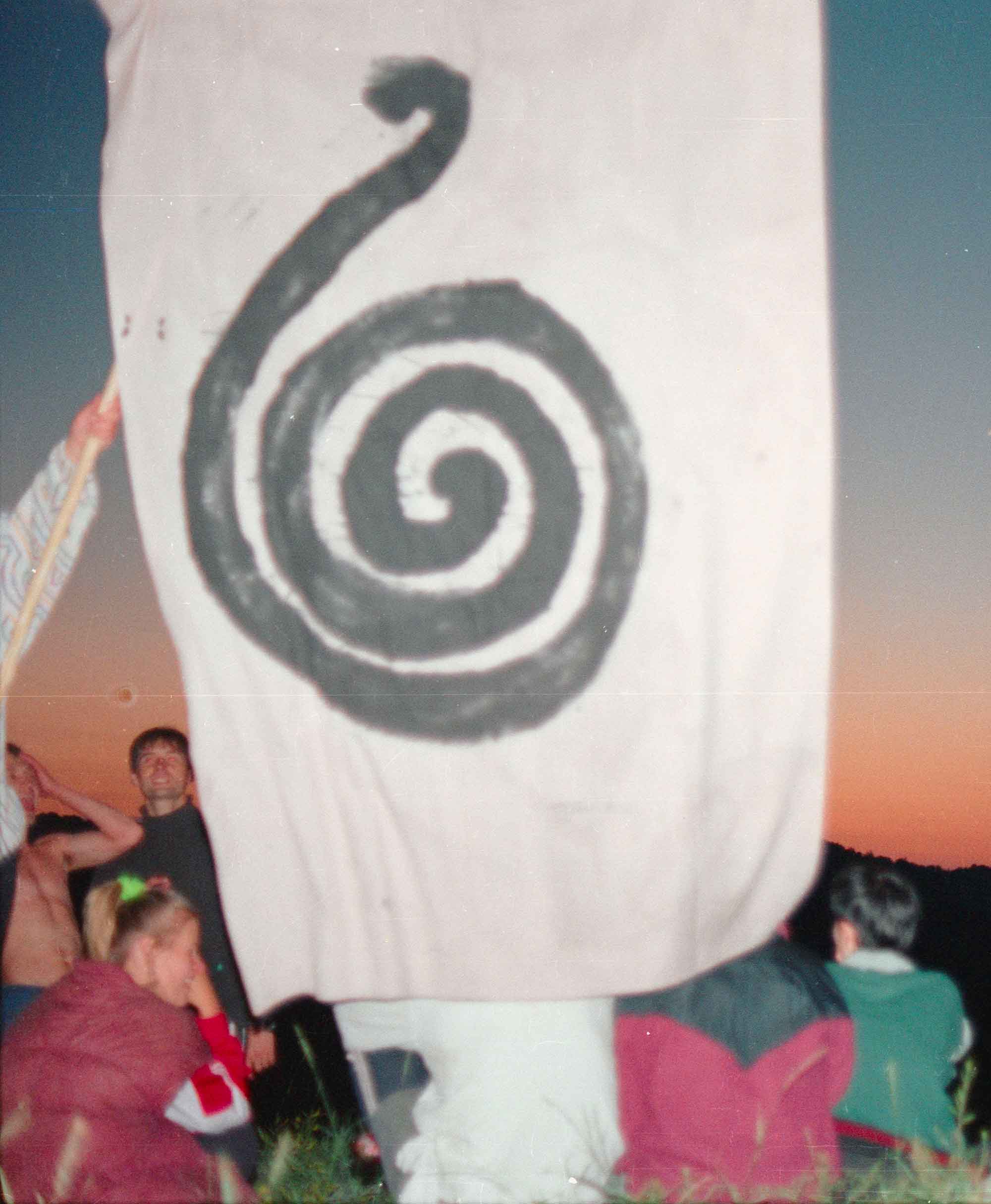
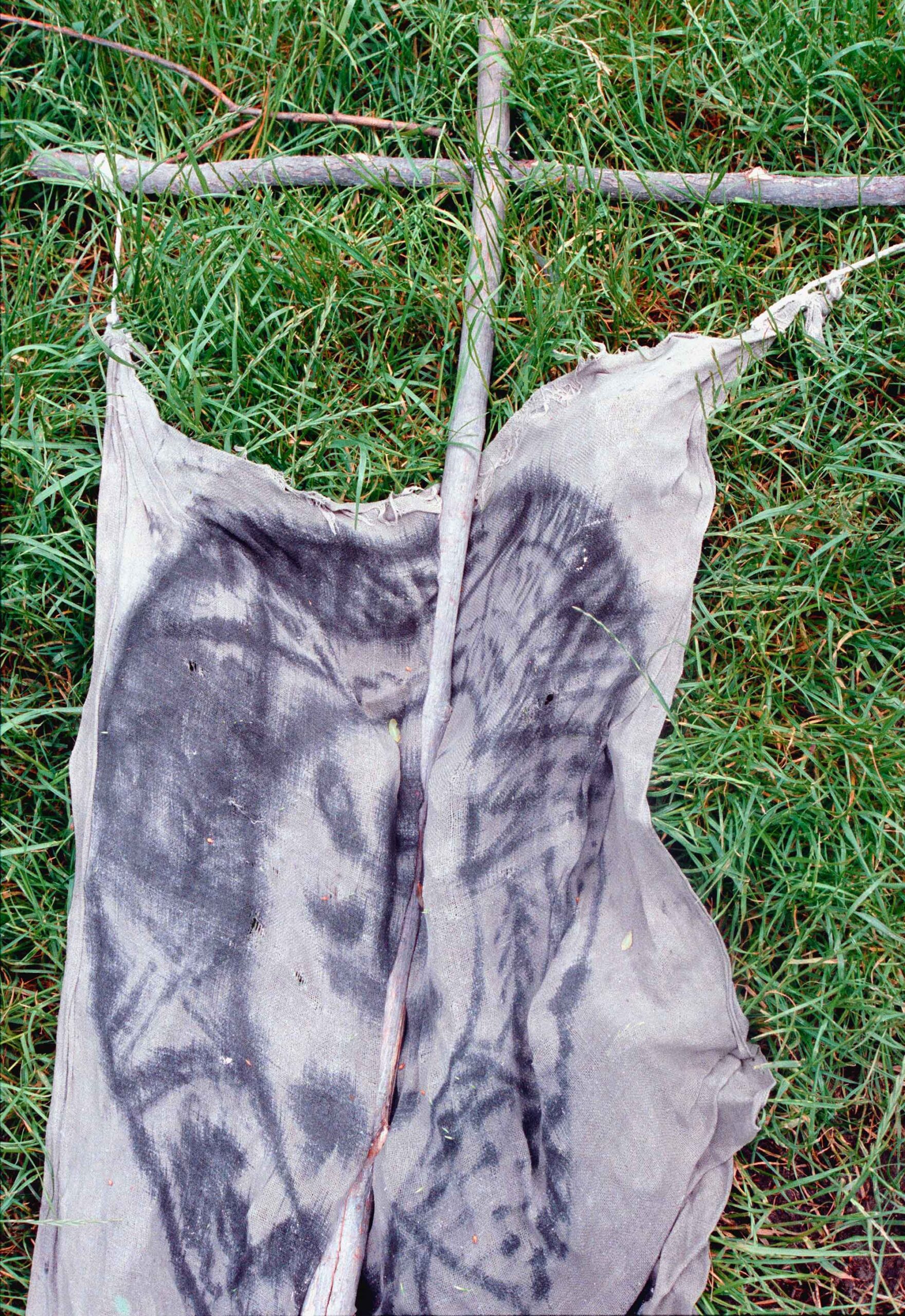
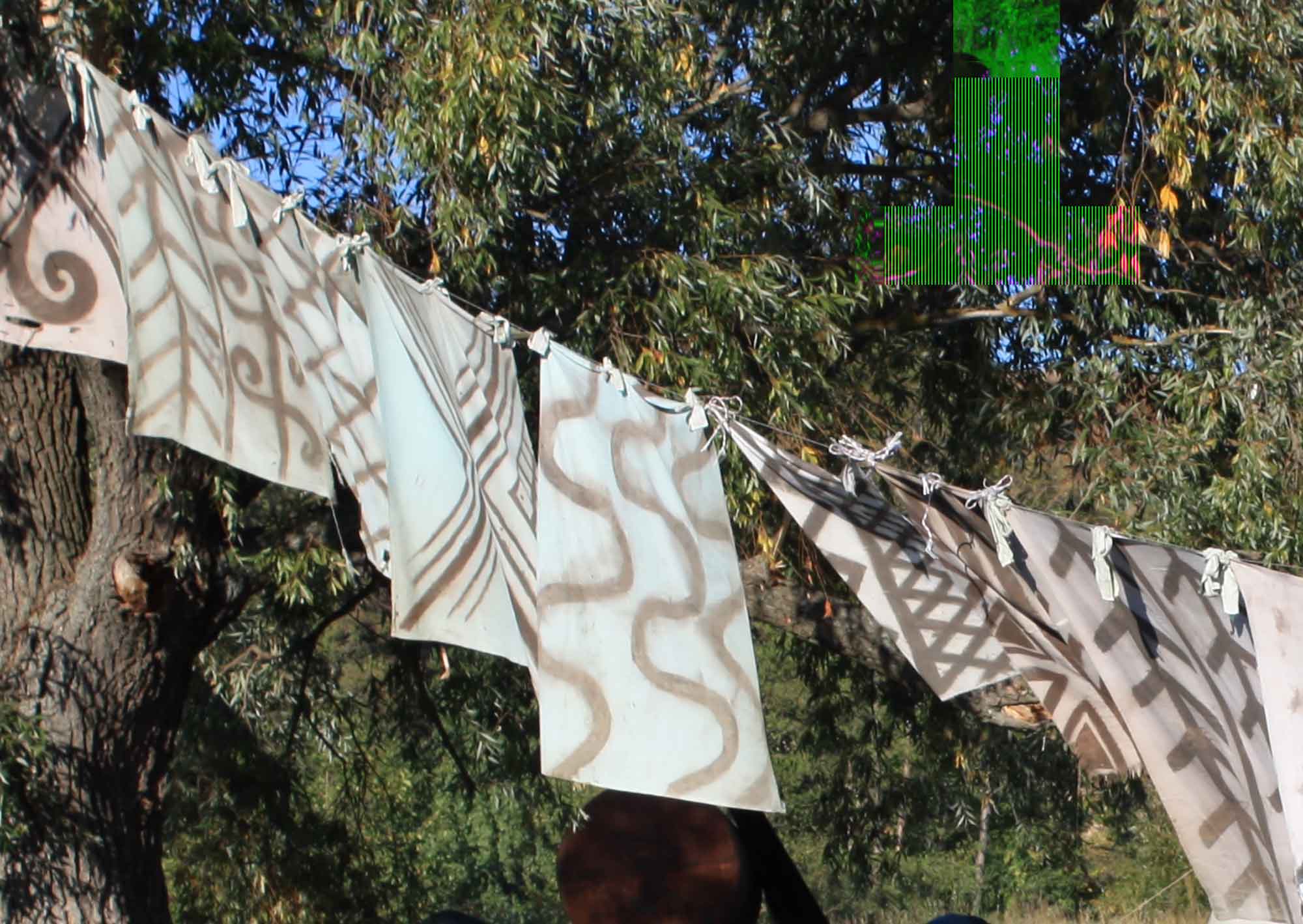
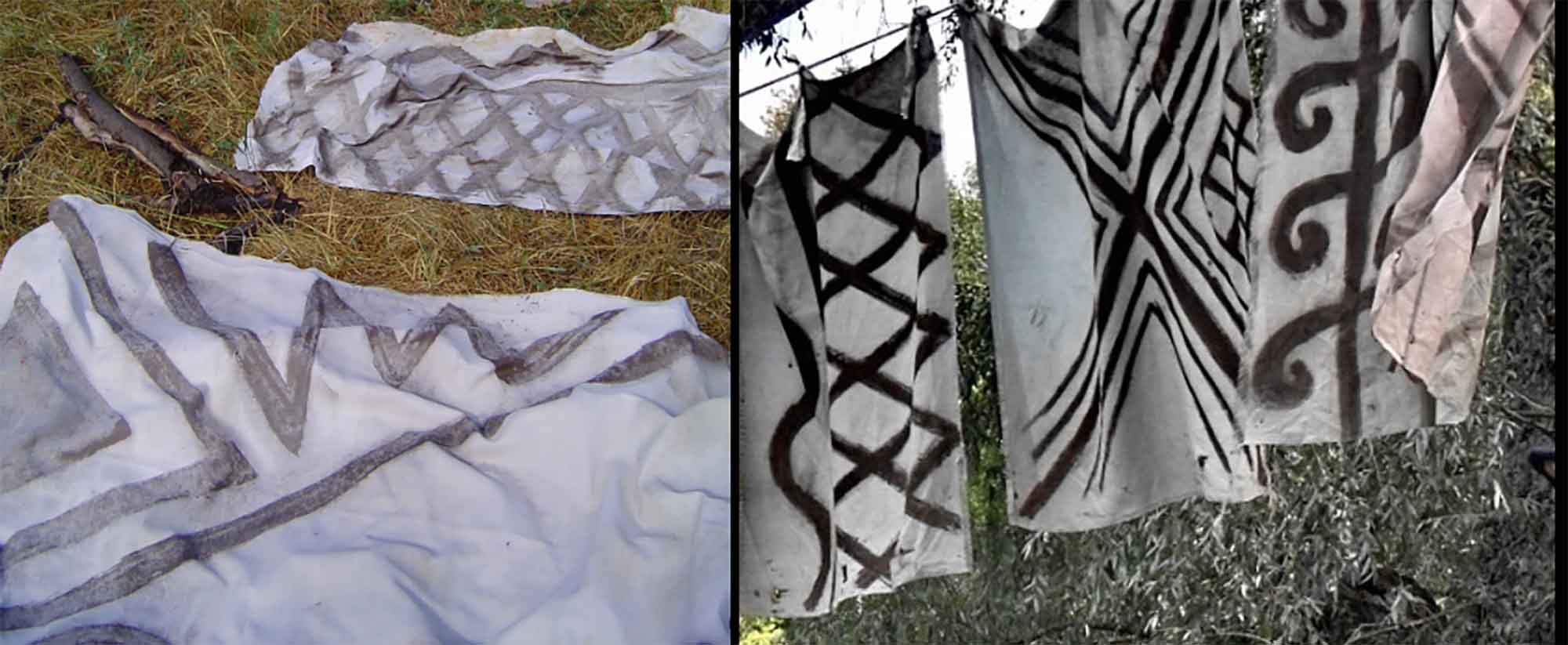
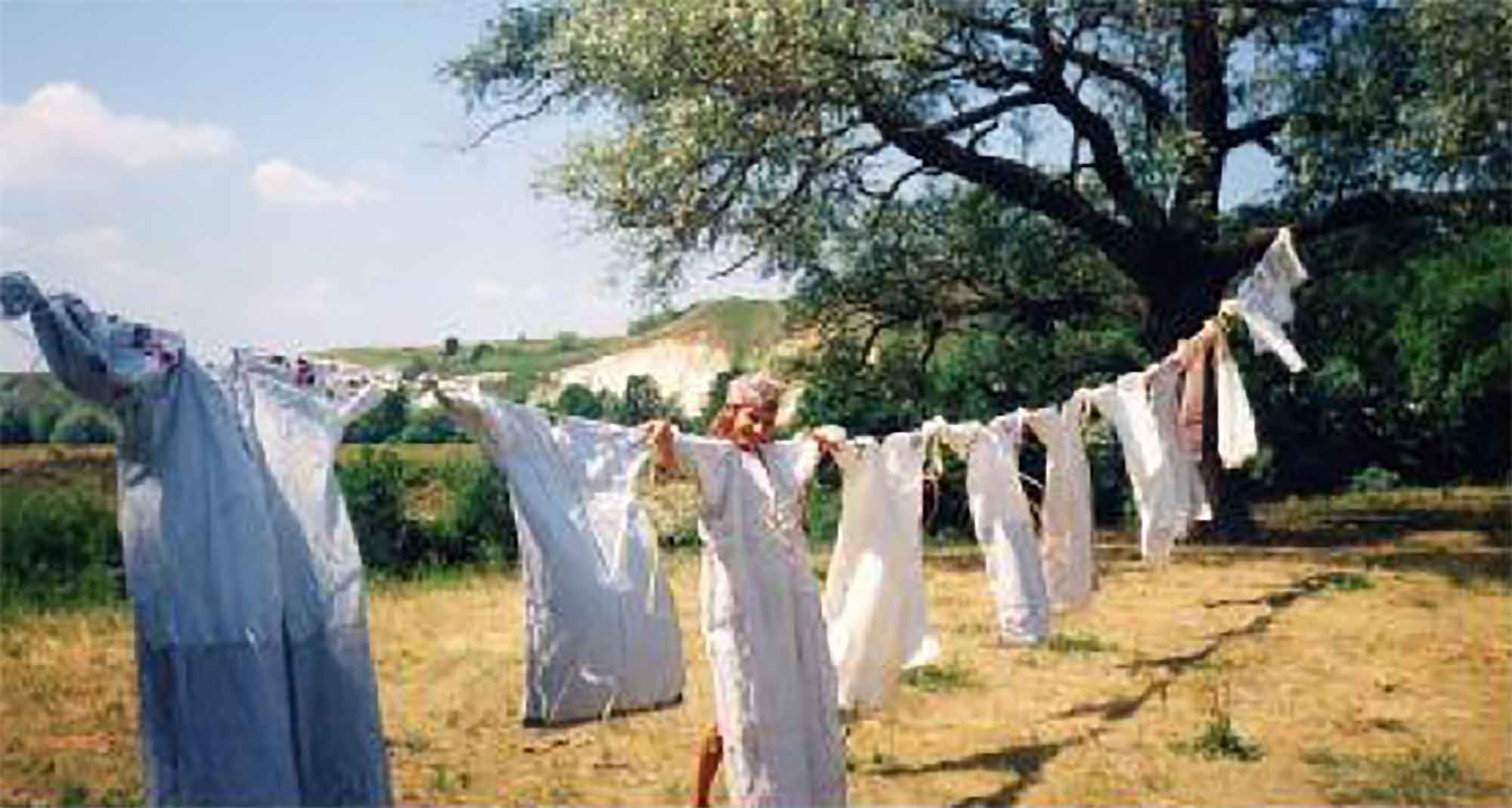
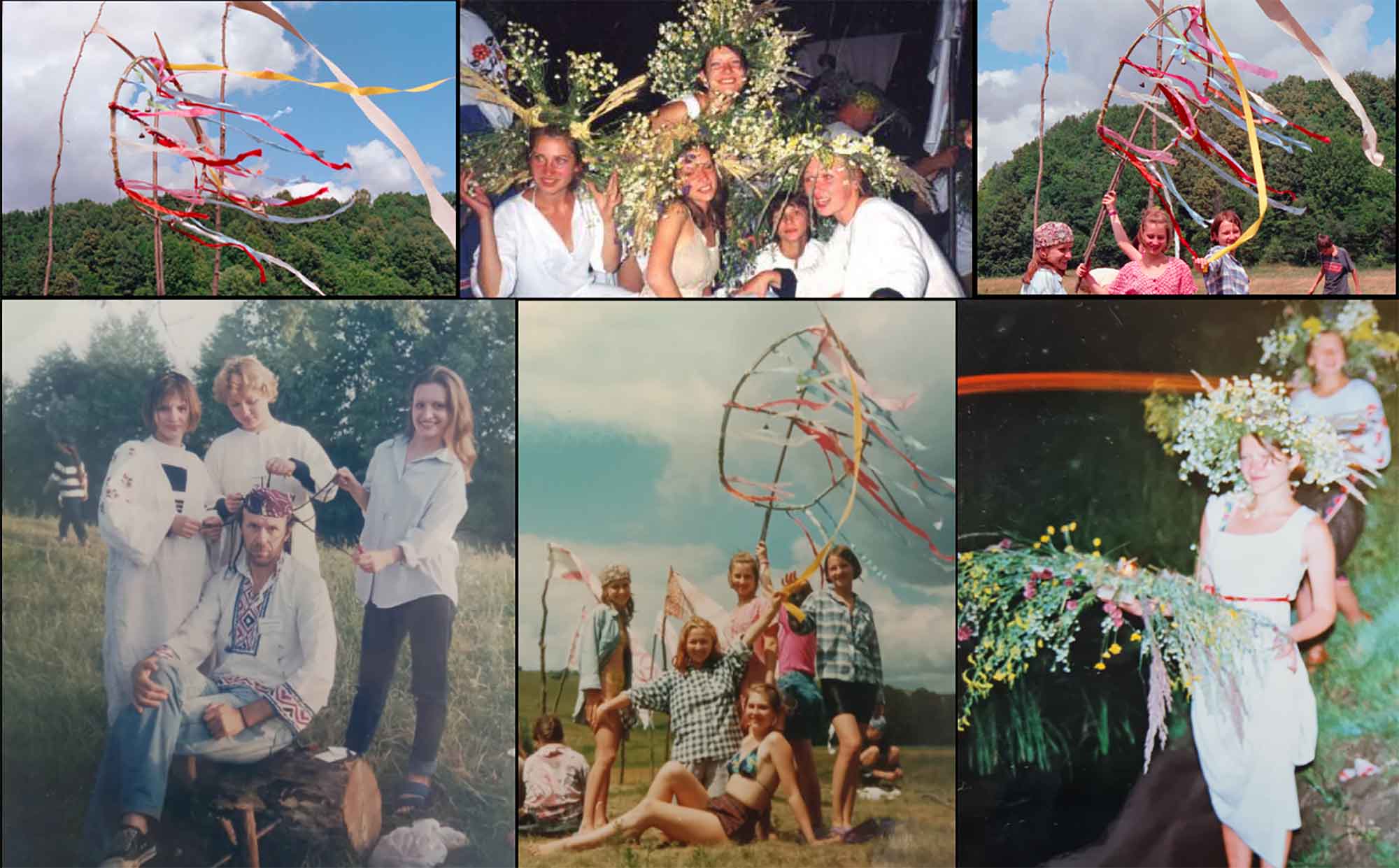
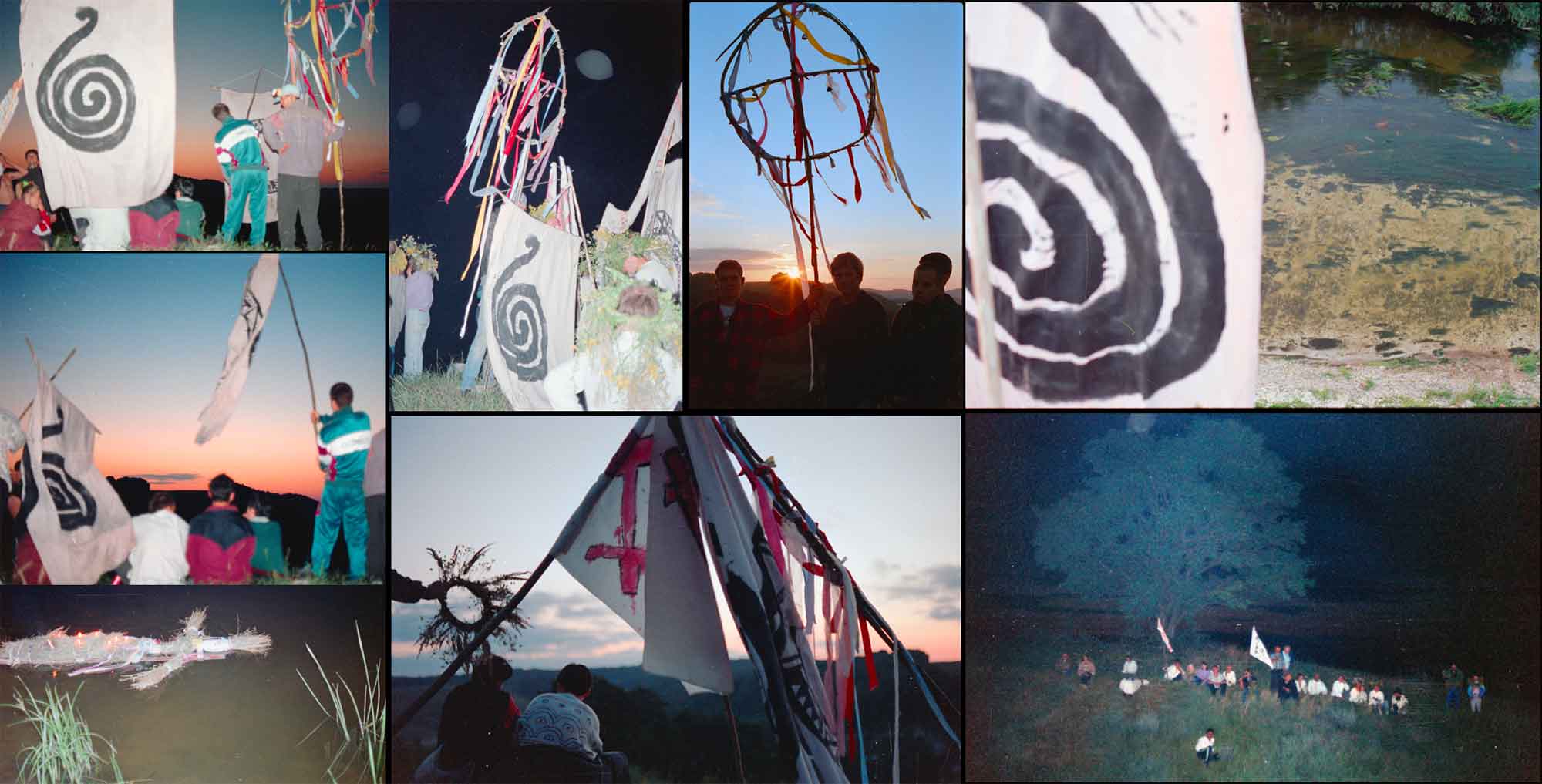
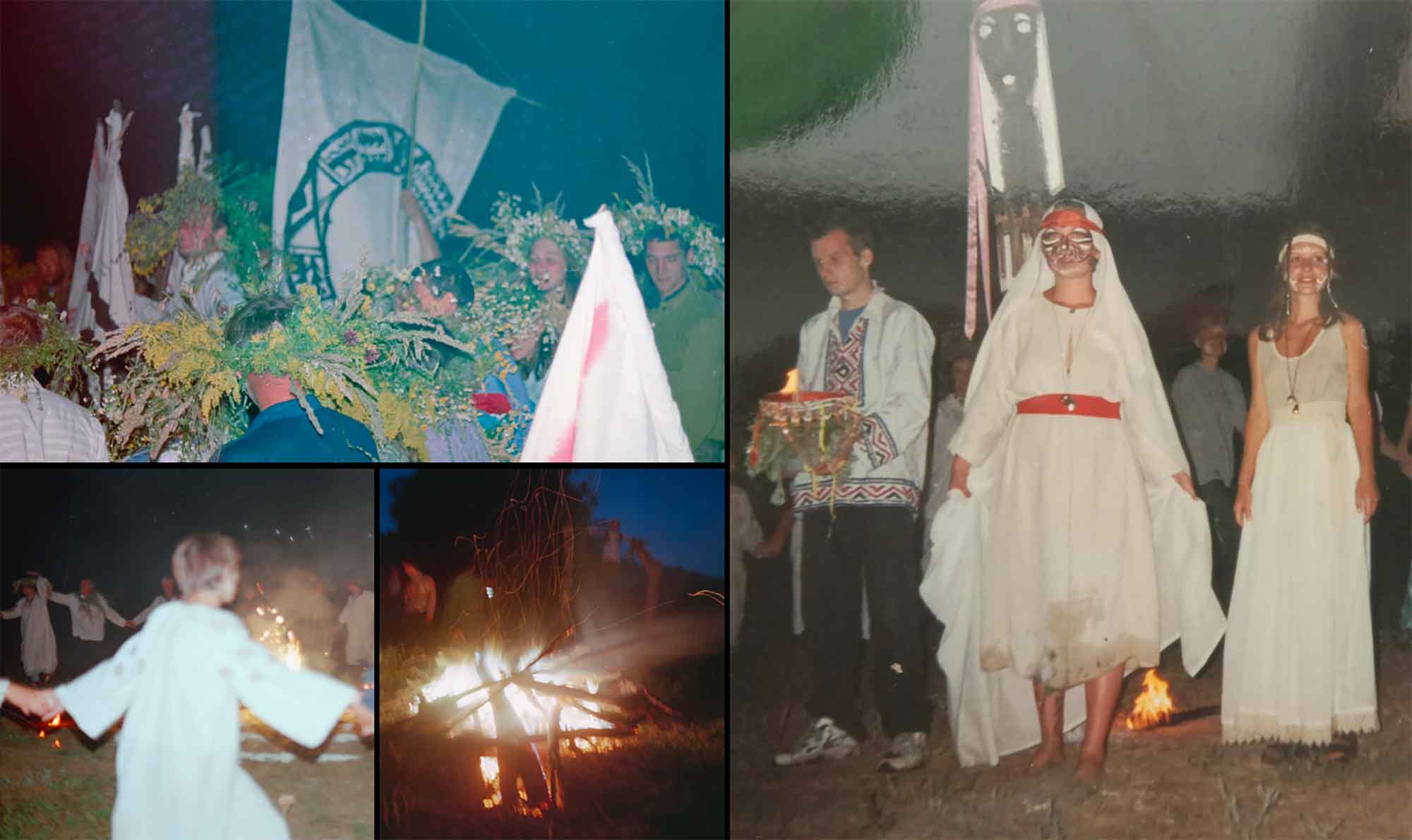
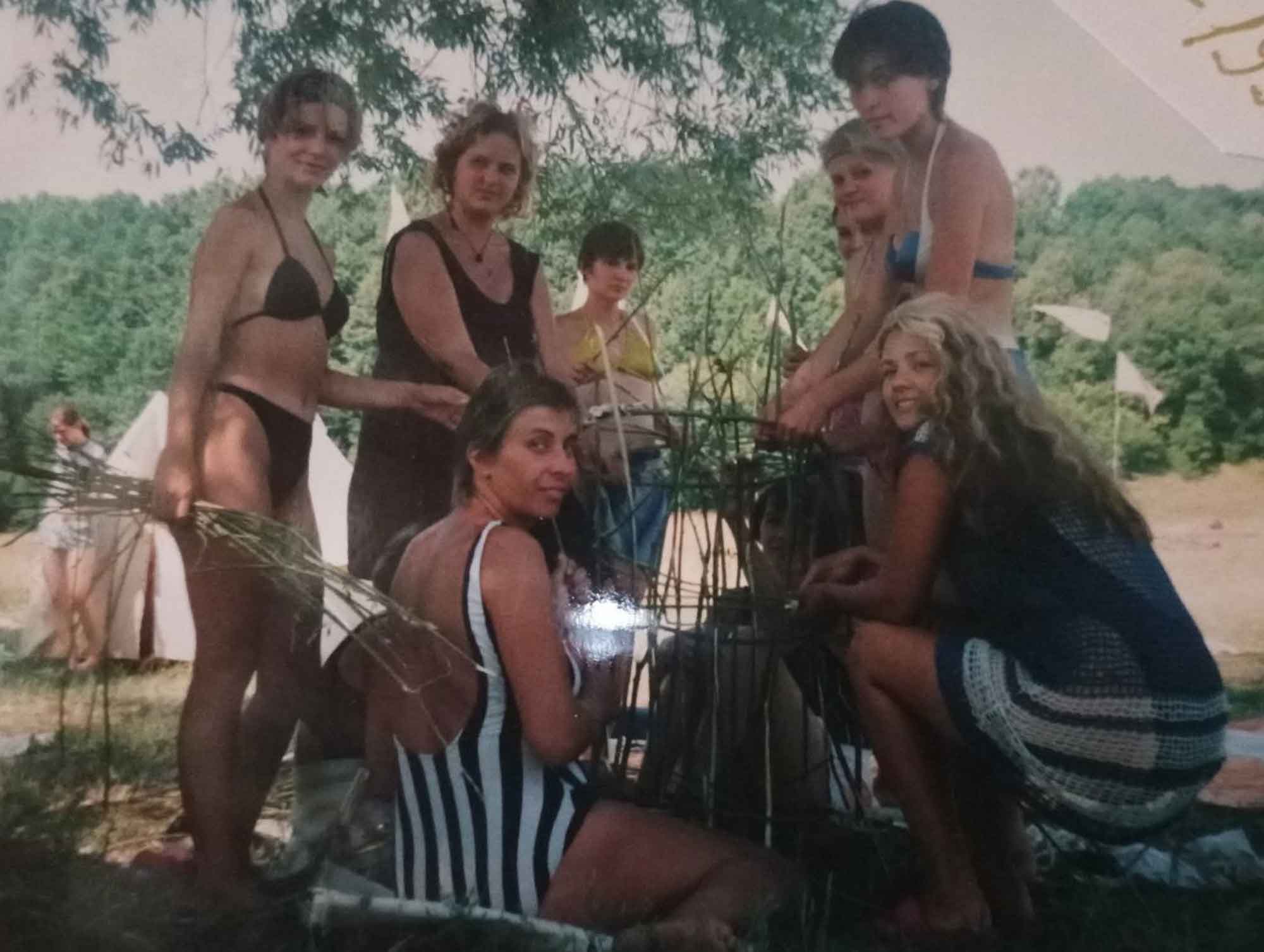
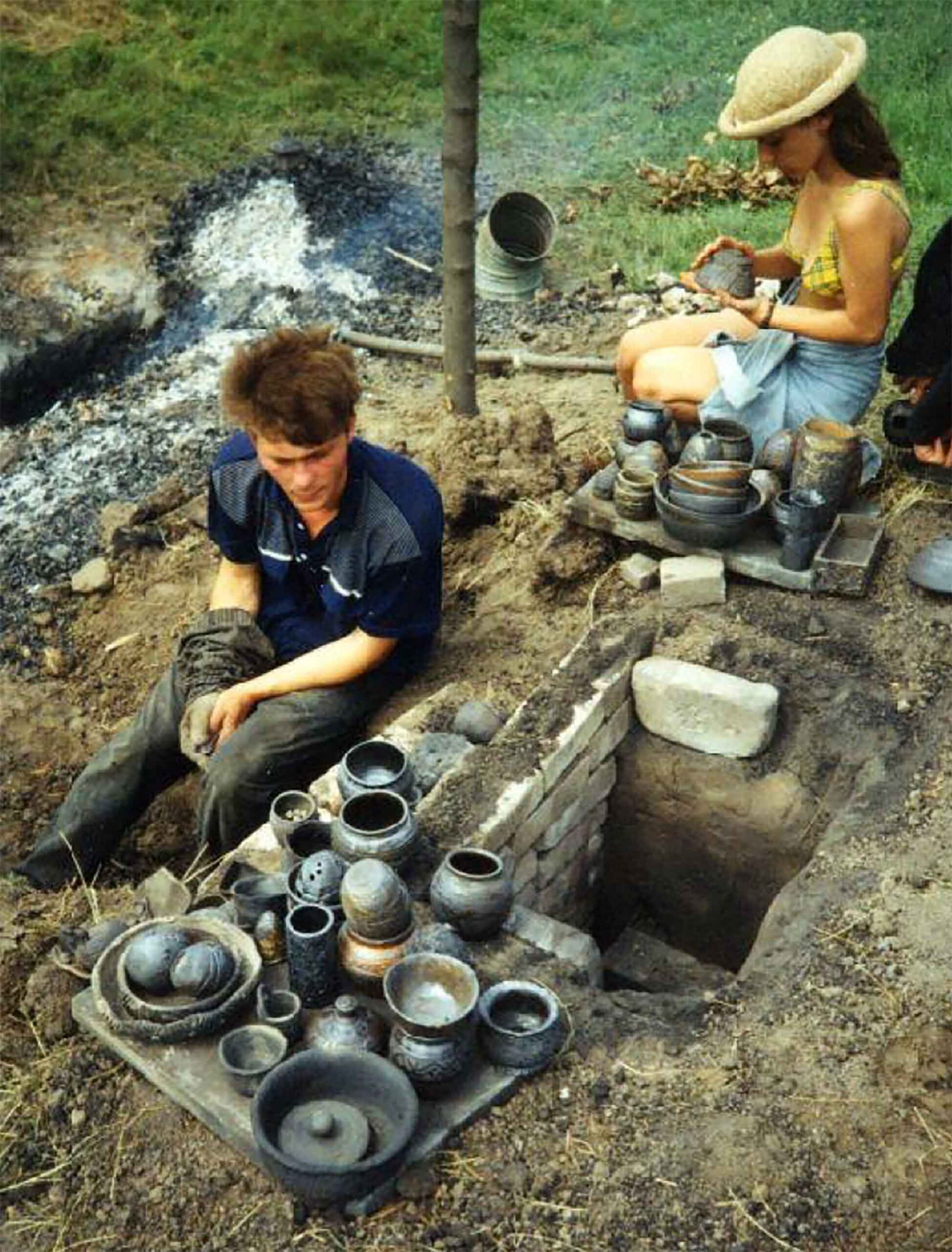
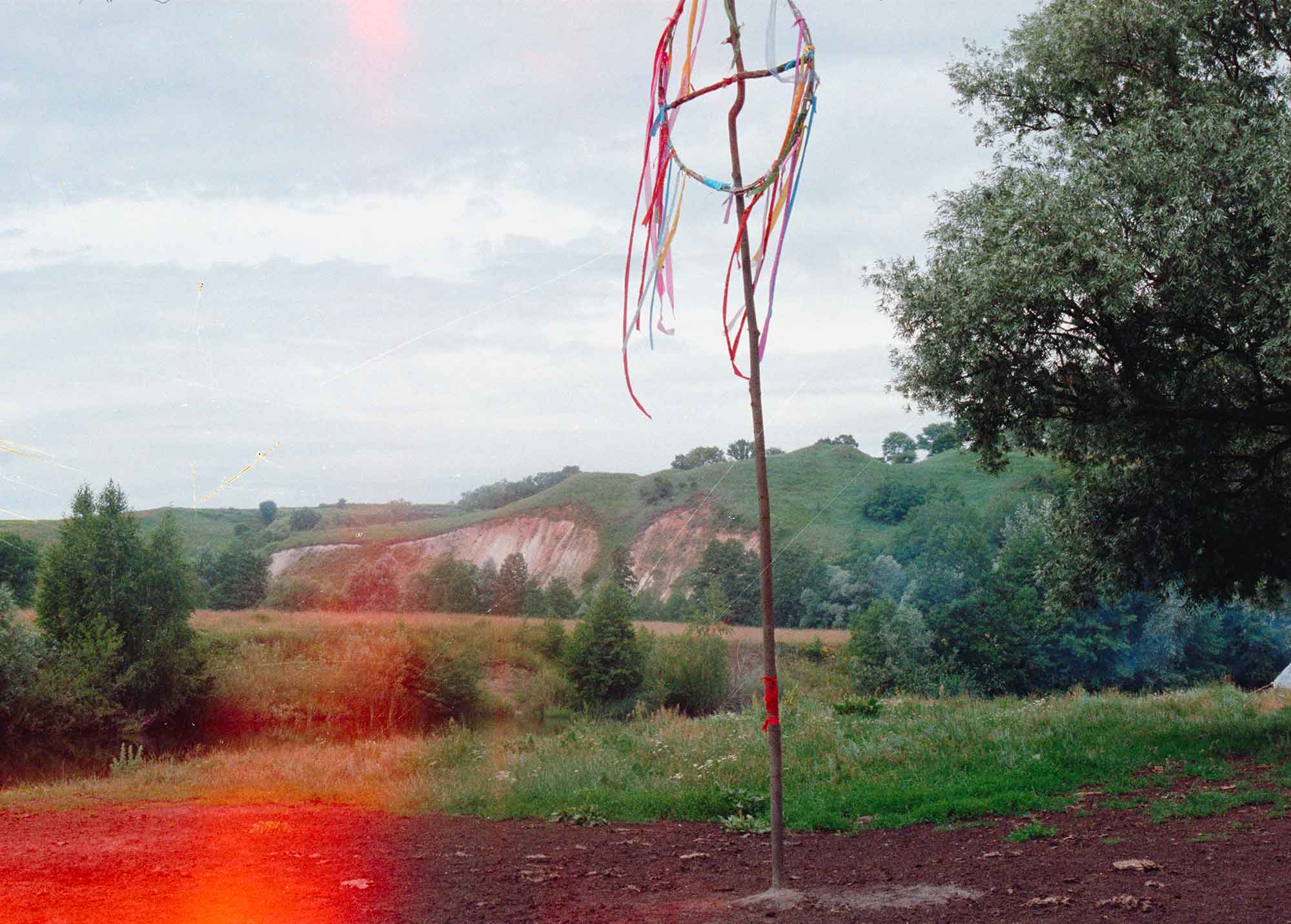
From 1998, the symposium adopted a mixed format, combining ceramics and land art. At the same time, student plein-air practice remained the substantive and structuring foundation of the event.
In this year, an important role in the development of the symposium was played by the artist Valerii Shkarupa, art historian Liudmyla Fedevych (Sumy Art Museum), and Anatolii Tsvil, whose contribution combined artistic, organisational, and institutional aspects. At the same time, a key group of the first artists and organisers of “Borderland Space” took shape: Ganna Gidora, Natalia Kokhan, Oleh Kokhan, Karolina Mozhova, Sviatoslav Korsun, Yurii Firsik, Ihor Shvachunov, and Hryhorii Protasov.
This team became the core of the symposium, combining creative initiative with technical and organisational support. In collaboration with Ganna Gidora, they not only ensured the continuation of the event, but also consistently developed the idea of environmental art in Mohrytsia, gradually establishing it as a central focus of spatial experimentation and interdisciplinary exploration. Their activities laid the foundations for the transformation of the symposium into a landmark phenomenon in the Ukrainian artistic process and contributed to the formation of its model, which organically combined artistic, educational, and research components.
One of the main tasks of the symposium was the study of the area and its archaeological, historical, and geological aspects. Participants carried out expeditions to surrounding settlements: Harnal (now in the territory of the Russian Federation), Velyka Rybytsia, and Bytytsia. They examined architectural monuments in Mohrytsia, Hrunivka, and Myropillia. Particular attention was paid to the chalk quarries along the River Psel: Barylivka (near Hrunivska Sich), Hrunivka, and Zapsillia, as well as the study of ravines with deposits of various soils, which were later used in artistic works.