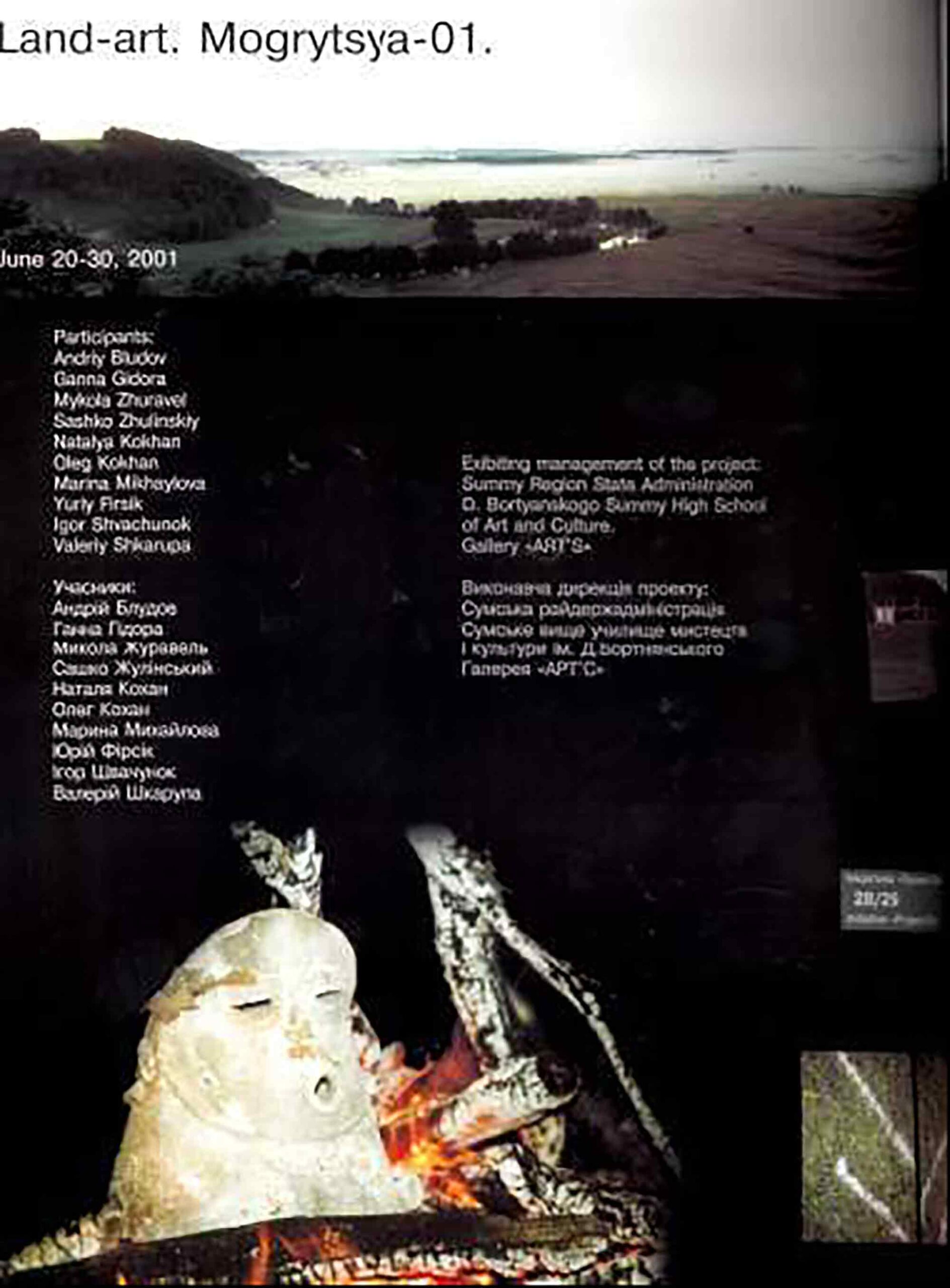
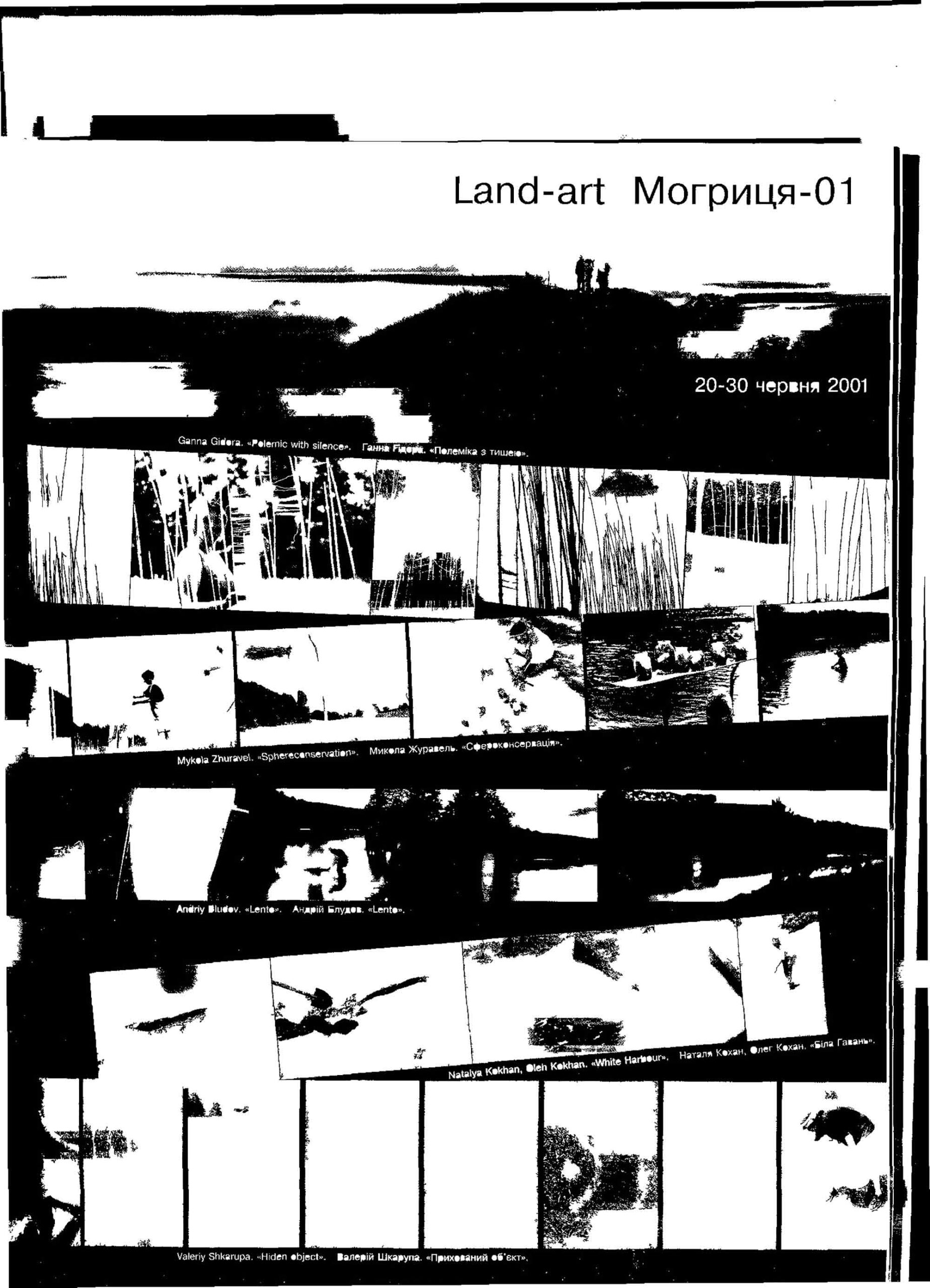
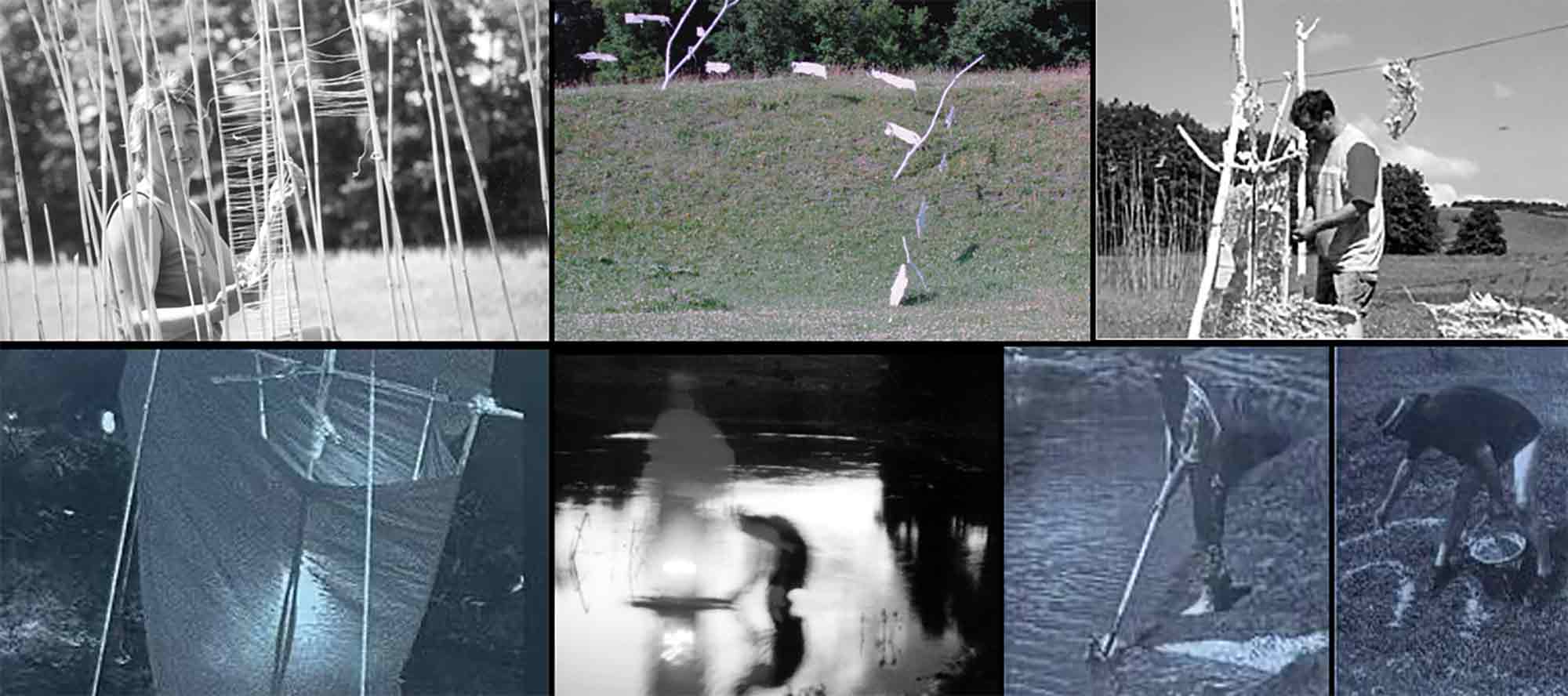
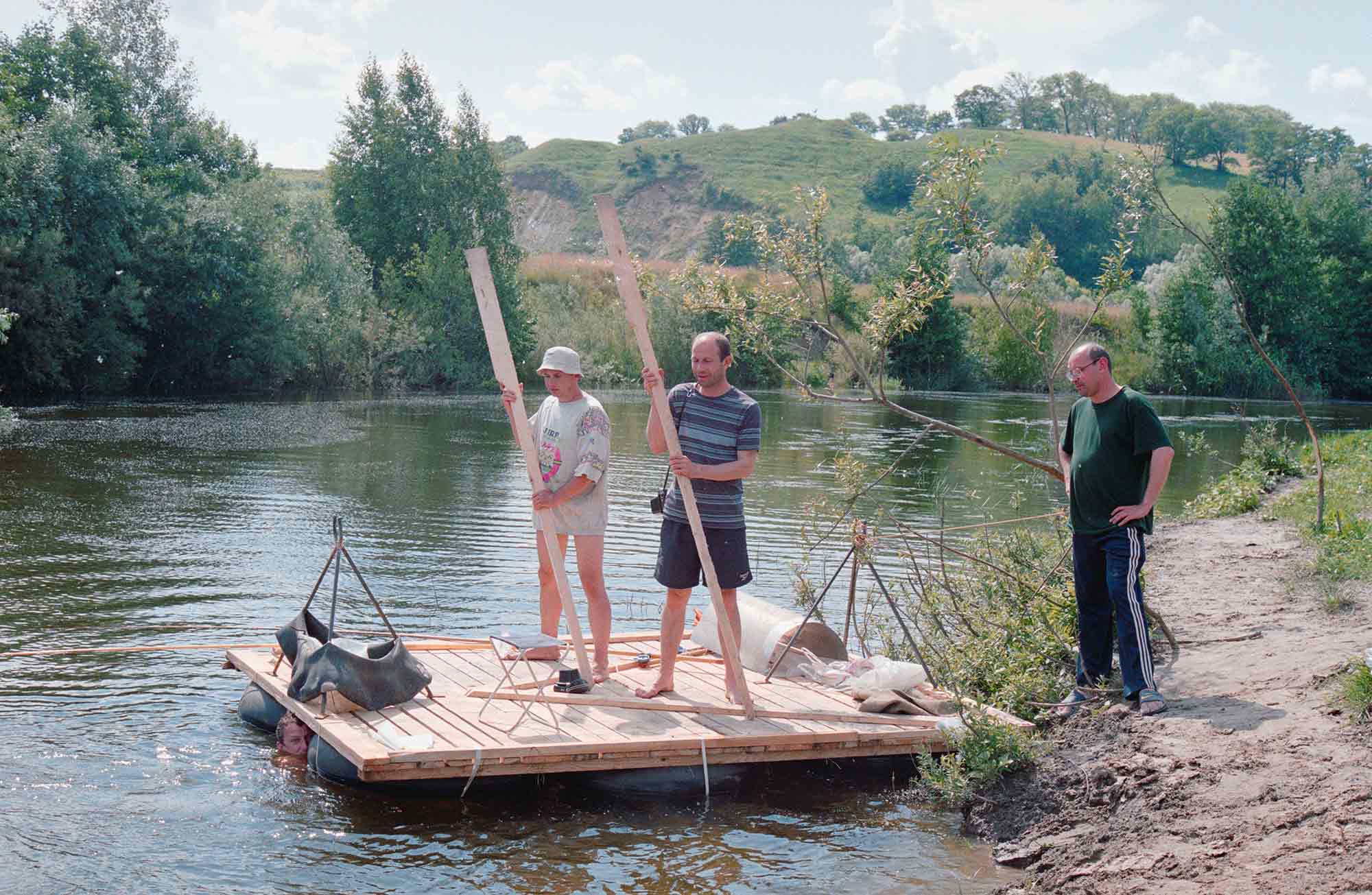
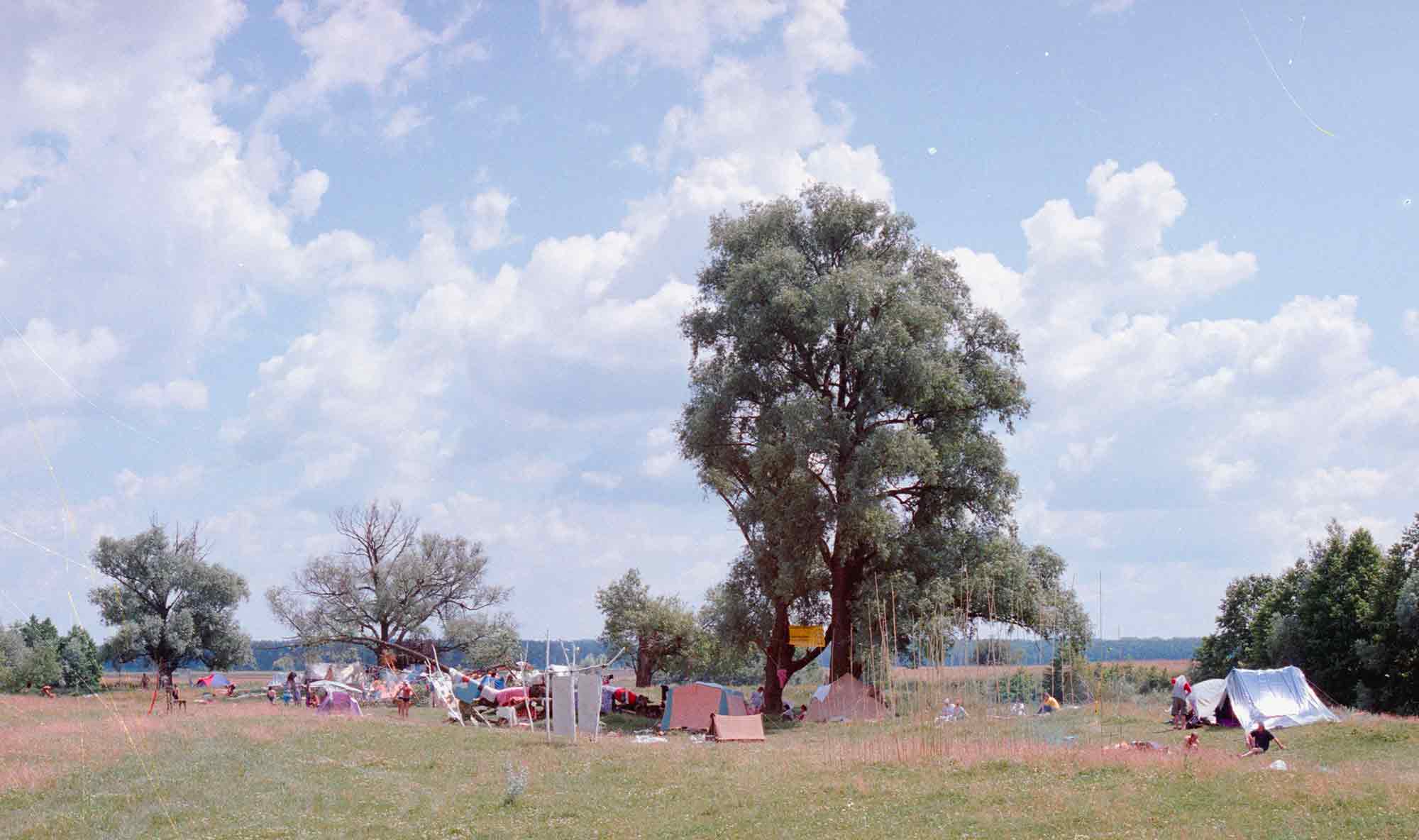
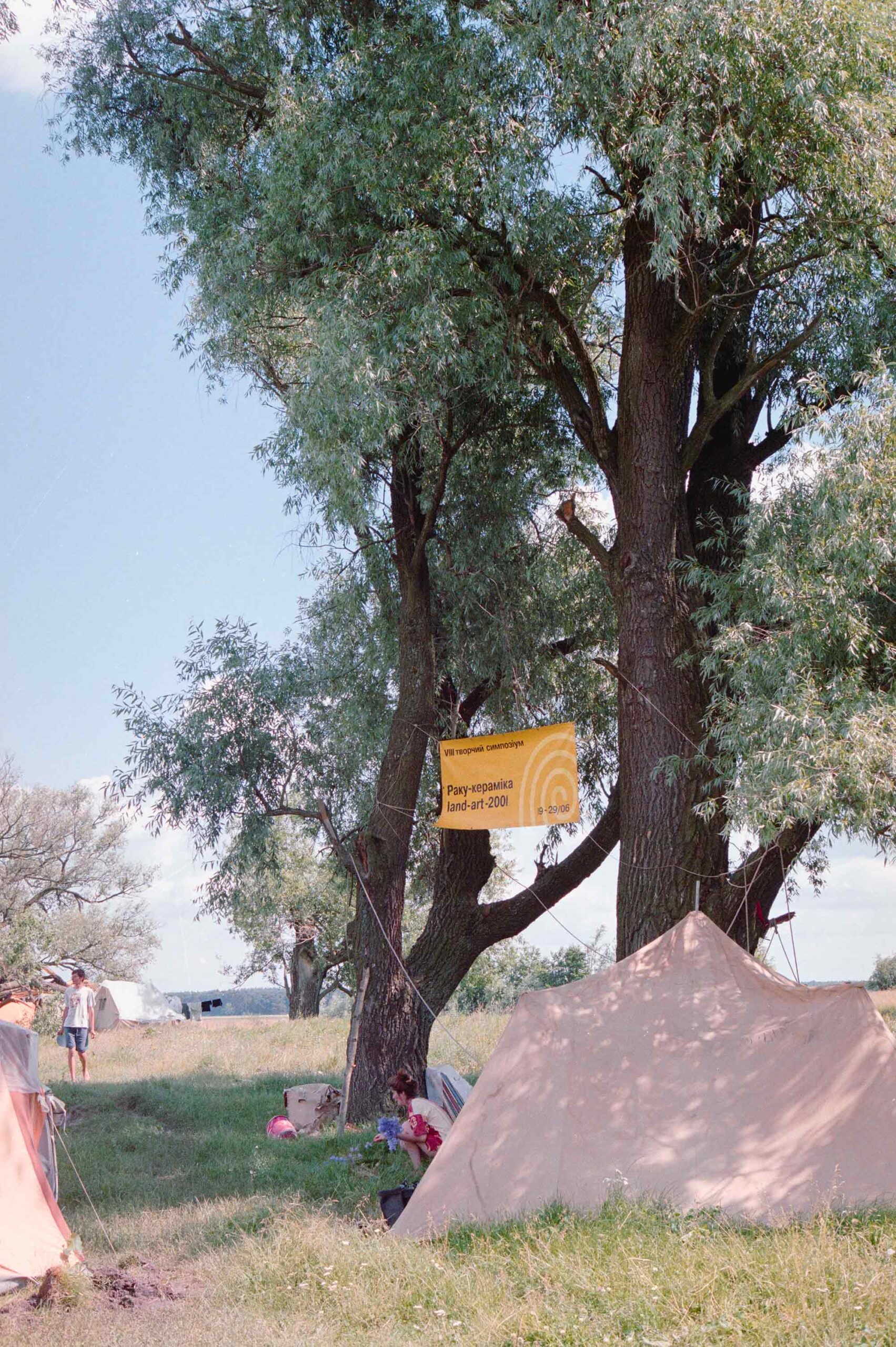
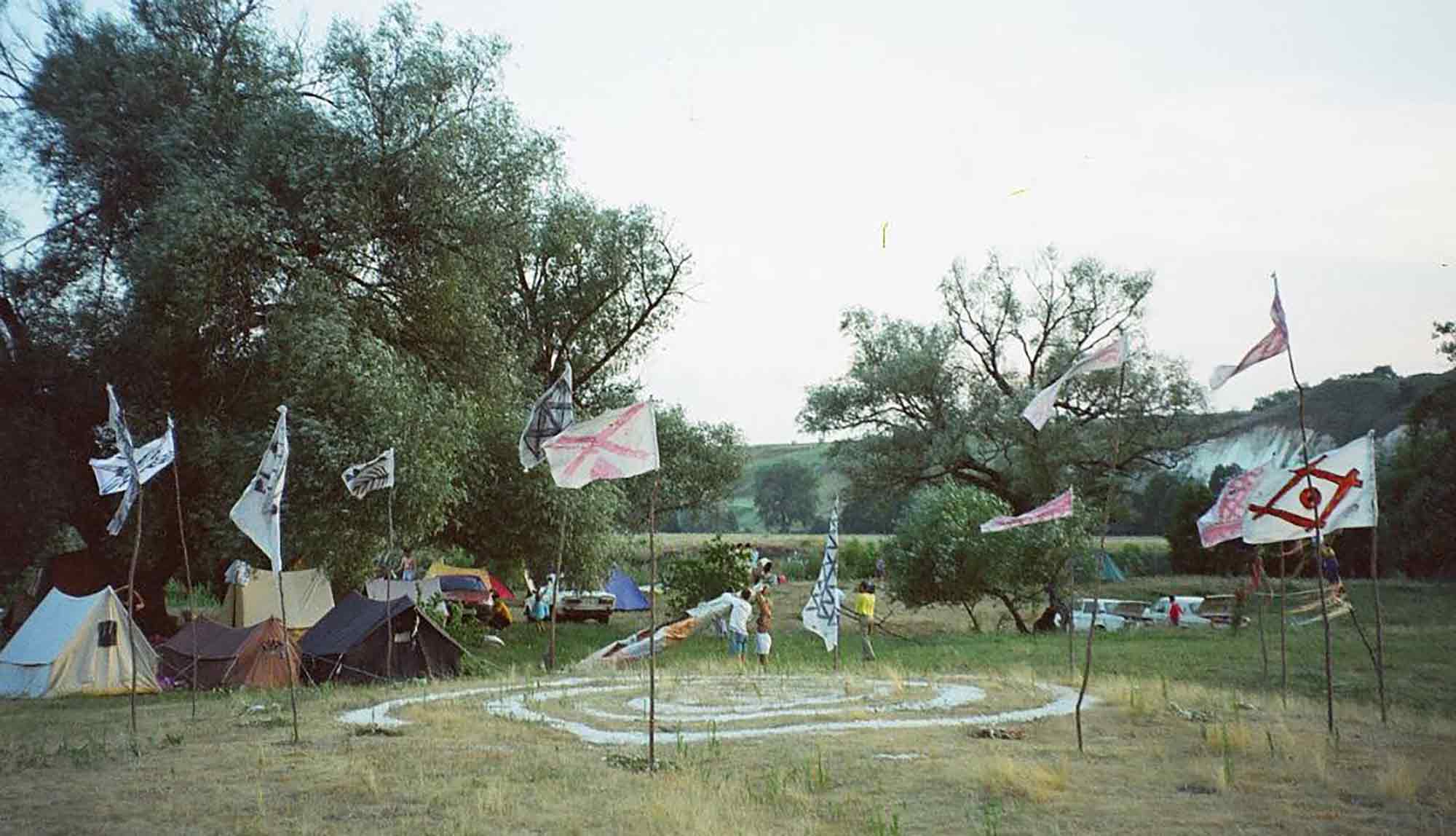
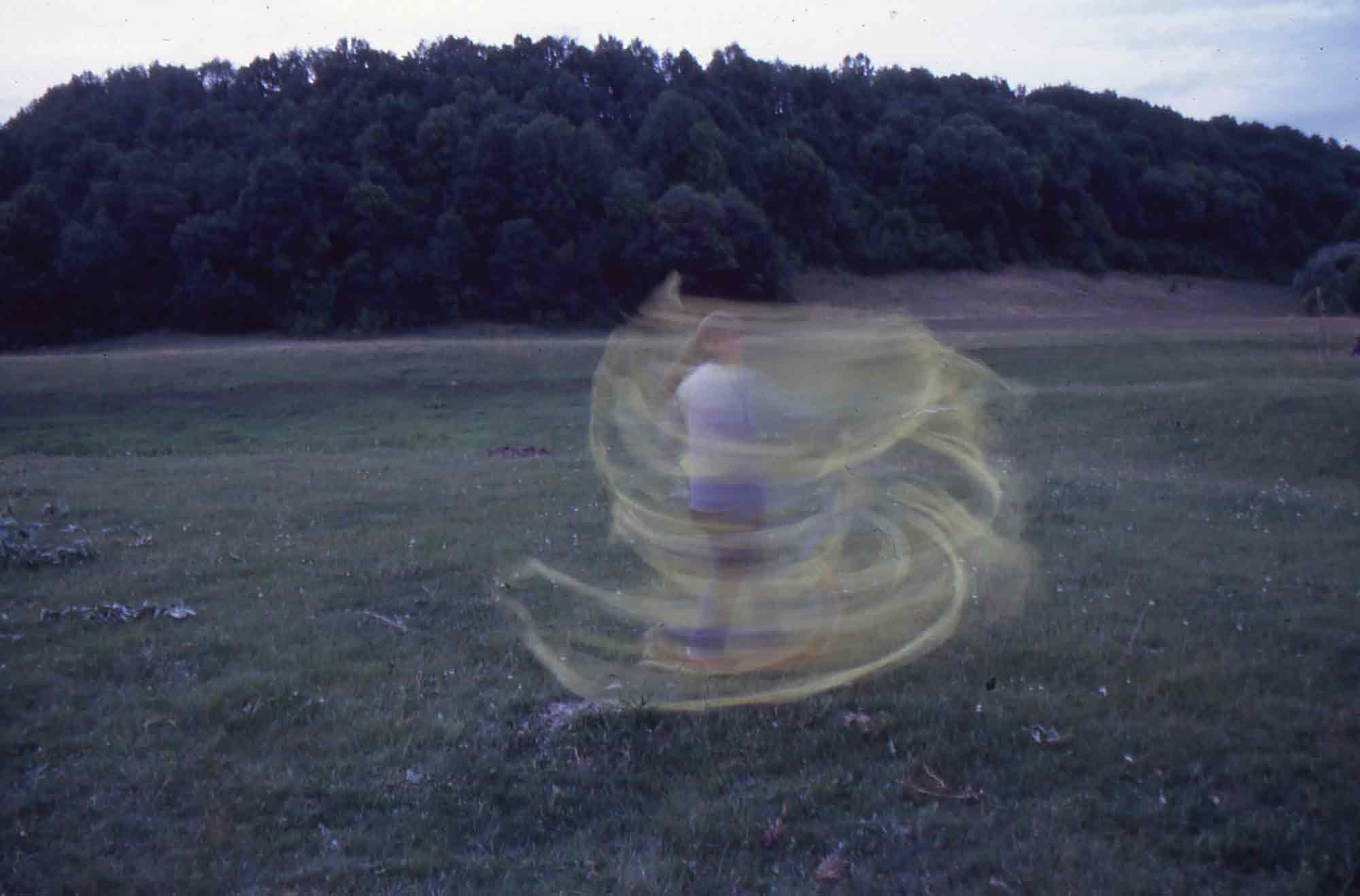
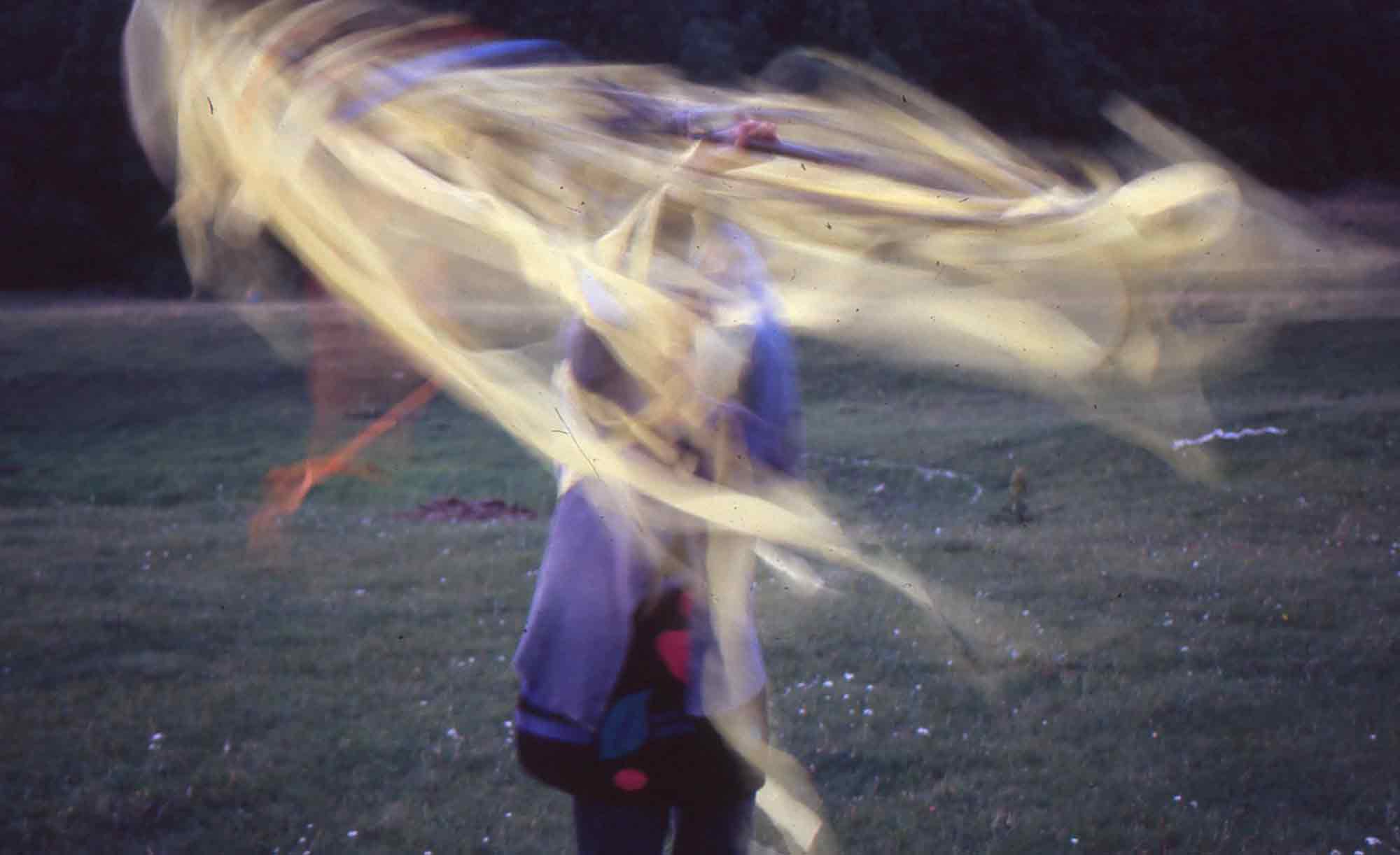
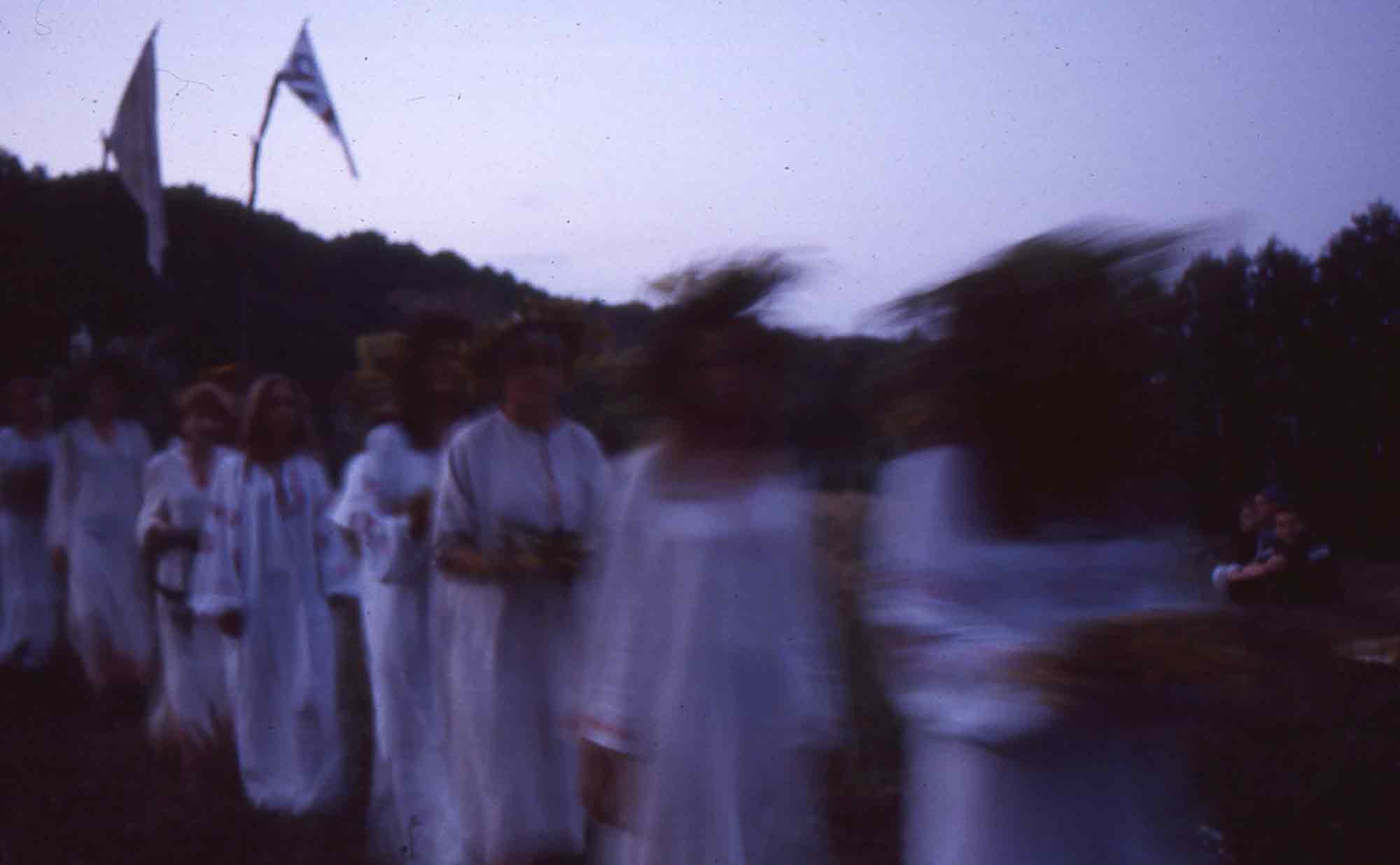
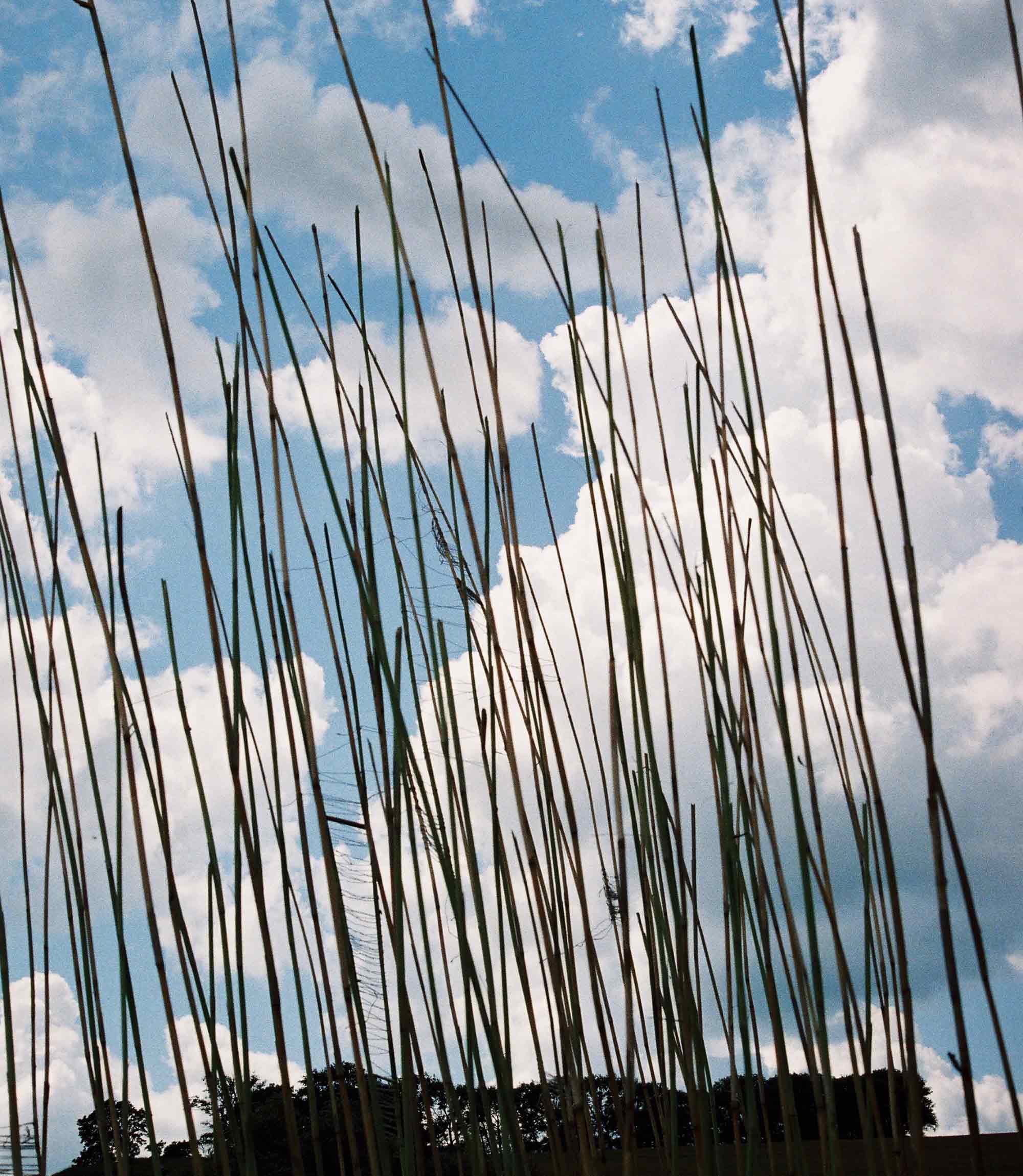
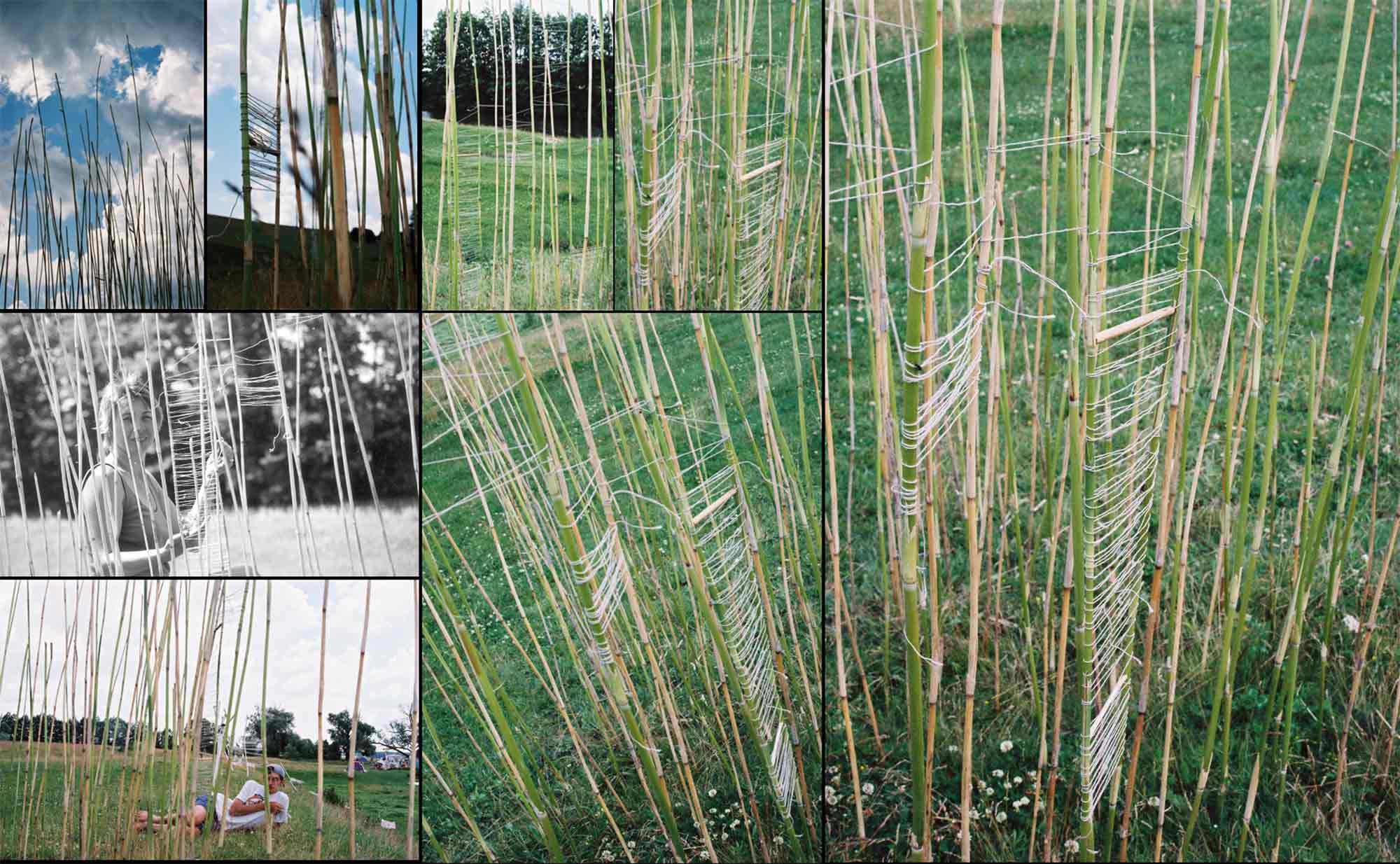
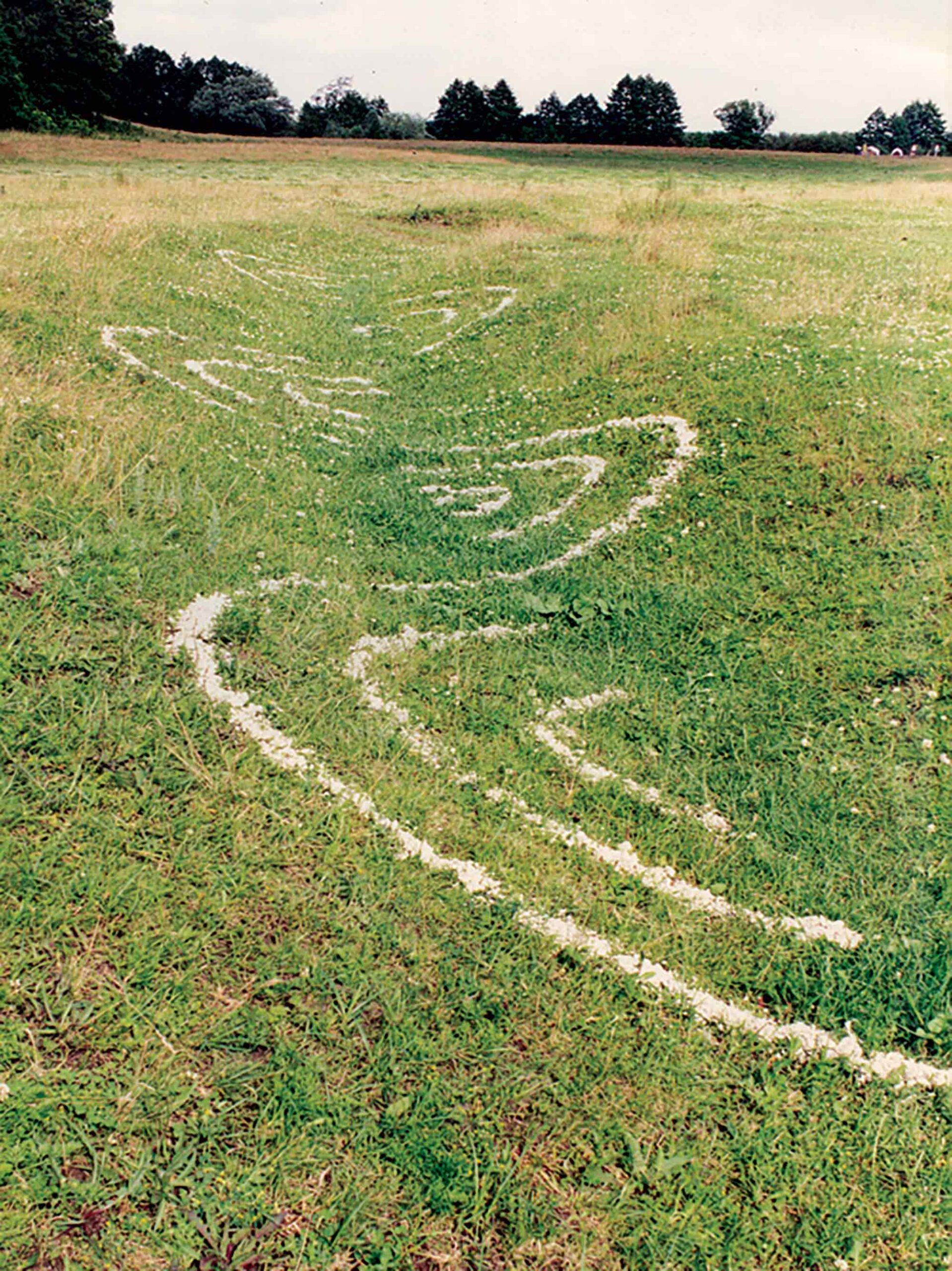
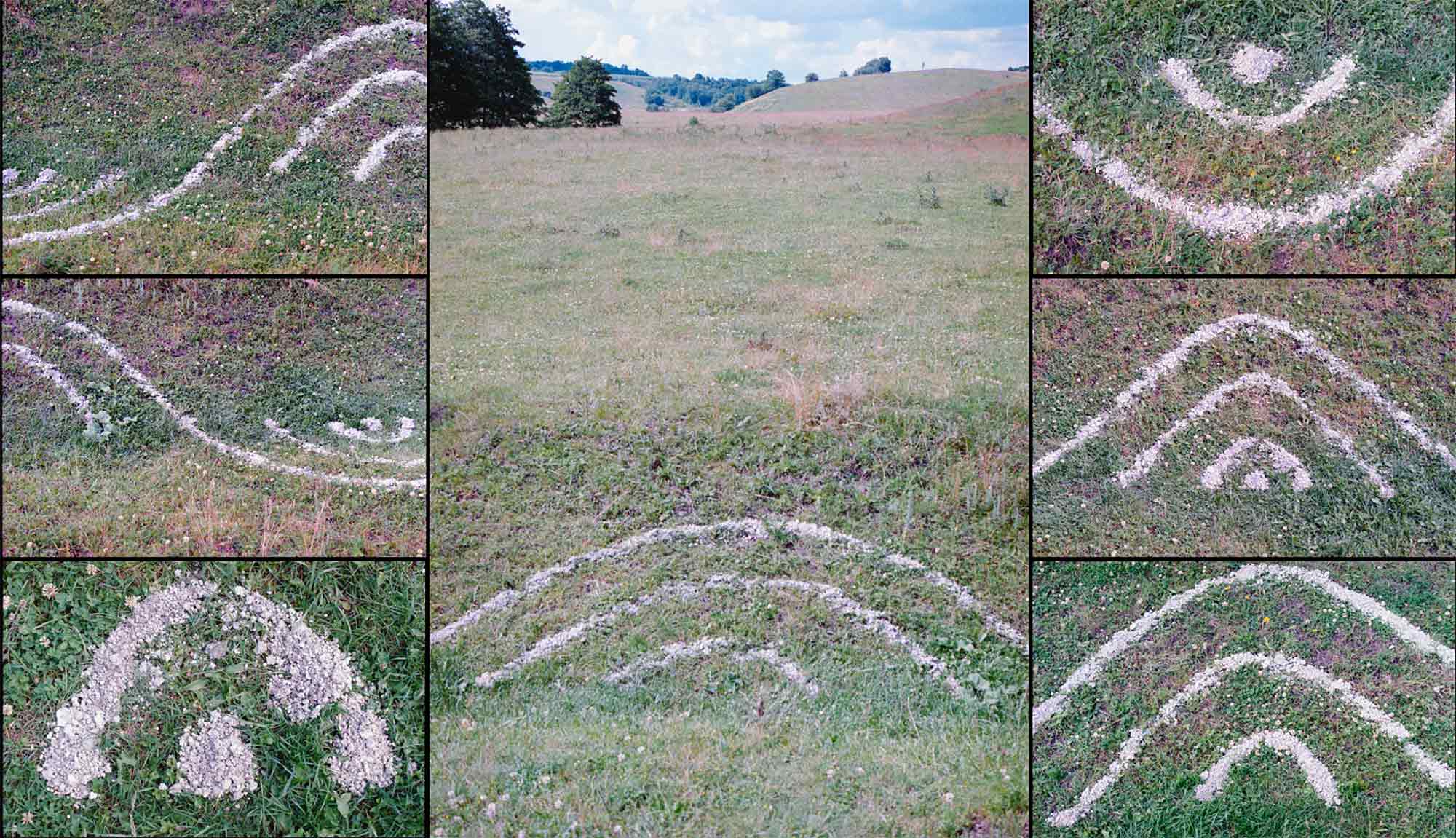
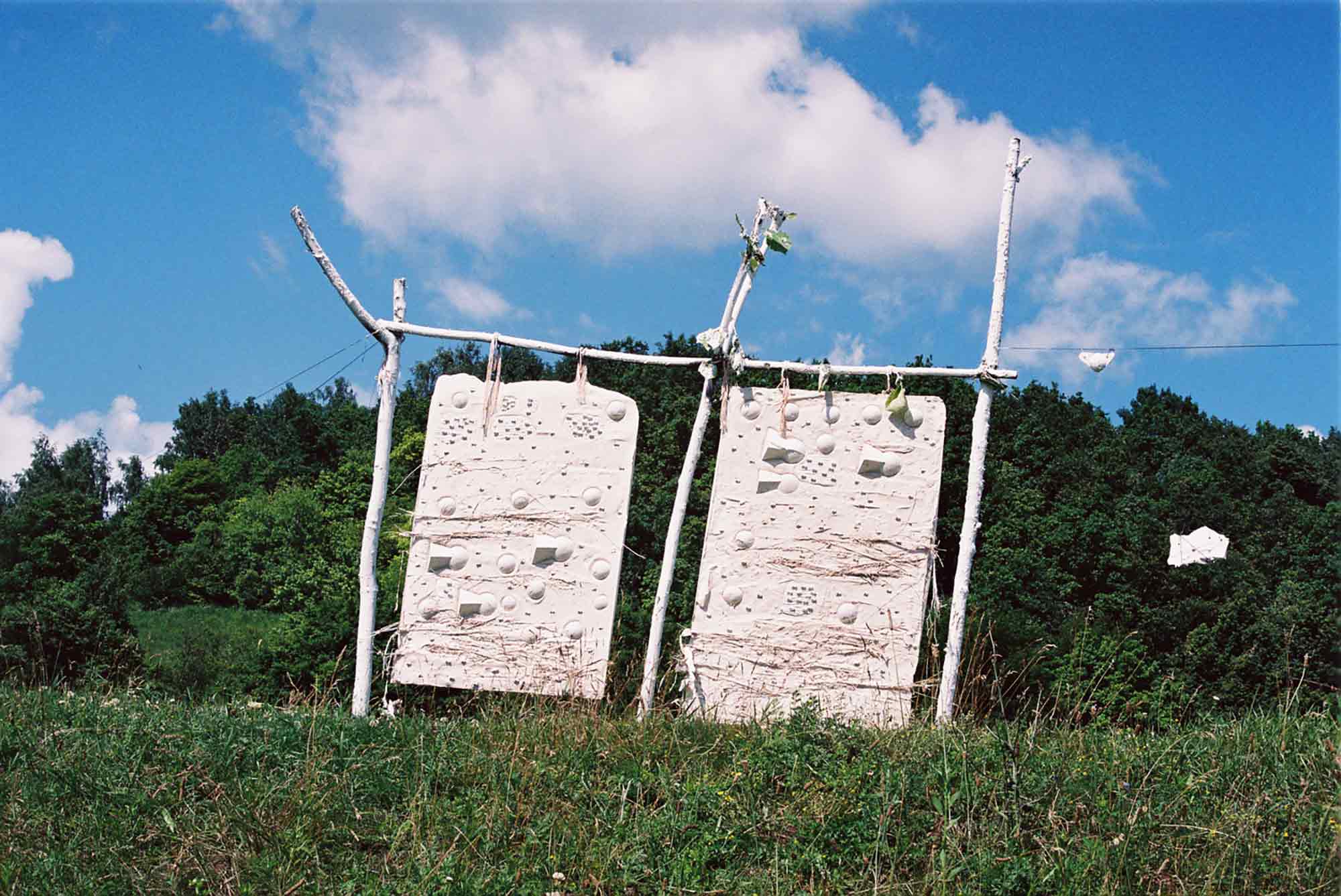
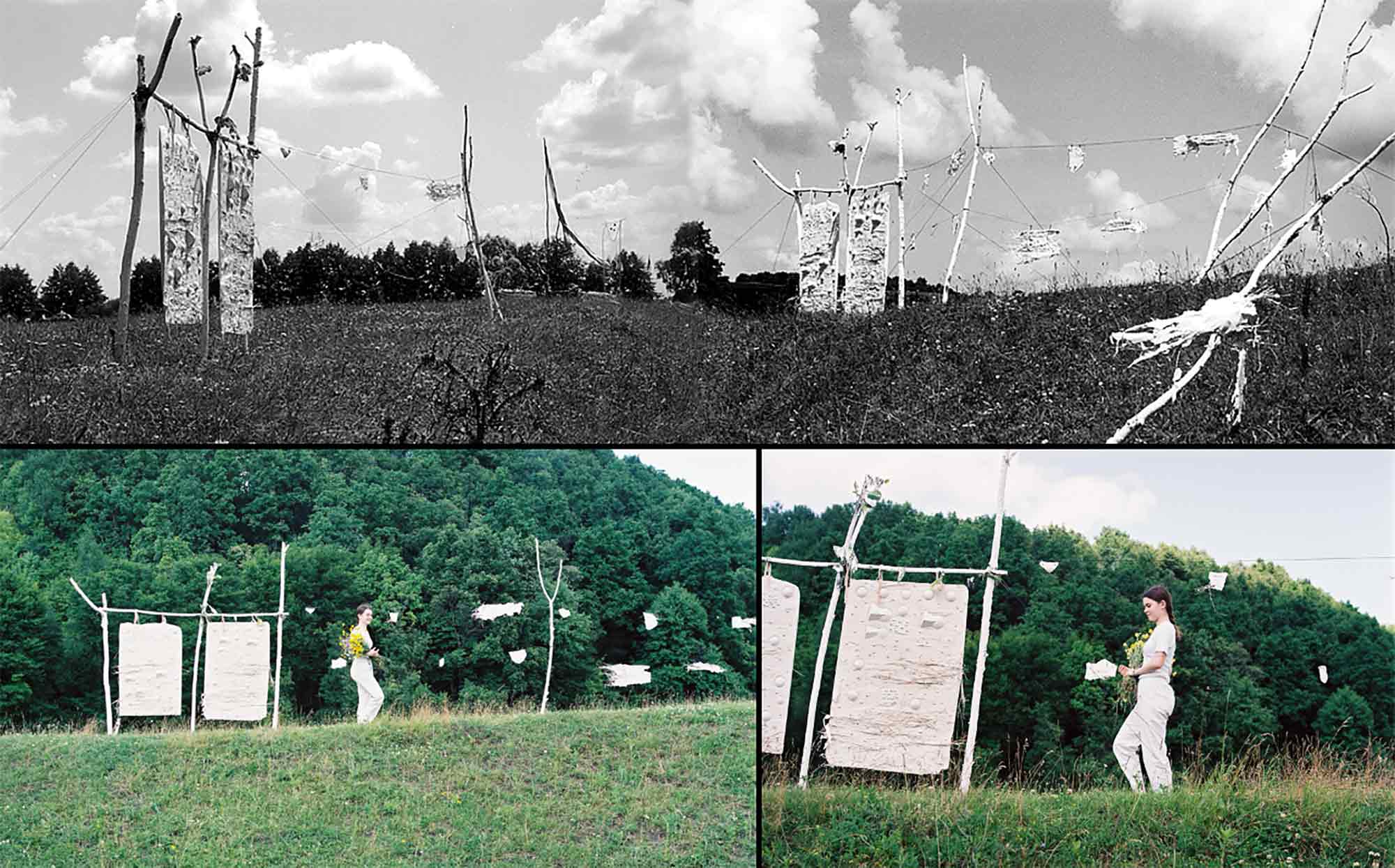
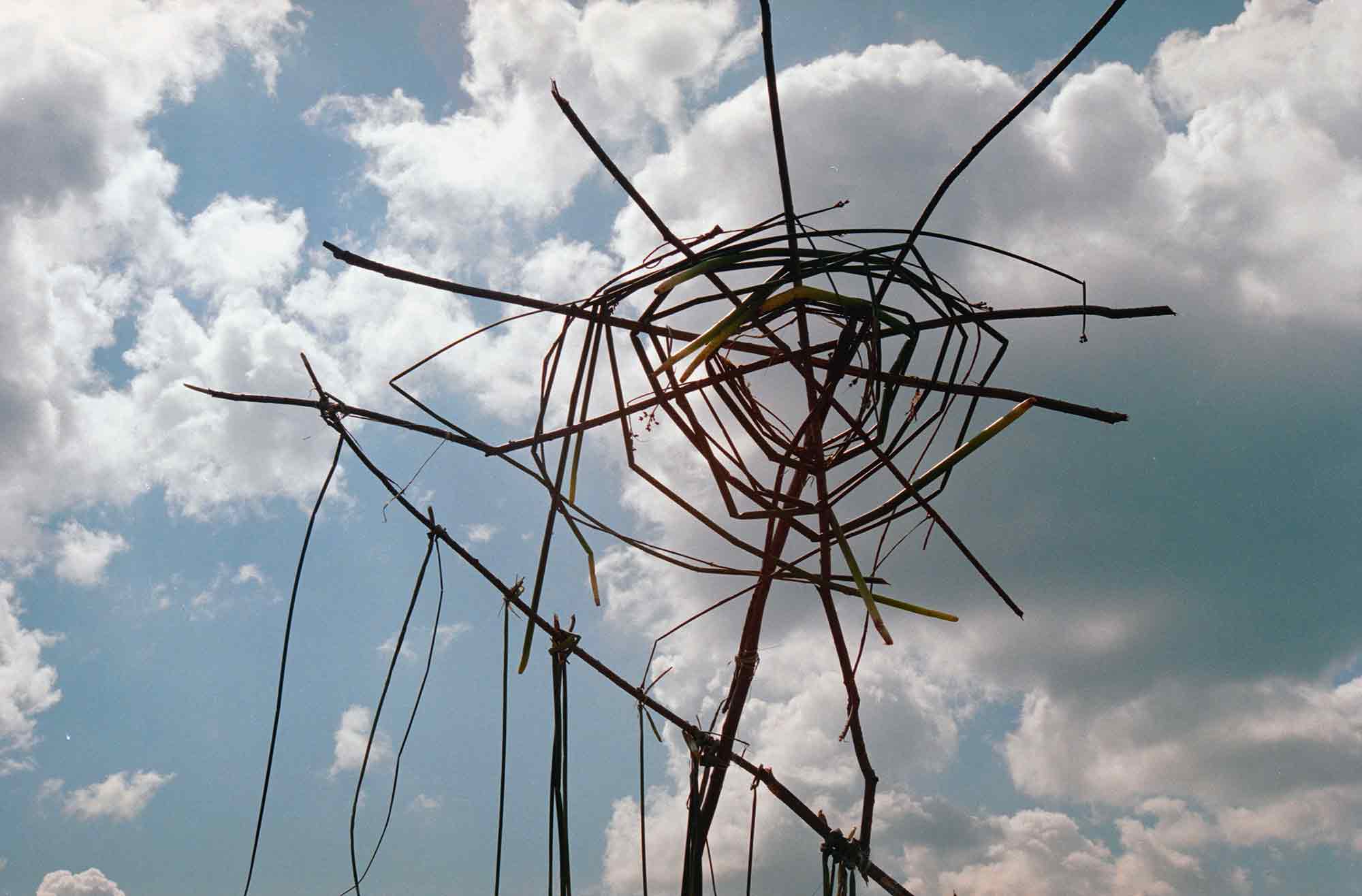
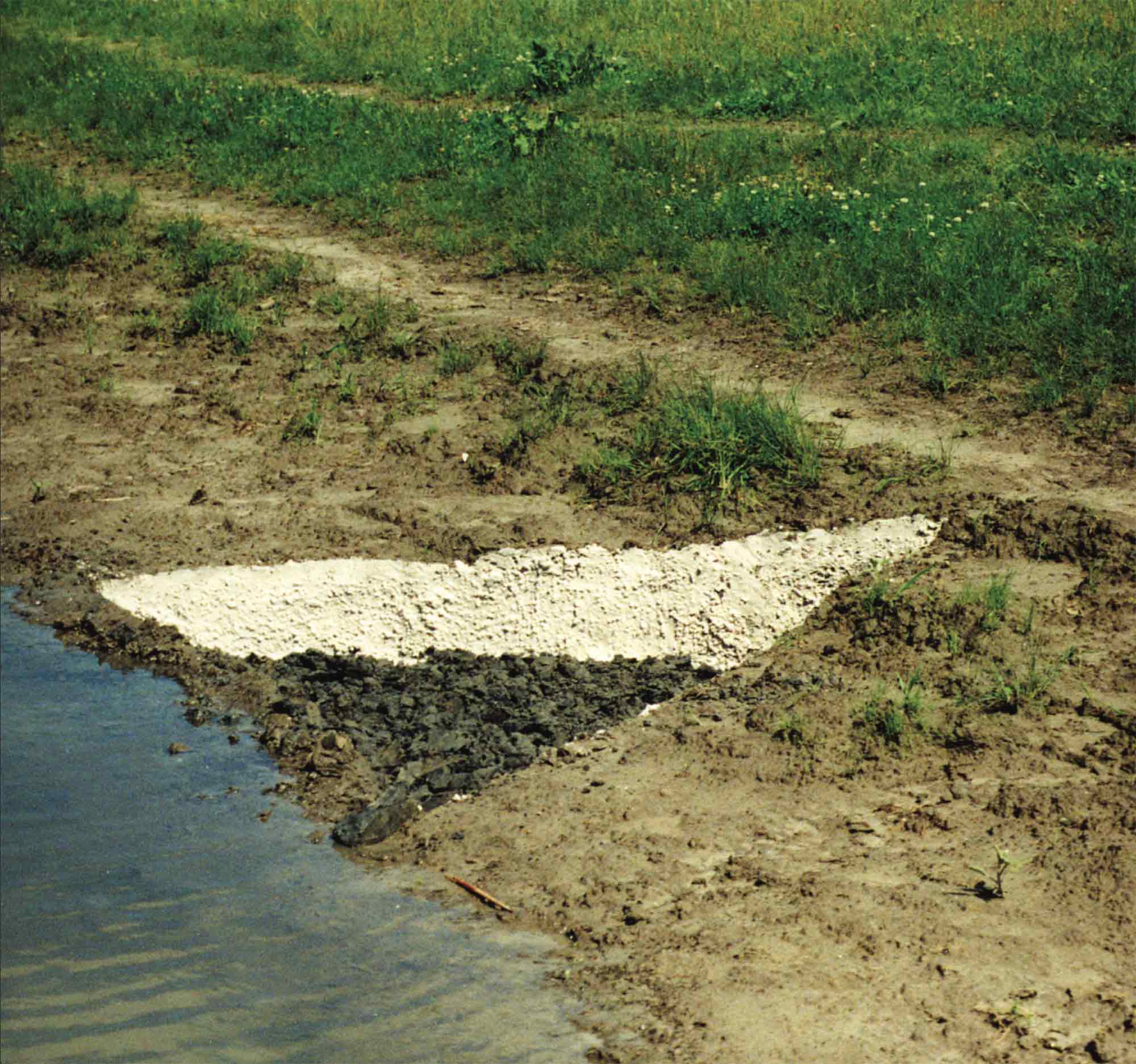
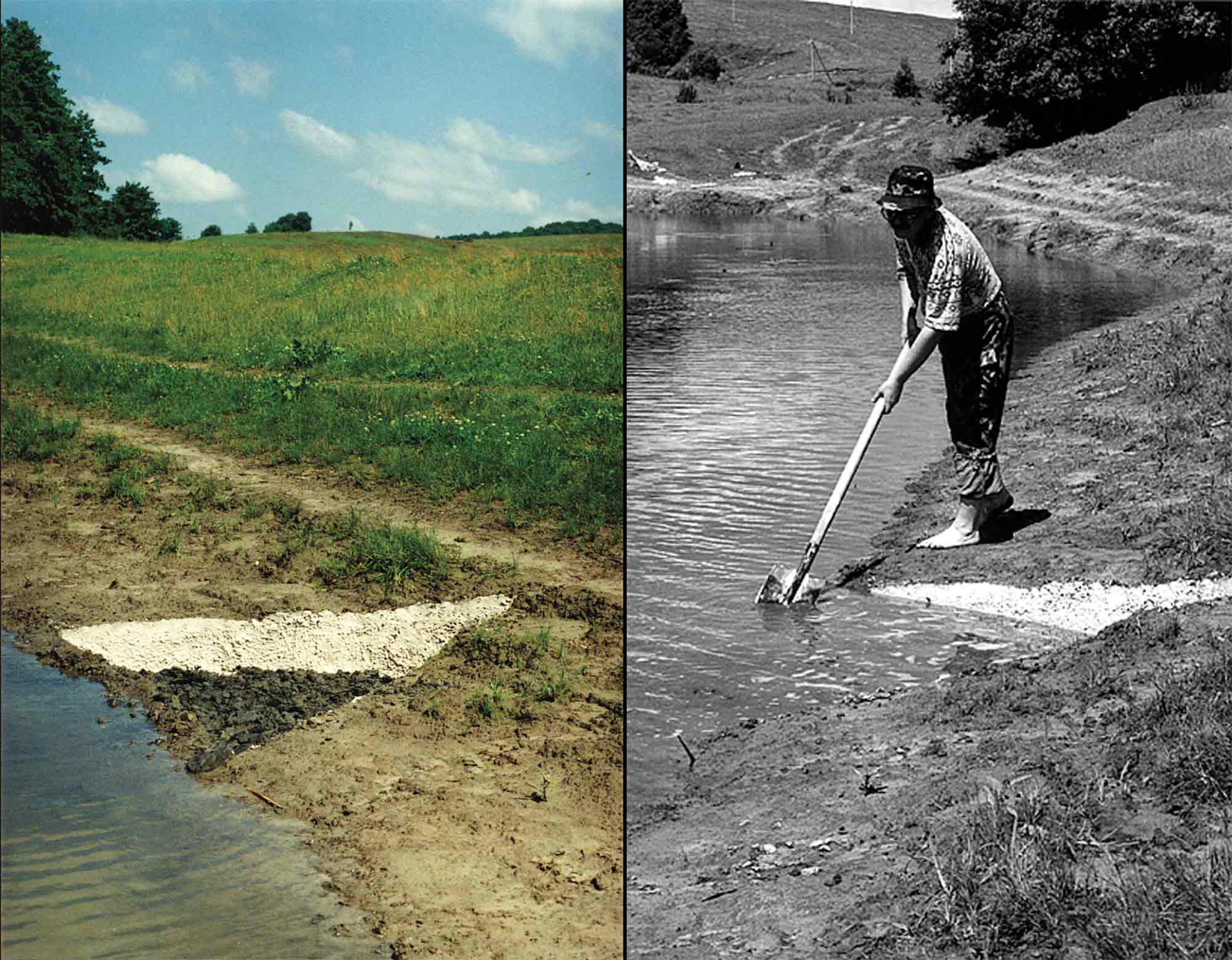
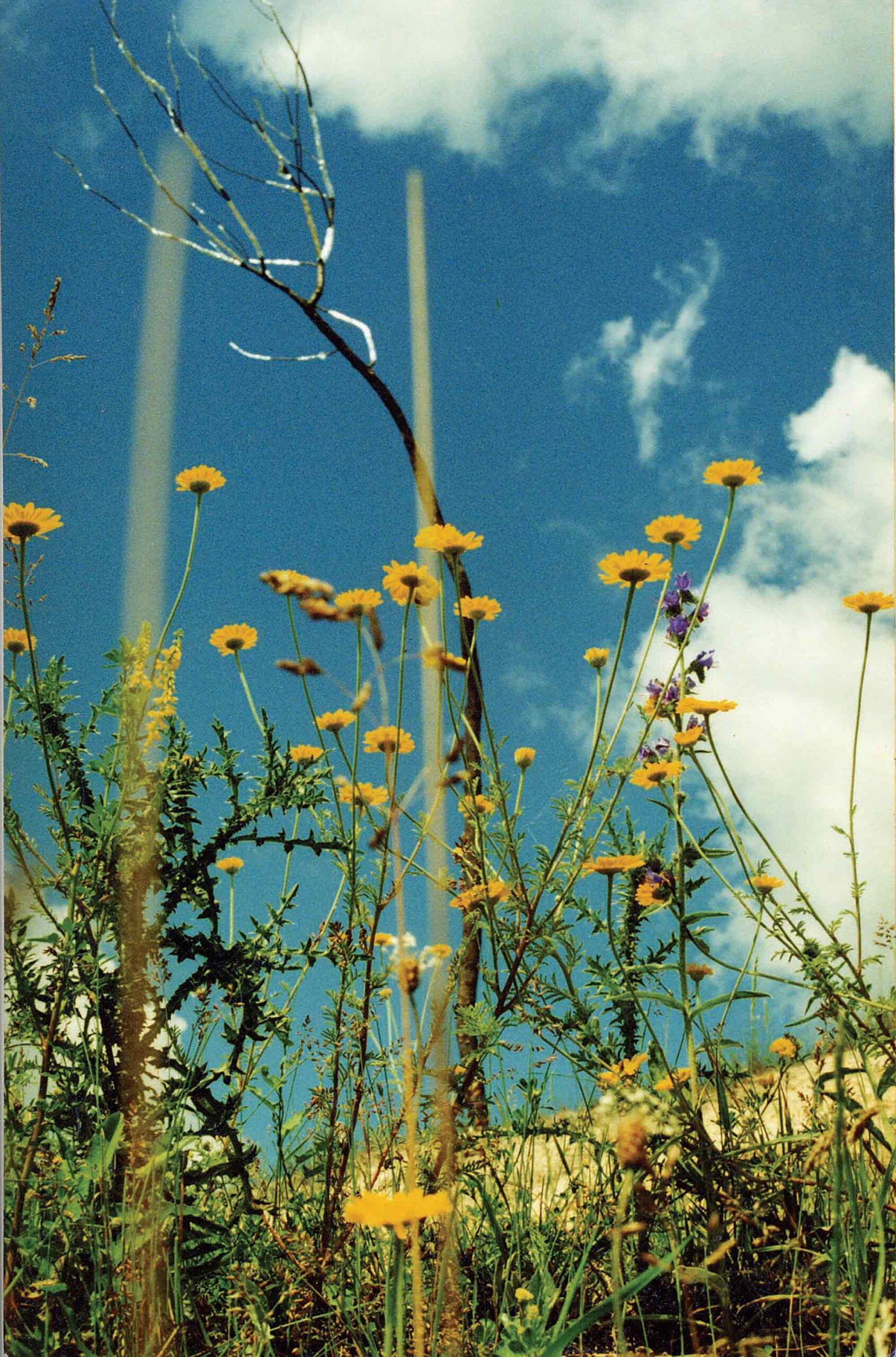
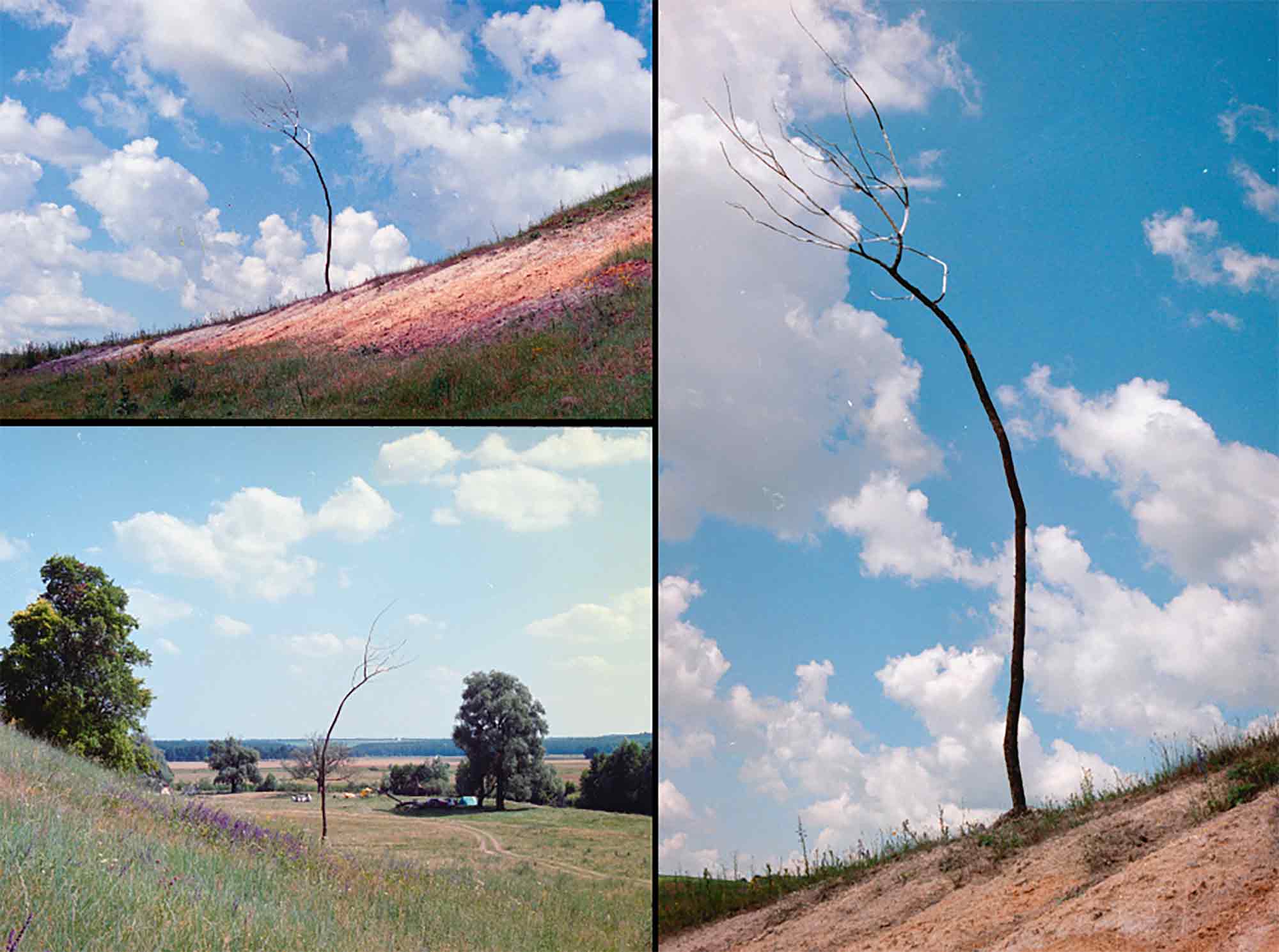
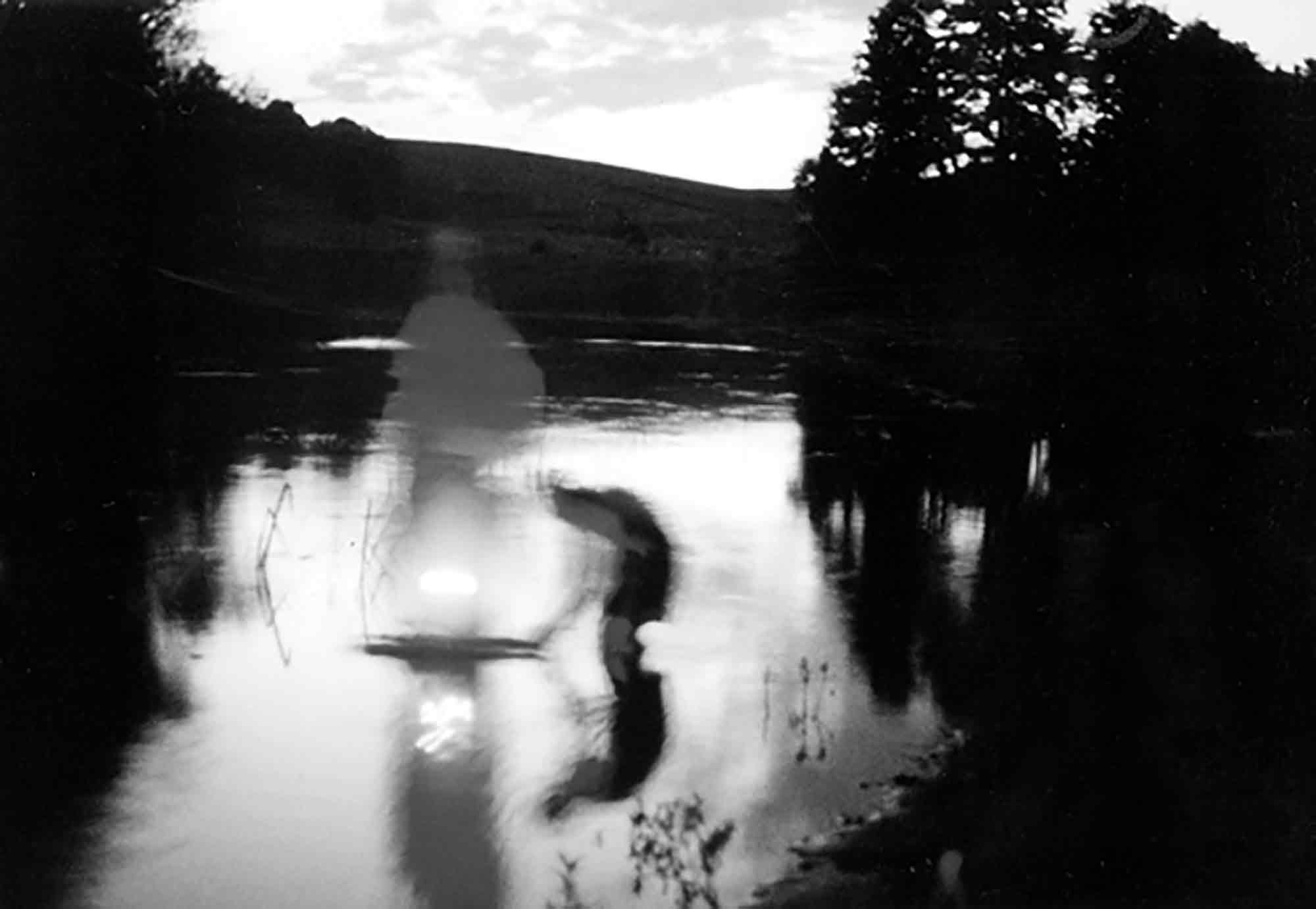
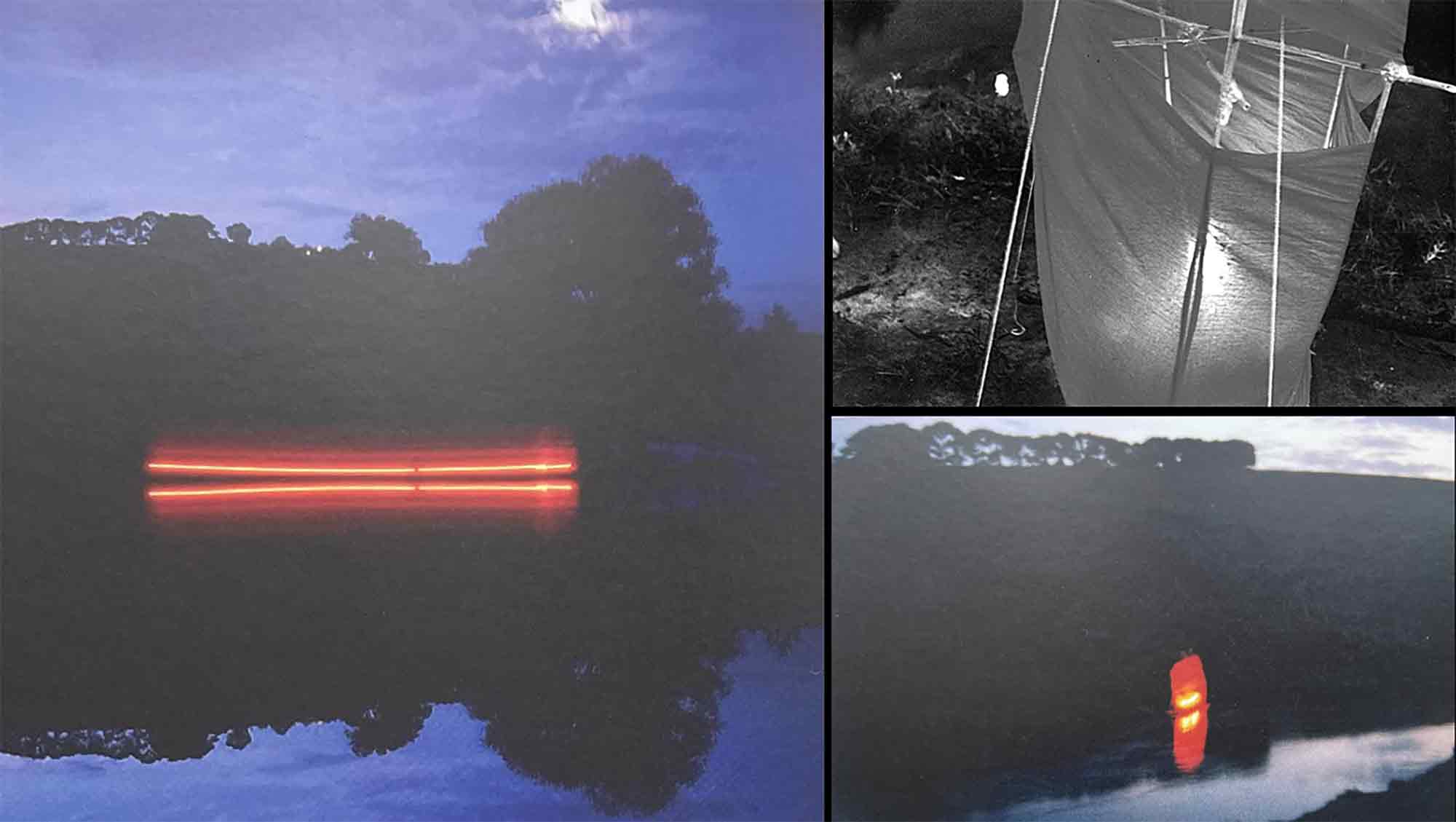
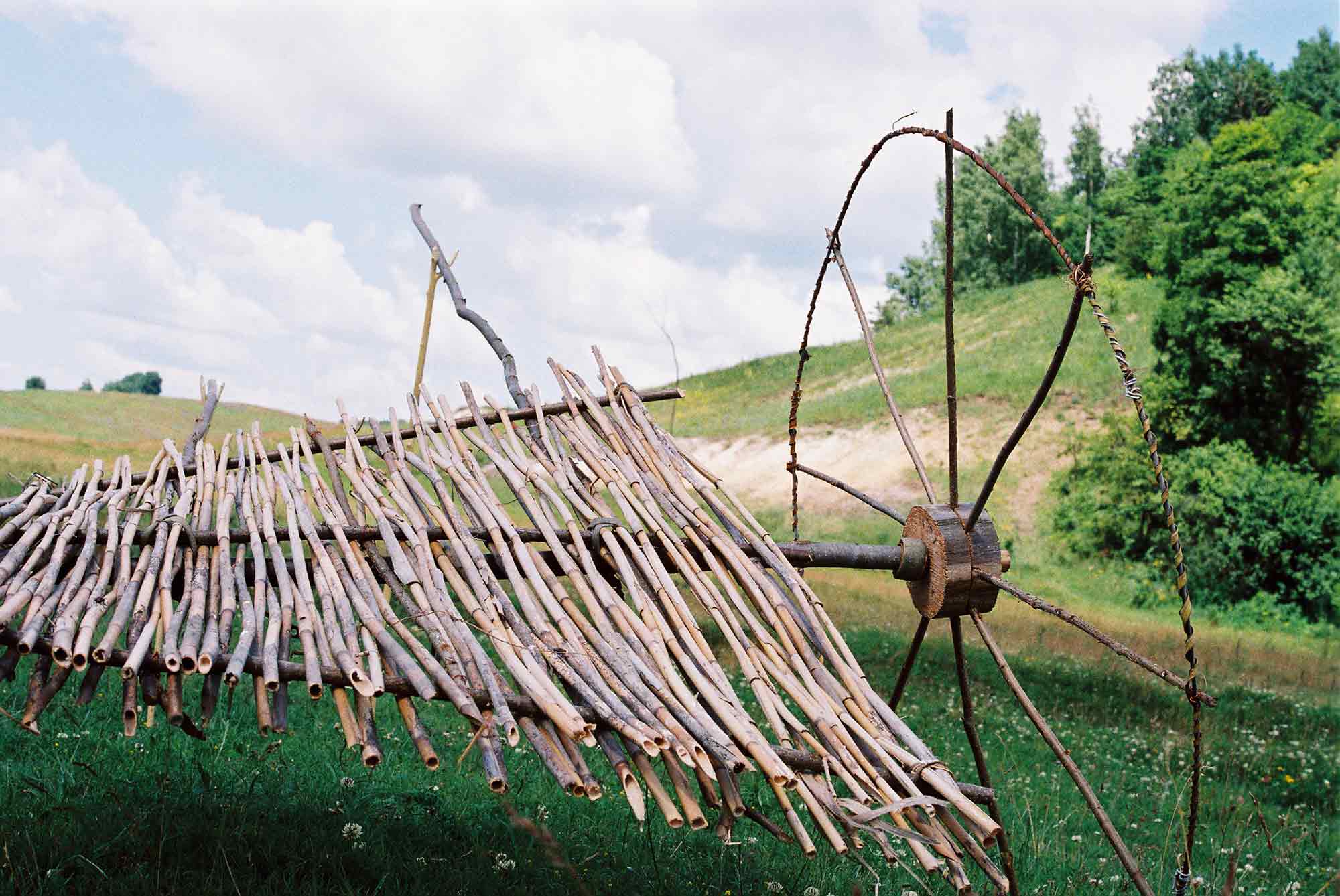
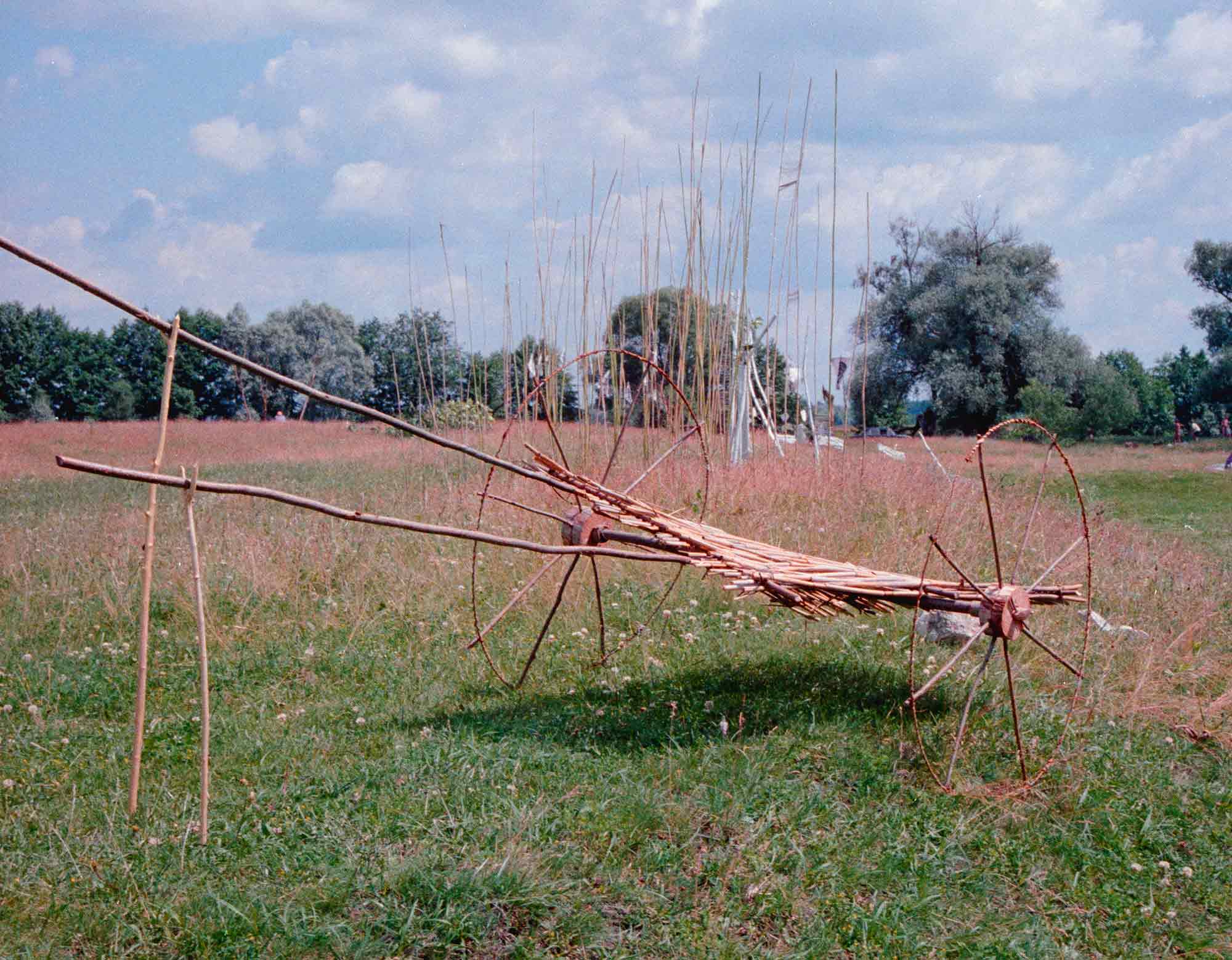
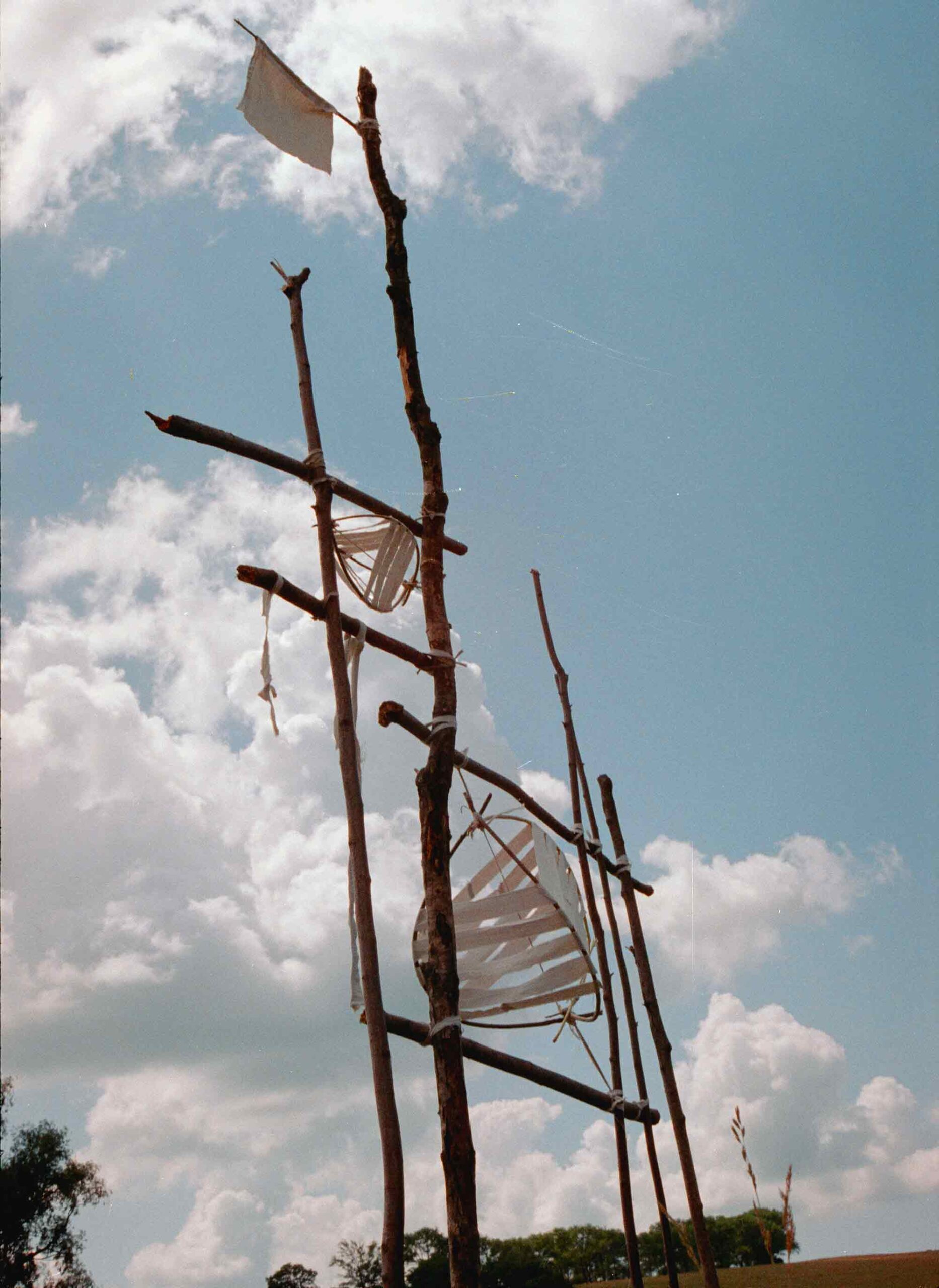
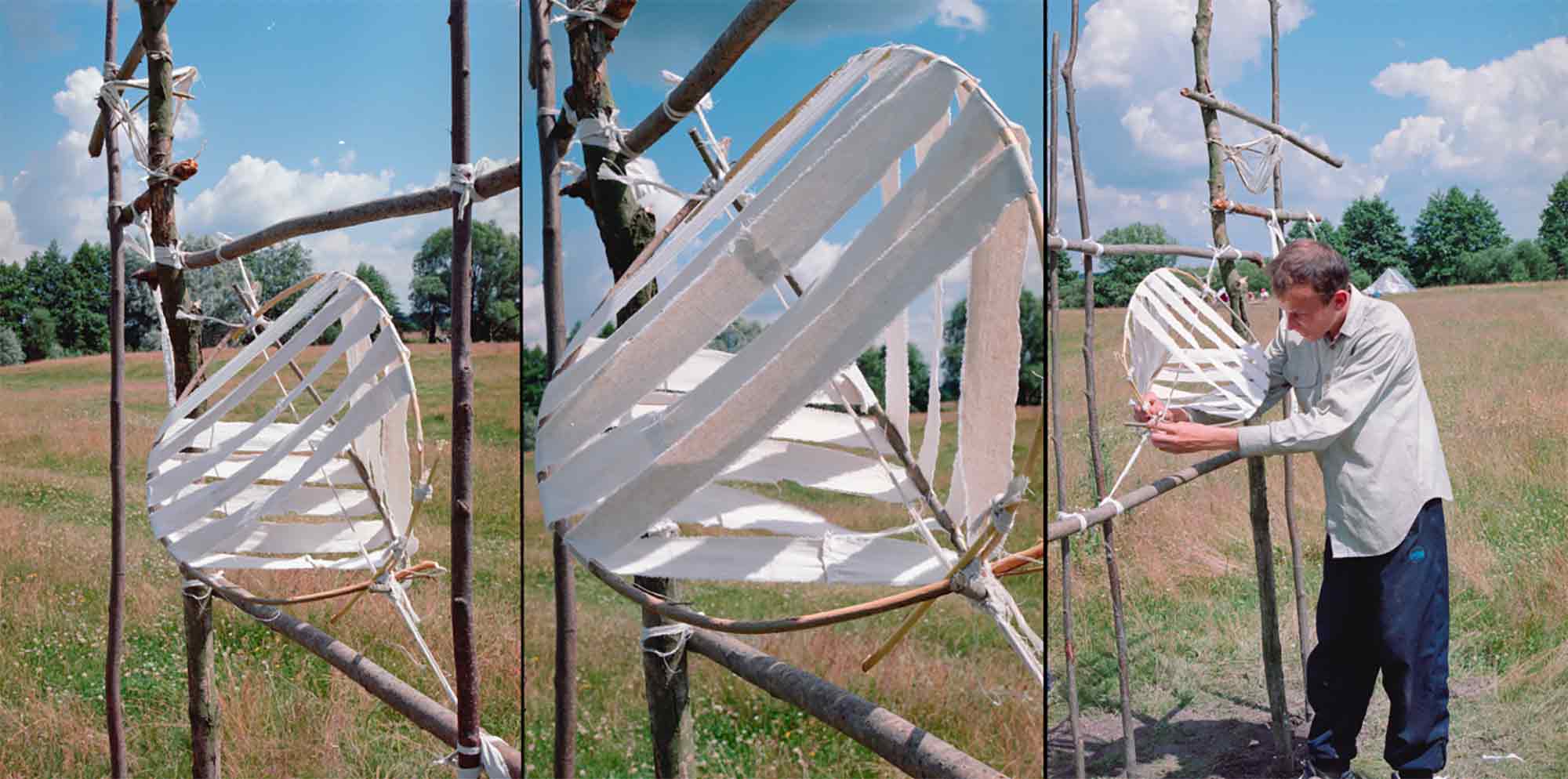
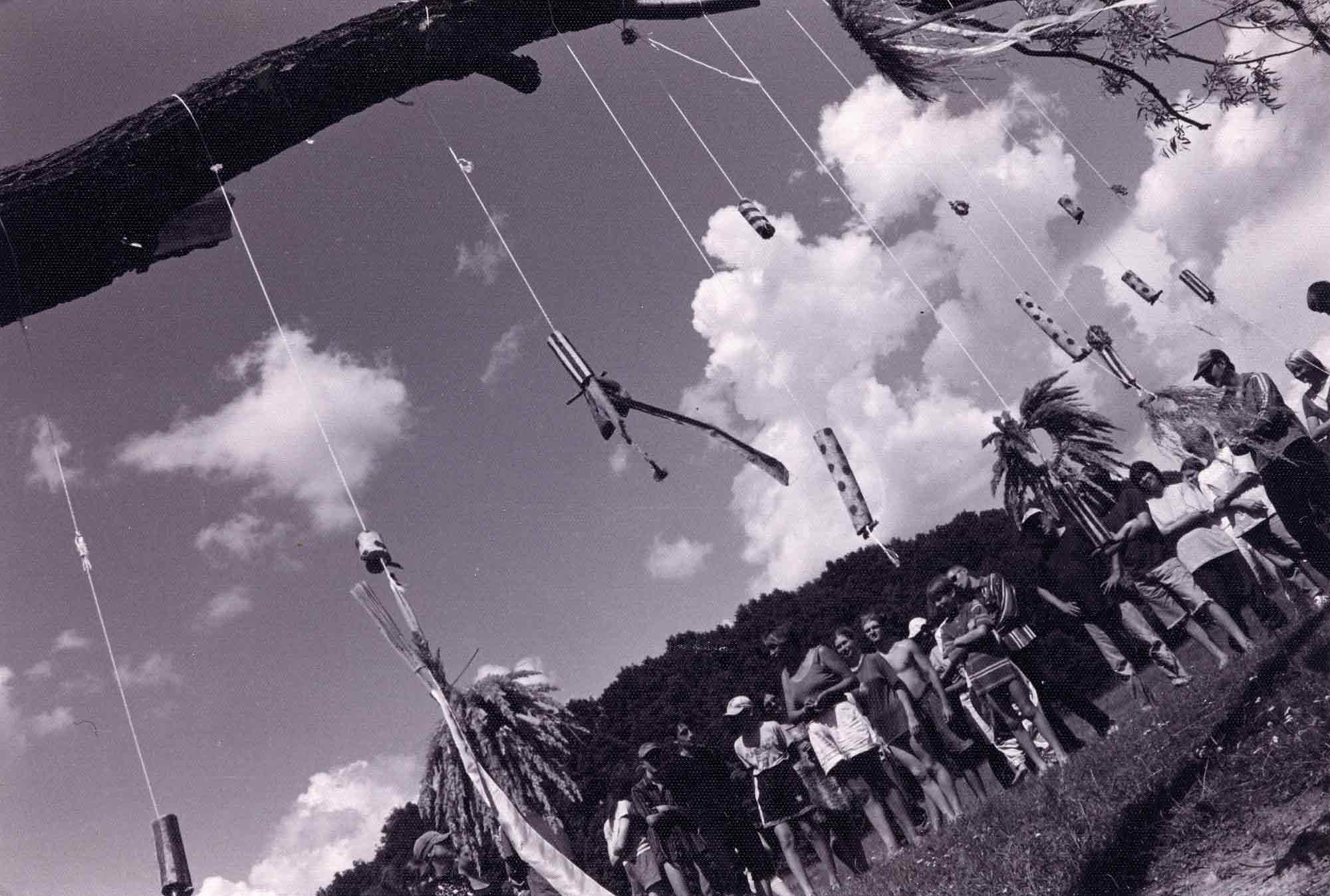
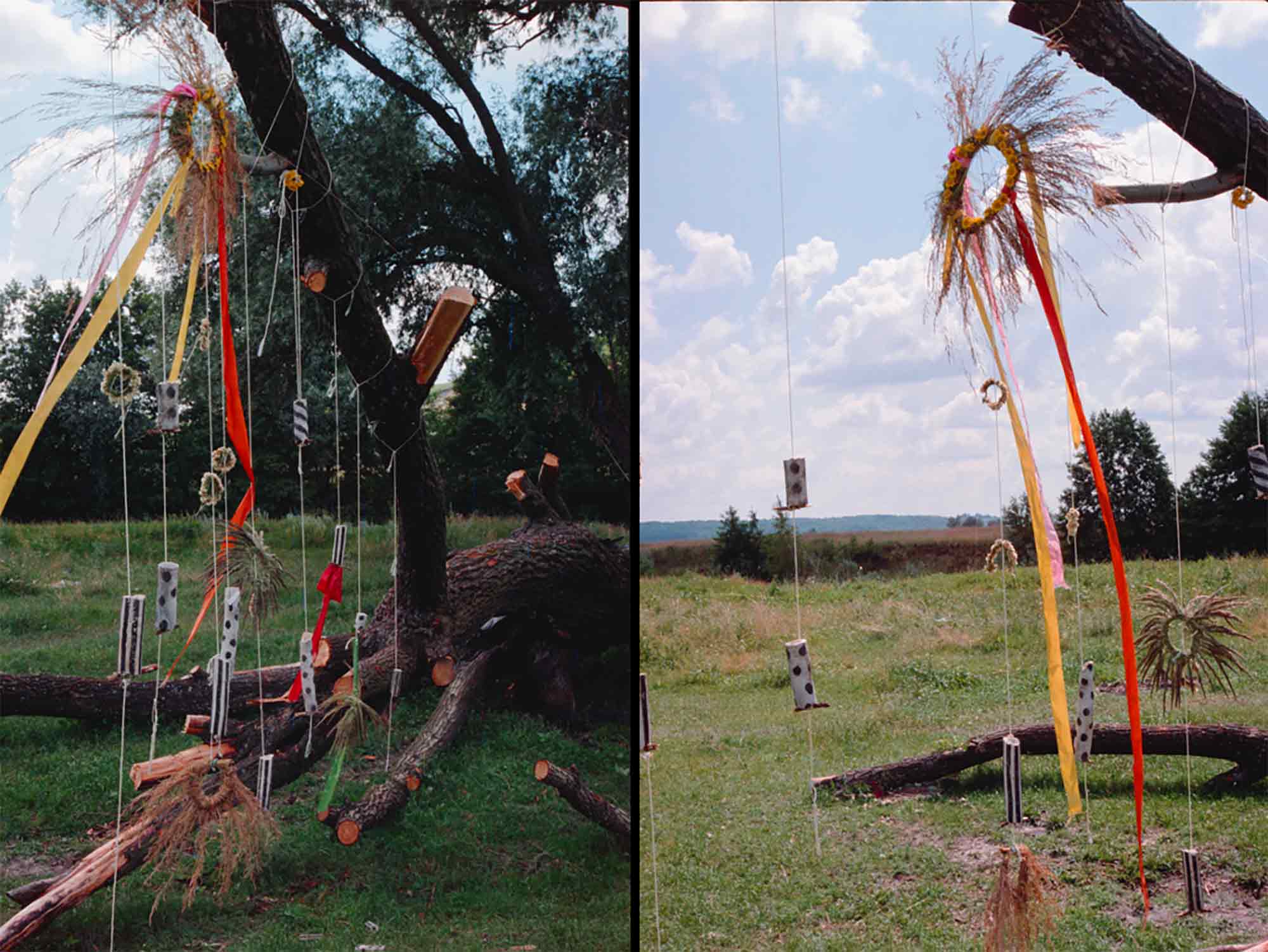
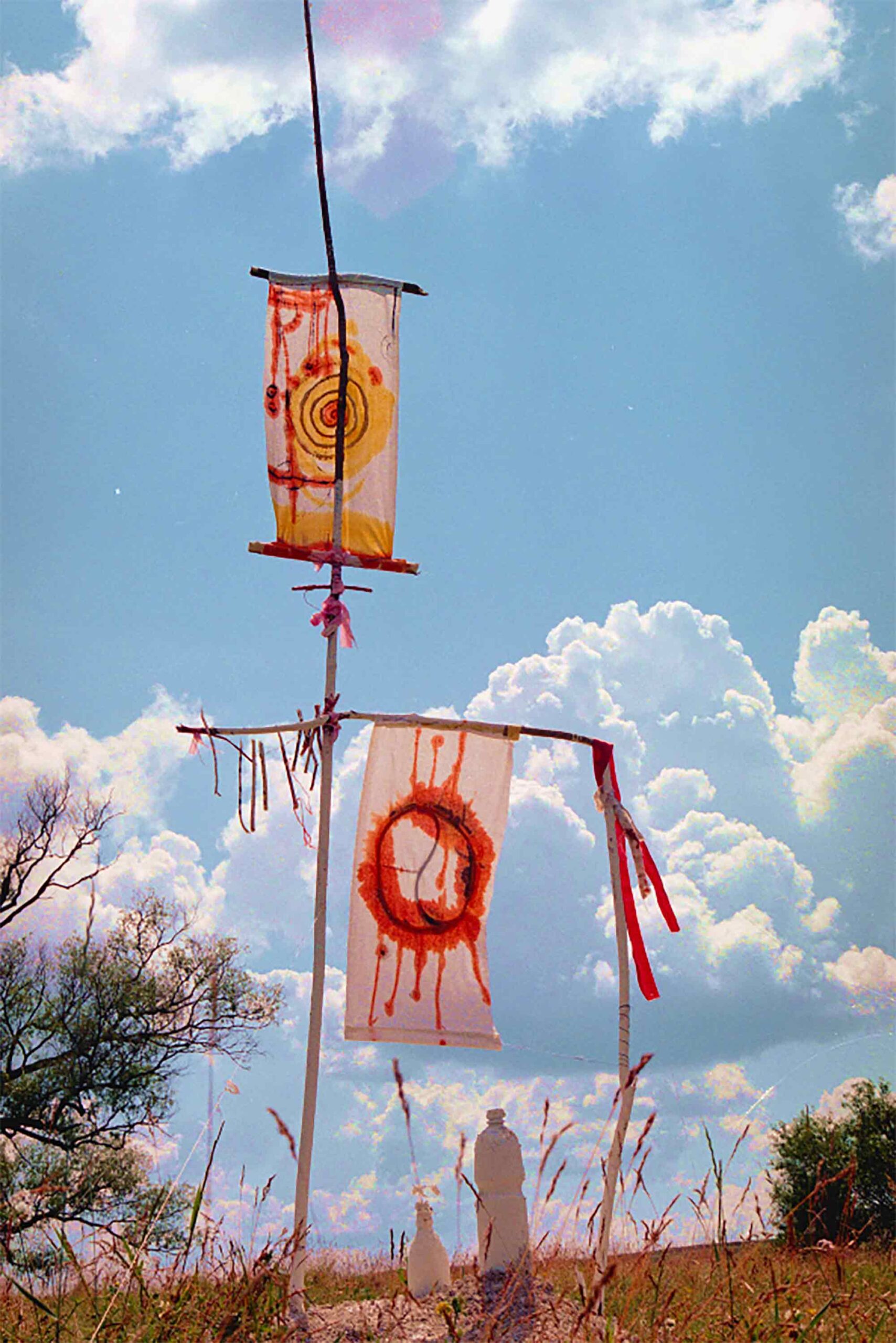
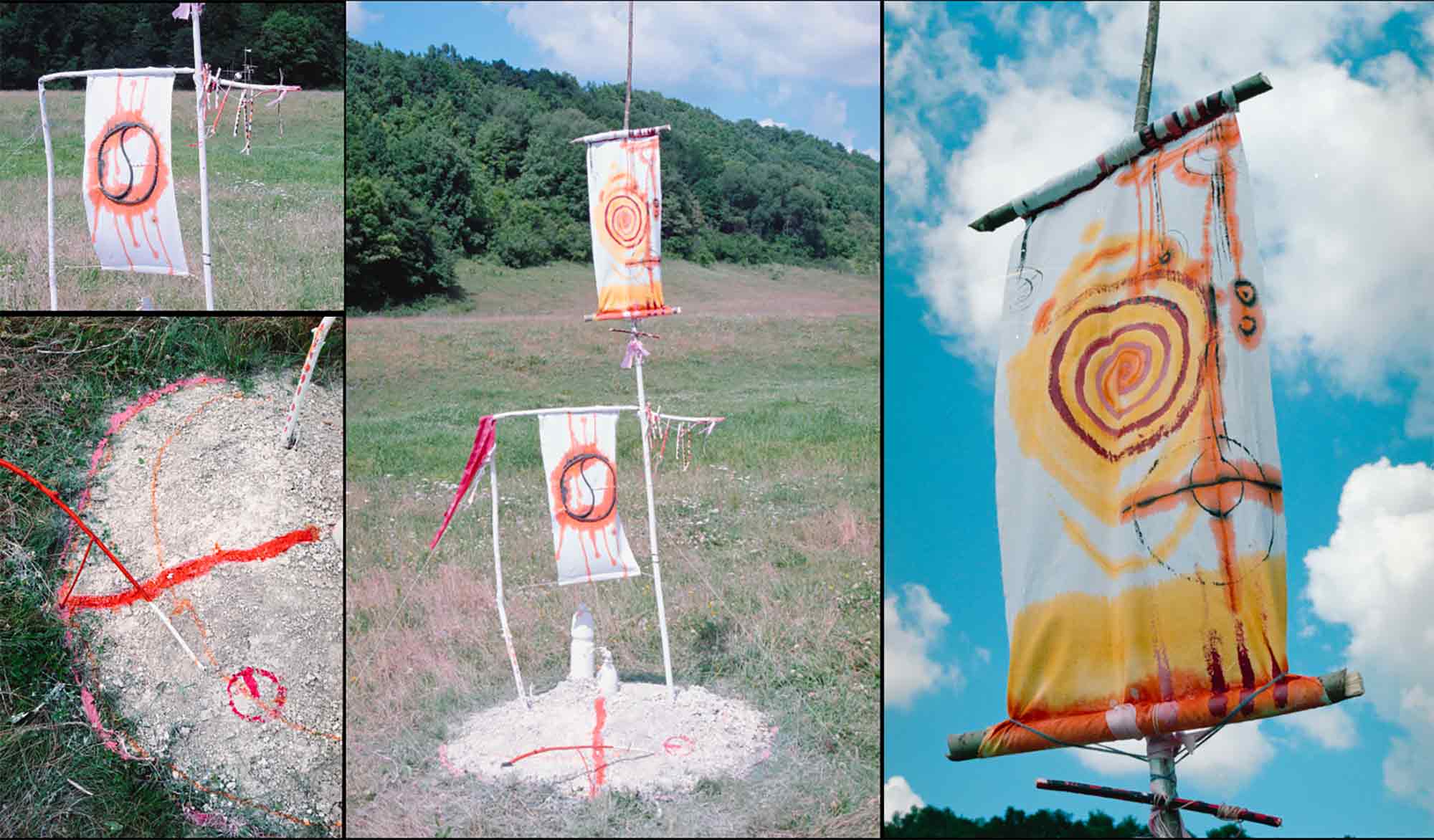
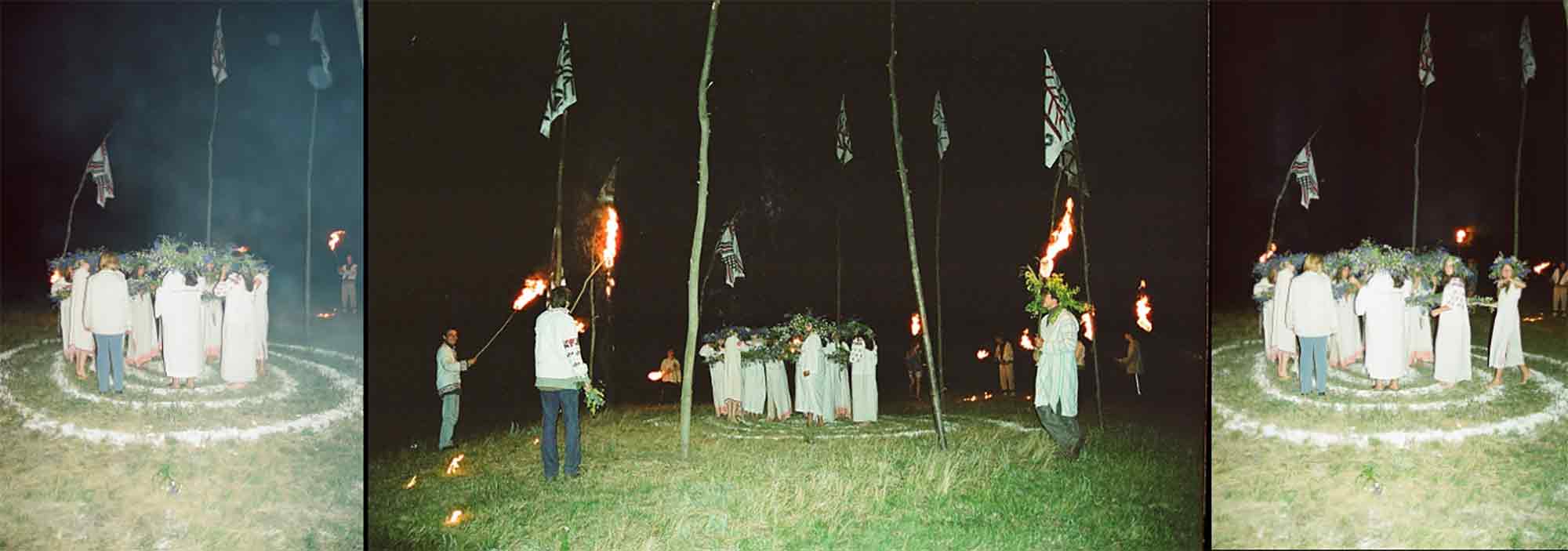
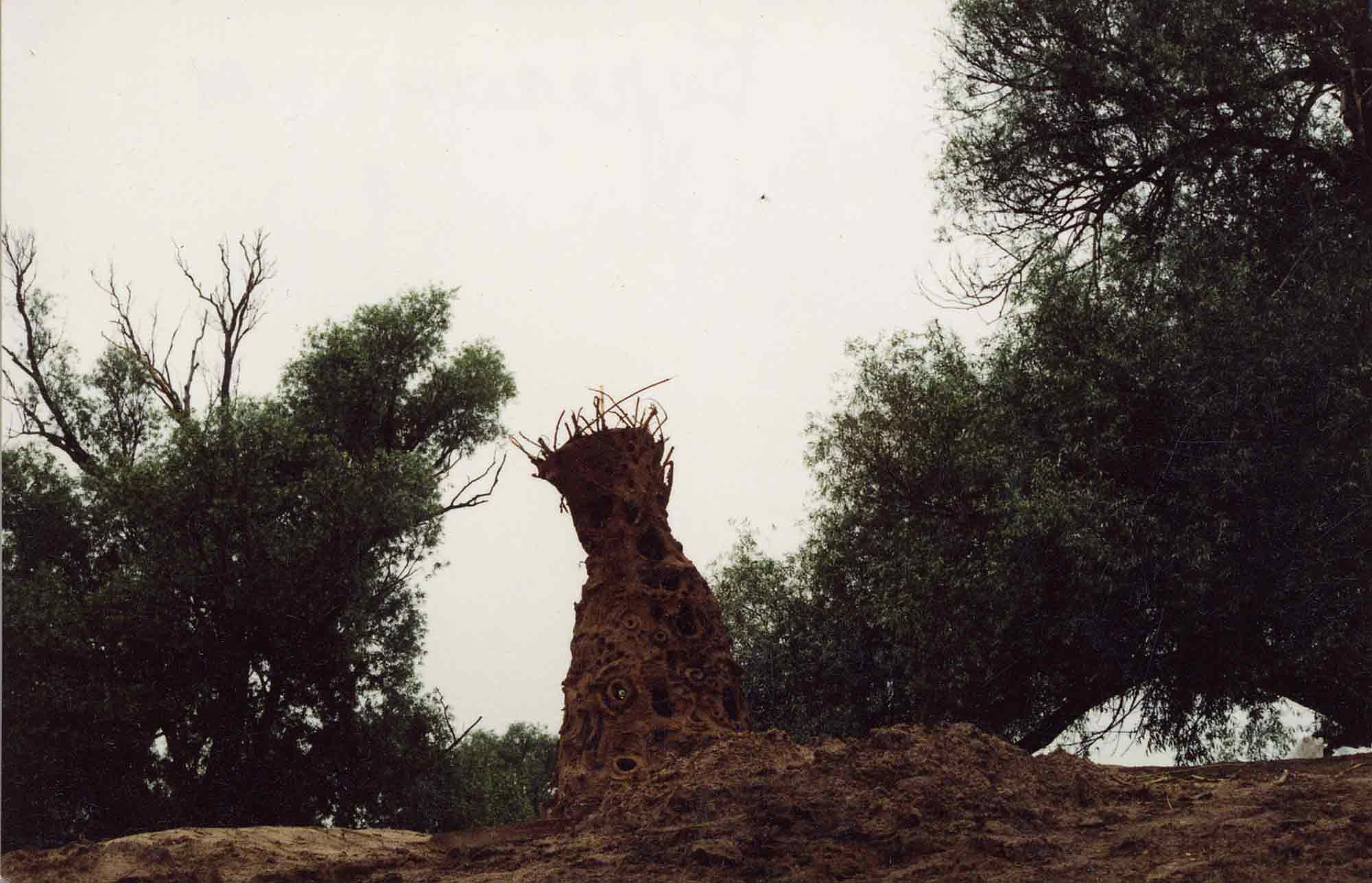
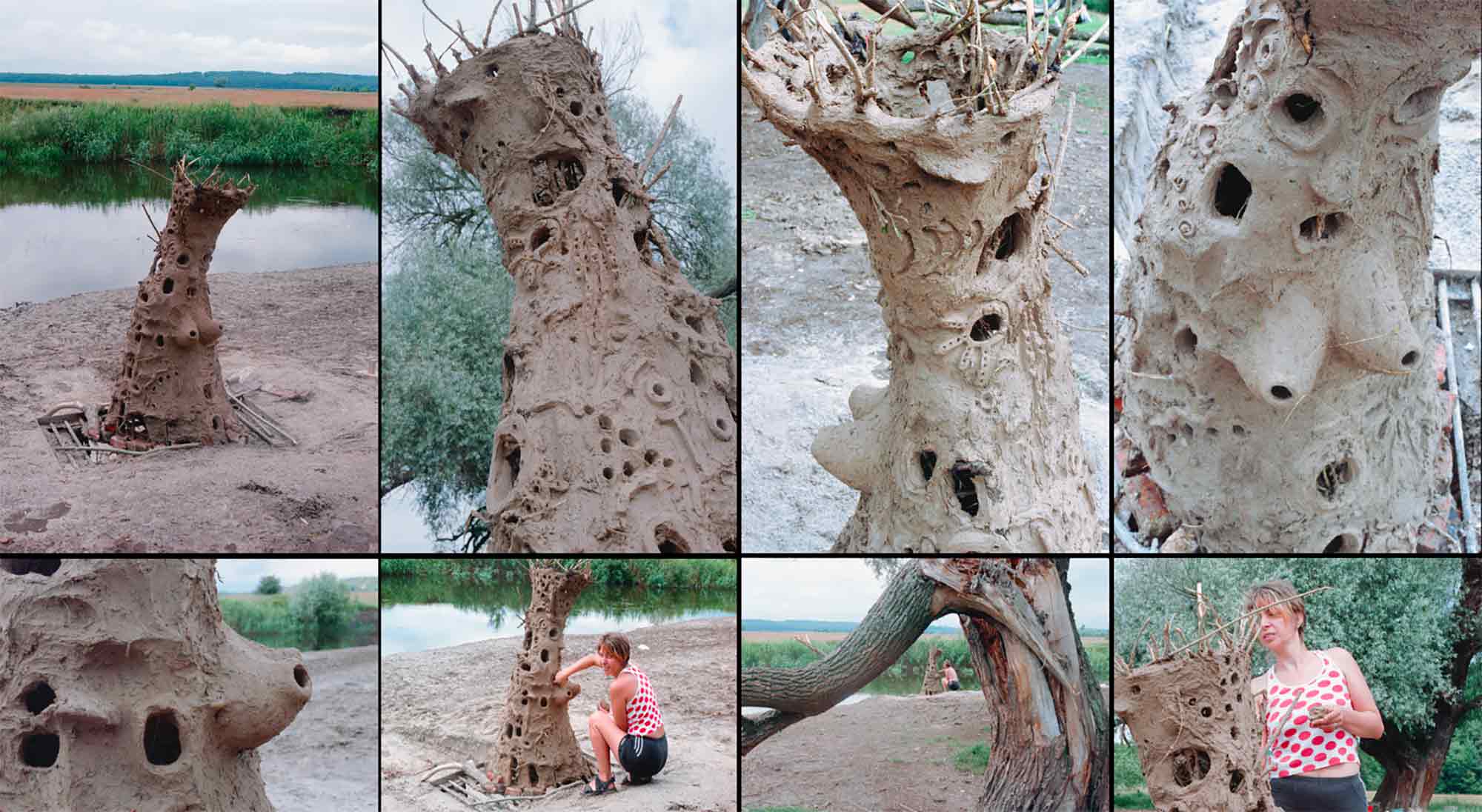
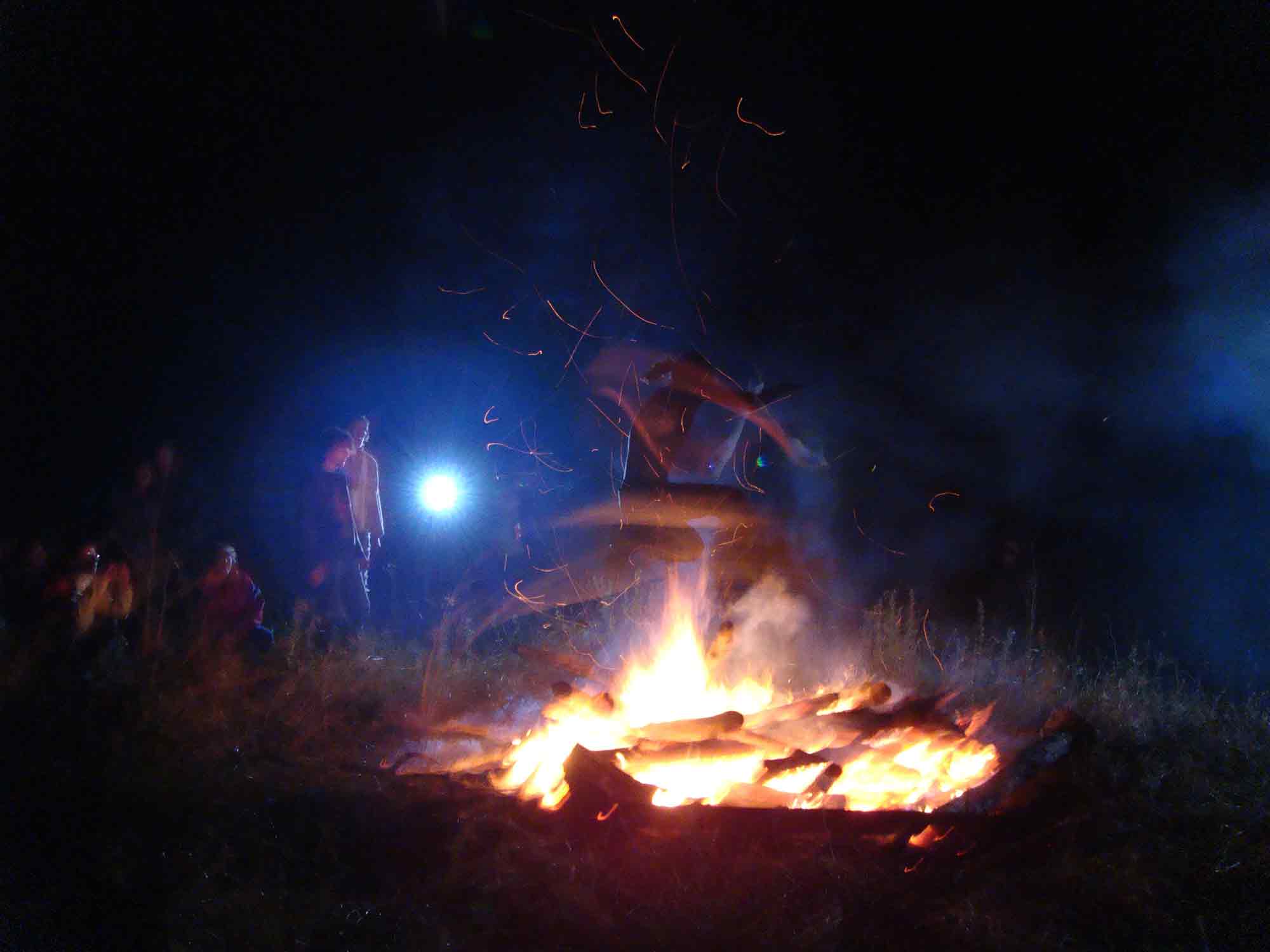
The year 2001 marked a moment of consolidation of previous experience and structured reflection. Mohrytsia functioned not only as a space for artistic action but also as an environment for interpreting that action—both by participants and by organisers. Technical and media diversity was maintained: objects, installations, performances, work with natural materials (chalk, clay, water), and light. At the same time, greater attention was paid to the philosophical aspects of interaction with the landscape. Central to this were the concepts of time, presence, and the boundary between the inner and the outer, between subject and environment. Artistic action increasingly assumed a contemplative, analytical or conceptual character, with an emphasis on temporality, spatial situationally, and interconnections. The works of Ganna Gidora, Valerii Shkarupa, Natalia and Oleh Kokhan, and other participants demonstrated a shift from the language of objects to that of gesture, observation, and the recording of change—both in the landscape and in the manner of artistic presence within it. In this context, land art was understood not as a finished formal result but as a process.
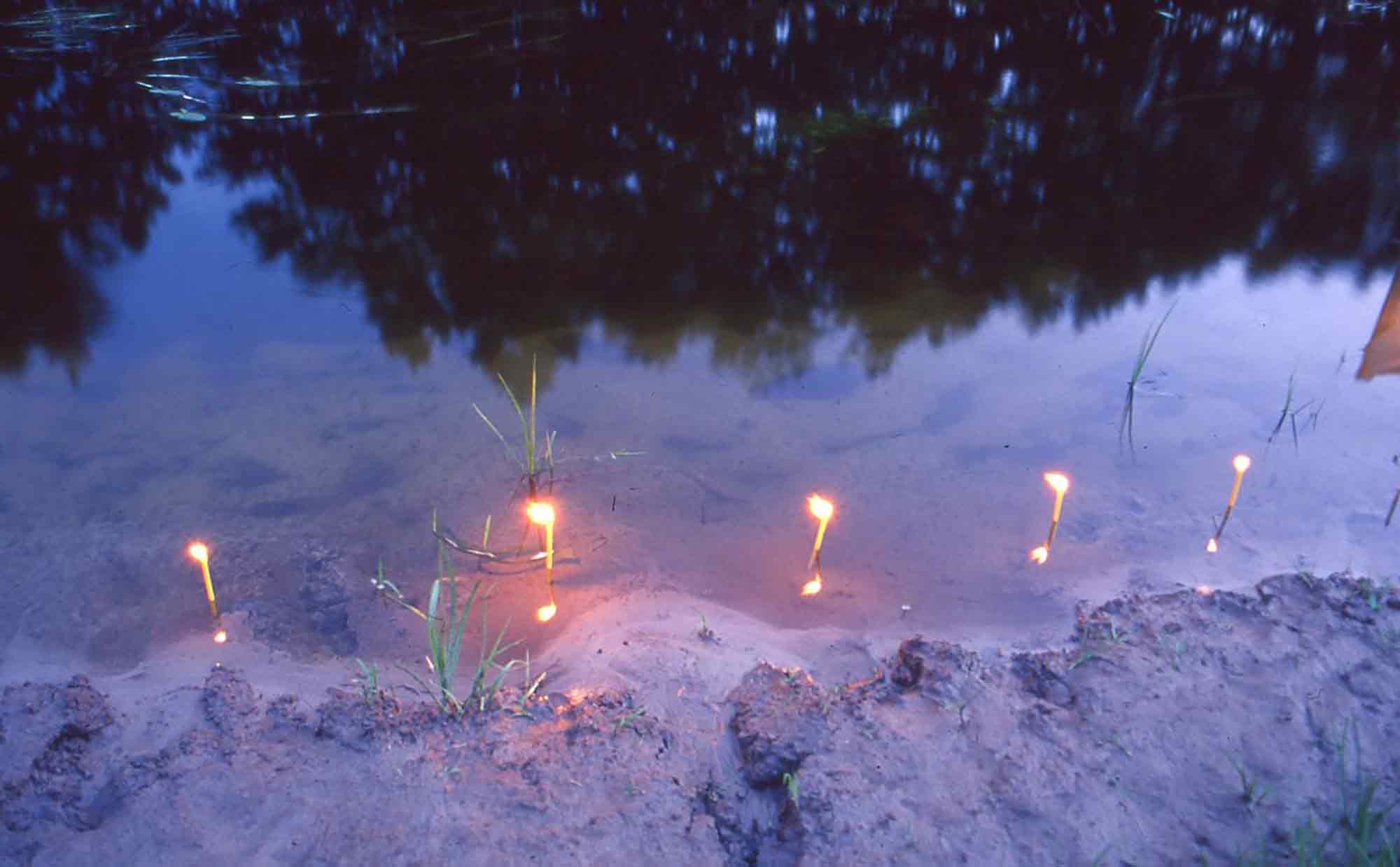
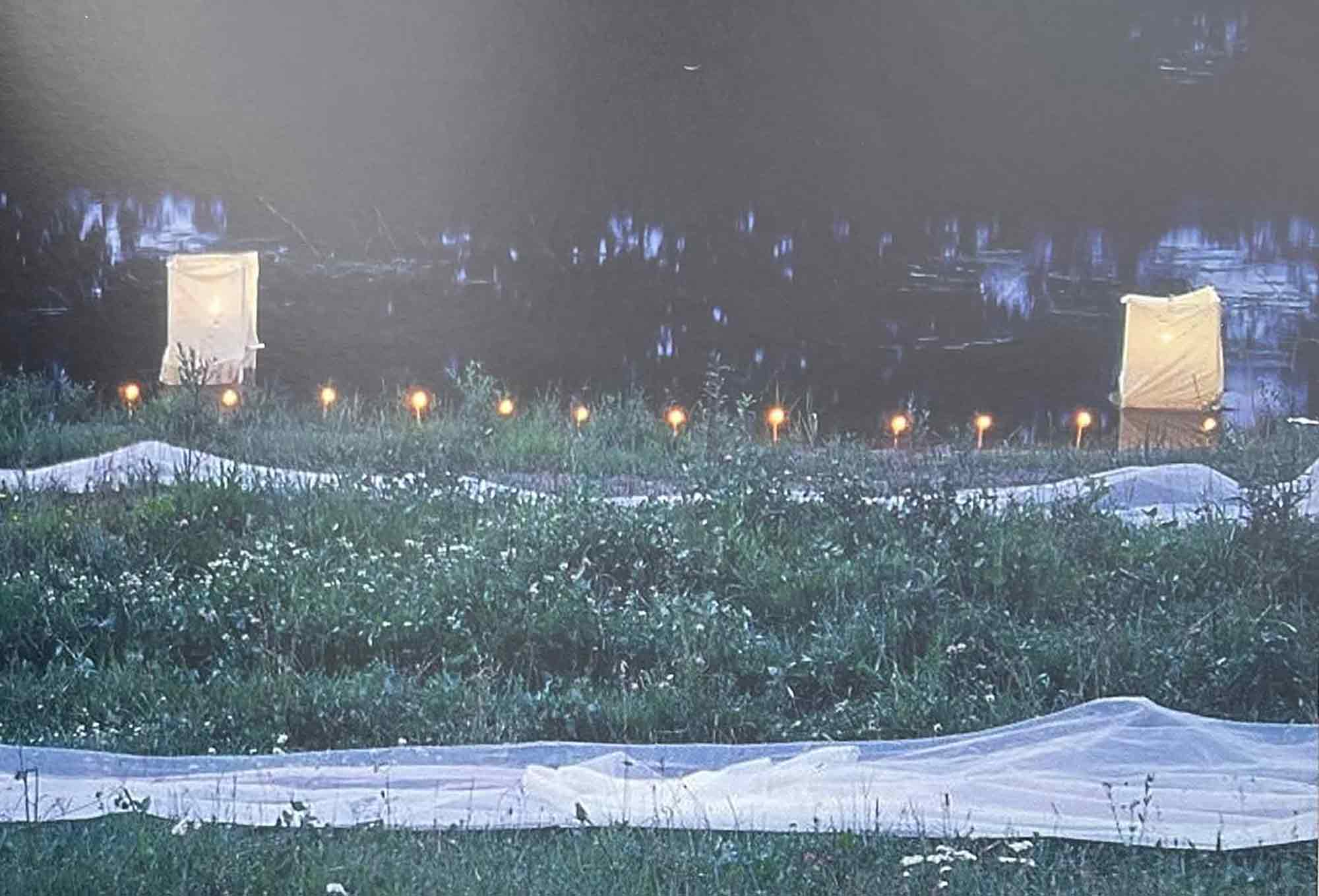
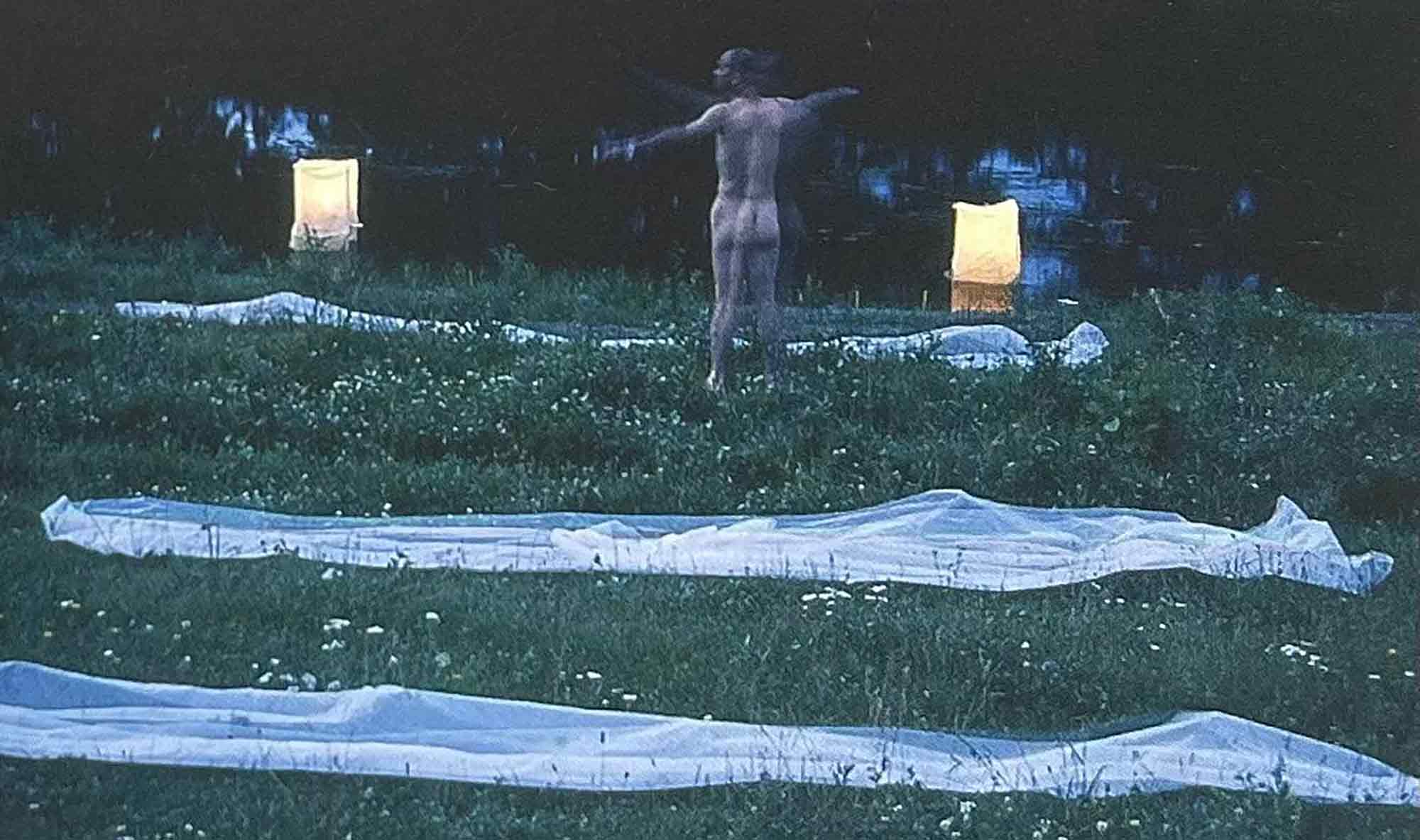
Andrii Bludov’s performance “Baden-Baden” was an individual artistic action within the space of Mohrytsia. On the banks of the Psel, he constructed a conventional “bourgeois bathhouse”—an installation of candles, lanterns, and silk sheets that created an atmosphere of leisurely luxury. The artist’s fluid choreographic movements among these elements evoked a theatrical ritual of pleasure, a simulation of relaxation. This work not only satirised the cultural notion of comfort and leisure but also introduced a new vector of individual performativity within the landscape environment, expanding the symposium format to include practices of bodily presence and emotional interaction with space.
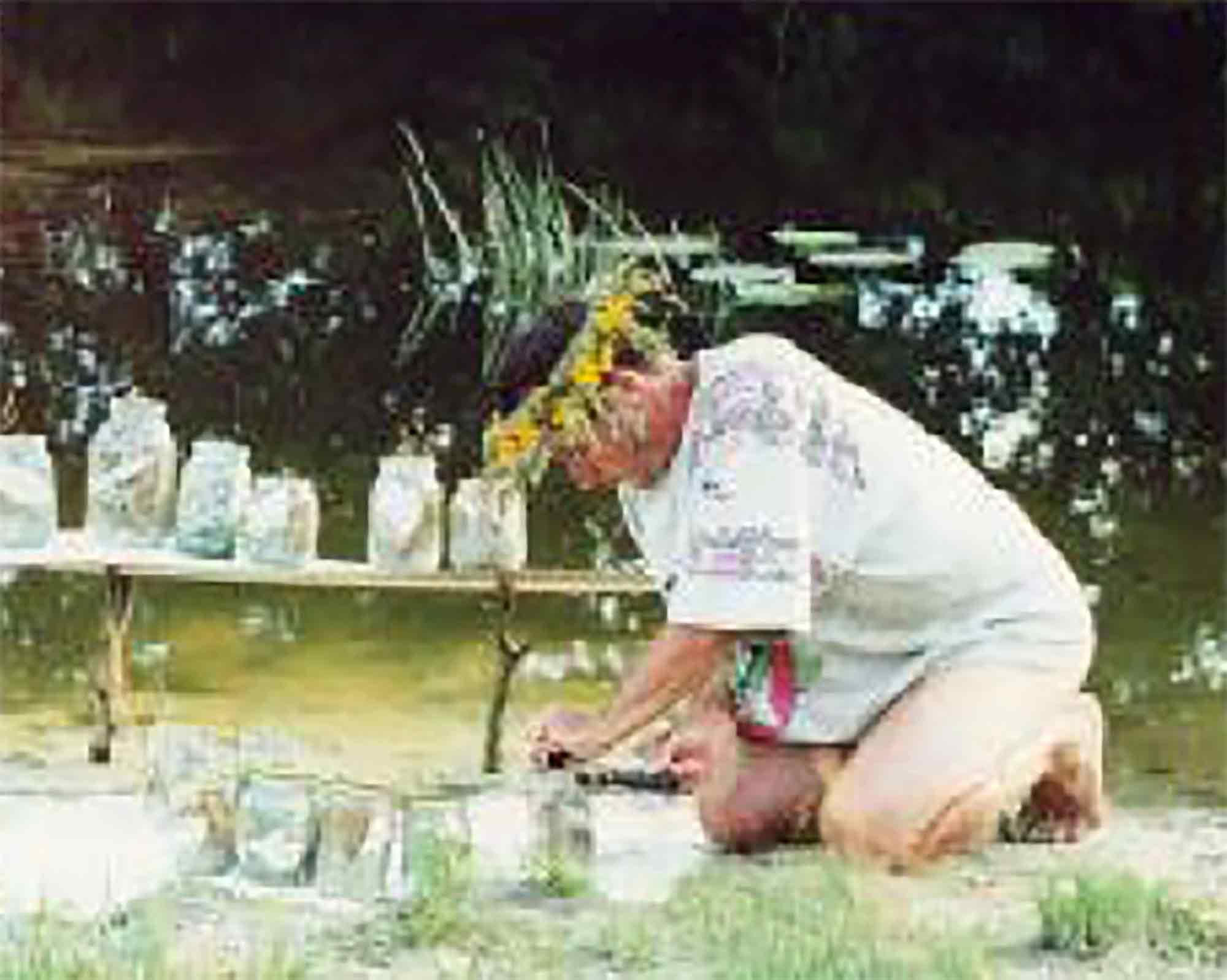
Mykola Zhuravel realised the ironic-poetic action “Sphere Conservation.” He created objects—plaster pyramids and spheres—and placed them, together with local herbs, in three-litre jars like preserved vegetables, echoing the established Ukrainian traditions of seasonal home canning, i.e. conservation. The artist highlighted not only the preservation of “fragments” of space but also raised the issue of the transience of land art as an art form. After all, land art typically exists within temporal limits, is inseparable from natural change, and rarely involves preservation in the traditional sense. Thus, the act of conservation became an ironic commentary on the very essence of the genre—art fated to vanish.